
Selecting the right basketball hoop involves more than just choosing a brand – it requires understanding technical specifications, quality standards, and installation requirements. As a professional manufacturer with nearly a decade of experience in sports equipment production, Hebei Junchi Sports Equipment Co., Ltd. provides this comprehensive guide to help you make informed decisions when purchasing basketball hoops for different applications.
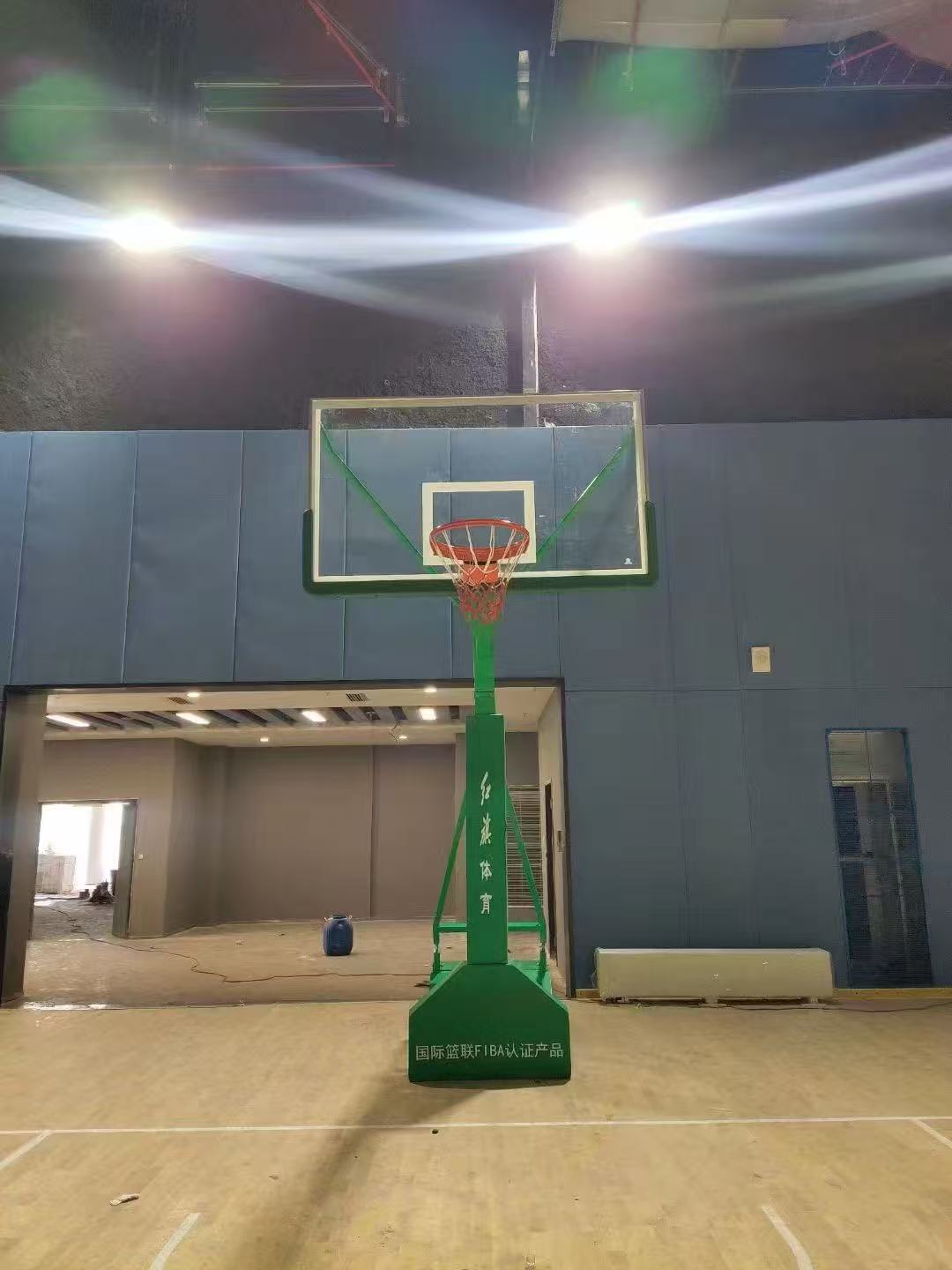
Understanding Basketball Hoop Types & Applications
The market offers several types of basketball hoops designed for different usage scenarios, each with unique technical specifications and quality requirements. Our company specializes in four main categories:
1. Electric Hydraulic Basketball Hoops
These represent the pinnacle of professional basketball equipment, featuring:
- Height adjustment range: 2.25-3.05 meters (7.4-10 feet)
- Hydraulic lifting system with remote control operation
- Heavy-duty steel frame with anti-corrosion treatment
- Tempered glass backboard (1800×1050mm) with steel frame
- Breakaway rim with spring tension adjustment
Ideal for professional competitions, these hoops meet FIBA standards and are installed in stadiums, sports centers, and professional training facilities. The electric hydraulic system allows for quick height adjustments during games or training sessions.
2. Manual Hydraulic Basketball Hoops
A cost-effective alternative to electric models, featuring:
- Manual hydraulic pump for height adjustment
- Galvanized steel frame with powder coating
- Acrylic or tempered glass backboard options
- Fixed or removable base designs
- Suitable for schools, community centers, and commercial gyms
3. Ground-Embedded Basketball Hoops
Designed for permanent outdoor installation, these hoops offer:
- Square steel tube main pole (150×150mm or 200×200mm)
- Embedded depth of 80-100cm with concrete foundation
- Weather-resistant materials for long-term durability
- Fixed height or limited adjustment options
- Ideal for parks, residential areas, and school playgrounds
4. Portable Basketball Hoops
For flexible usage scenarios, these models feature:
- Wheel-mounted base for easy relocation
- Height adjustment mechanisms (screw-type or pneumatic)
- Lightweight materials (aluminum or composite)
- Suitable for home use, temporary events, or indoor courts
Key Quality Standards for Basketball Hoops
When evaluating basketball hoop quality, several international and national standards should be considered:
| Standard | Applicable Products | Key Requirements |
|---|---|---|
| GB/T 19851.1-2005 | Basketball equipment | Backboard dimensions, rim specifications, structural strength |
| EN 1270 | European safety standards | Impact resistance, stability requirements, edge protection |
| FIBA Standards | Professional competitions | Official dimensions, material specifications, installation guidelines |
| ASTM F1447 | US safety standards | Structural integrity, load capacity, warning labels |
Our manufacturing process strictly adheres to these standards, with each basketball hoop undergoing multiple quality checks:
- Material inspection (steel grade, glass thickness)
- Structural strength testing (load capacity verification)
- Surface treatment evaluation (corrosion resistance)
- Functional testing (height adjustment, rim flexibility)
- Final product inspection before packaging
Professional Installation Requirements
Proper installation is crucial for basketball hoop safety and performance. Based on our experience serving thousands of customers nationwide, here are key installation considerations:
1. Foundation Requirements
For ground-embedded models:
- Concrete foundation depth: 80-100cm (depending on soil conditions)
- Foundation diameter: 1.2-1.5 times the pole diameter
- Reinforcement: Steel bars (Φ12-Φ16) in concrete
- Curing time: Minimum 7 days before use
2. Leveling & Alignment
Critical for proper operation:
- Vertical alignment tolerance: ≤3mm/m
- Backboard plane alignment: Parallel to playing surface
- Rim height verification: Using professional measuring tools
3. Safety Precautions
Essential safety measures:
- Install protective padding on main pole and base
- Ensure sufficient clearance around playing area
- Secure all bolts and fasteners with torque specifications
- Post safety warnings and usage instructions
Our company provides detailed installation manuals with each basketball hoop, and for large projects, we offer professional installation services by certified technicians to ensure compliance with all safety standards.
Maintenance & Longevity Tips
Regular maintenance extends basketball hoop lifespan and ensures safe operation. Here are professional maintenance recommendations:
| Component | Maintenance Frequency | Recommended Actions |
|---|---|---|
| Steel Frame | Monthly | Check for rust, touch up paint if needed |
| Hydraulic System | Quarterly | Check oil level, lubricate moving parts |
| Backboard | Annually | Inspect for cracks, check mounting hardware |
| Rim | Bi-monthly | Check spring tension, net attachment |
| Fasteners | Monthly | Tighten all bolts to specified torque |
For outdoor basketball hoops, additional weather protection measures are recommended:
- Apply silicone-based protectant to backboard edges
- Use pole covers during winter months in cold regions
- Store portable models indoors during severe weather
- Avoid using abrasive cleaners on any components
FAQ
What factors should I consider when choosing a basketball hoop?
Key considerations include usage scenario (professional/recreational), installation location (indoor/outdoor), available budget, height adjustment requirements, and maintenance capabilities. Professional competitions require FIBA-certified equipment, while community centers may prioritize durability and safety features.
How often should basketball hoops be inspected for safety?
We recommend monthly visual inspections for all components, with professional safety checks annually. Pay special attention to: structural integrity of the main pole, backboard attachment points, rim spring tension, and hydraulic system operation (for adjustable models).
What maintenance is required for electric hydraulic basketball hoops?
These systems require: quarterly hydraulic oil level checks, annual professional servicing of the motor and pump assembly, monthly inspection of electrical connections, and protection from moisture ingress. Our company provides comprehensive maintenance packages for professional clients.
How long does a quality basketball hoop typically last?
With proper installation and maintenance: indoor hoops can last 15+ years, outdoor ground-embedded models 10-15 years, and portable models 5-8 years. The lifespan depends on material quality, usage frequency, and environmental conditions.
Can basketball hoops be customized for specific requirements?
Yes, as a manufacturer we offer customization options including: brand logo placement, special color schemes, non-standard height ranges, additional safety features, and integration with smart scoring systems. Minimum order quantities apply for custom designs.
Summary
Selecting the right basketball hoop requires careful consideration of technical specifications, quality standards, and installation requirements. As a professional manufacturer with nearly a decade of experience, Hebei Junchi Sports Equipment Co., Ltd. recommends prioritizing safety certifications, structural integrity, and after-sales support when making purchasing decisions. Our product range covers all usage scenarios from home use to professional competitions, with each basketball hoop meeting or exceeding international quality standards. For optimal performance and longevity, we emphasize proper installation by certified technicians and regular professional maintenance.