
Selecting the right outdoor fitness equipment is crucial for creating safe, durable, and engaging public fitness spaces. Whether you’re outfitting a park, community center, or commercial facility, the quality of your equipment directly impacts user experience and long-term maintenance costs. This comprehensive guide will walk you through everything you need to know about choosing professional-grade outdoor fitness equipment from reliable manufacturers.

Understanding the Importance of Quality in Outdoor Fitness Equipment
Outdoor fitness equipment faces unique challenges compared to indoor models. Exposure to weather elements, varying user weights, and high-frequency use demand superior durability and construction. Professional manufacturers like Hebei Junchi Sports Equipment Co., Ltd. understand these requirements and design their products accordingly.
The company’s nearly 10-year experience in the sports equipment industry has taught them that quality isn’t just about materials – it’s a complete approach to design, manufacturing, and testing. Their products consistently receive positive feedback from universities, sports bureaus, military units, and cultural stations across China, proving their commitment to quality.
When evaluating equipment quality, look for:
- Weather-resistant materials (galvanized steel, anti-corrosion coatings)
- Robust construction that withstands heavy use
- Smooth operation without sharp edges
- Certifications from recognized testing authorities
- Positive reviews from similar installation environments
Key Factors to Consider When Selecting Outdoor Fitness Equipment
Choosing the right equipment involves more than just picking popular items. A strategic approach ensures your investment meets both current needs and future requirements. Here are the essential factors to evaluate:
1. User Demographics and Fitness Goals
Different age groups and fitness levels require different equipment. For example:
- Senior citizens may prefer low-impact options like leg press machines and stretching equipment
- Young adults might want more challenging options like pull-up bars and plyometric boxes
- Families need a mix of equipment suitable for various ages
Consider conducting a community survey or analyzing usage patterns at similar facilities to determine the most needed equipment types.
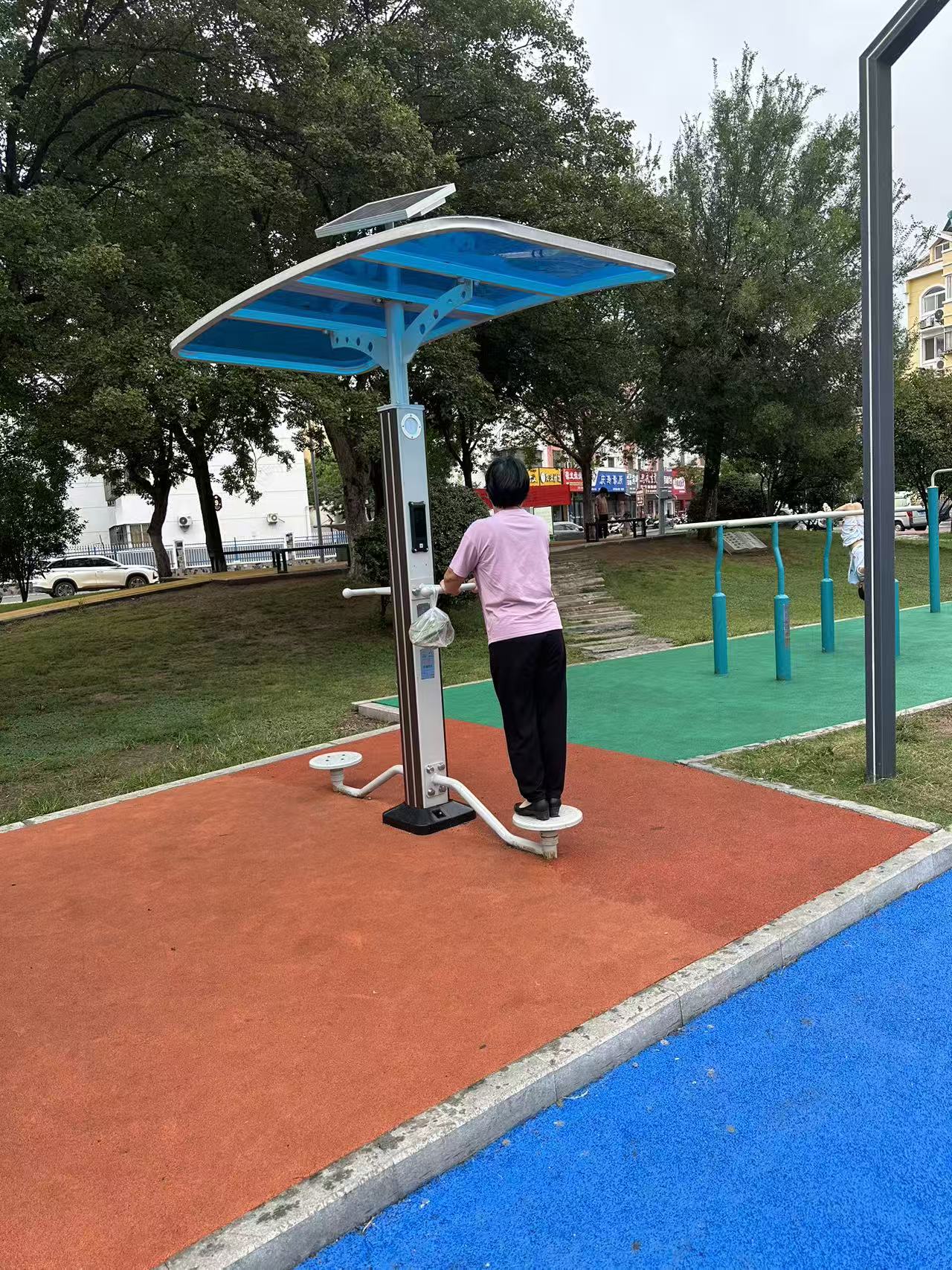
2. Space Requirements and Layout
Measure your available space carefully and consider:
- Minimum clearance around each piece (typically 1-2 meters)
- Traffic flow between equipment stations
- Sun exposure and shade patterns throughout the day
- Accessibility for users with disabilities
Professional manufacturers can provide layout plans based on your specific space dimensions and user requirements.
3. Safety Features and Certifications
Safety should be your top priority. Look for equipment that includes:
- Non-slip surfaces on all contact points
- Rounded edges without sharp corners
- Clear instructional signage
- Sturdy anchor systems for ground stability
- Certifications like ISO 9001 or national sports equipment standards
Hebei Junchi’s products, for example, have been continuously certified as qualified by the National Sporting Goods Supervision and Inspection Center and named famous-quality products by the provincial Bureau of Quality Supervision.
4. Maintenance Requirements
Consider the long-term maintenance needs of each equipment type:
- Moving parts may require more frequent lubrication
- Painted surfaces need periodic touch-ups
- Some materials resist graffiti better than others
- Simple designs often require less maintenance
Ask manufacturers about their recommended maintenance schedules and whether they offer maintenance services or training.
Top Recommended Outdoor Fitness Equipment Types
Based on popularity and functionality, these equipment types consistently receive positive feedback:
| Equipment Type | Key Features | Best For |
|---|---|---|
| Leg Press Machine | Low-impact leg strengthening, adjustable resistance | Seniors, rehabilitation |
| Chest Press | Upper body strengthening, ergonomic design | All ages, general fitness |
| Pull-Up/Dip Station | Multiple grip positions, sturdy construction | Young adults, athletes |
| Elliptical Cross Trainer | Full-body cardio, low impact | All ages, cardio training |
| Balance Beam | Non-slip surface, varying heights | Core training, rehabilitation |
How to Evaluate Outdoor Fitness Equipment Manufacturers
Choosing the right supplier is as important as selecting the equipment itself. Here’s what to look for in a professional manufacturer:
1. Industry Experience and Reputation
Look for companies with at least 5-10 years in the industry and a proven track record. Hebei Junchi Sports Equipment Co., Ltd. has nearly a decade of experience and maintains sales networks nationwide, demonstrating their reliability and market presence.
2. Product Range and Customization Options
A comprehensive product catalog indicates manufacturing capability and experience. The ability to customize equipment to your specific needs shows flexibility and customer focus. Hebei Junchi offers everything from basic fitness stations to complete outdoor gym solutions.
3. Certifications and Quality Control
Reputable manufacturers should have multiple certifications proving their commitment to quality. Hebei Junchi’s products have received:
- Continuous qualification certification from the National Sporting Goods Supervision and Inspection Center
- Famous-quality product designation from the provincial Bureau of Quality Supervision
- Consumer Trusted Unit award from the Consumer Association
4. After-Sales Support and Warranty
Understand what support is offered after purchase:
- How long is the warranty period?
- What does the warranty cover?
- Is installation assistance available?
- Do they offer maintenance services or training?
Professional manufacturers stand behind their products with comprehensive support programs.
FAQ
What certifications should outdoor fitness equipment have?
Look for equipment certified by recognized national or international standards organizations. In China, important certifications include those from the National Sporting Goods Supervision and Inspection Center and provincial quality supervision bureaus. ISO 9001 certification for quality management systems is also valuable. These certifications ensure the equipment meets safety, durability, and performance standards.
How often should outdoor fitness equipment be maintained?
Maintenance frequency depends on usage and local conditions. Generally, inspect equipment monthly for damage or wear, clean surfaces weekly, and lubricate moving parts every 3-6 months. Professional manufacturers can provide specific maintenance schedules based on their equipment design and your usage patterns. Regular maintenance extends equipment life and ensures user safety.
What makes outdoor fitness equipment different from indoor equipment?
Outdoor equipment must withstand weather elements like sun, rain, and temperature extremes. It typically uses more durable materials like galvanized steel and anti-corrosion coatings. The design often includes features to prevent water accumulation and damage from UV exposure. Outdoor equipment also needs sturdier anchoring systems to withstand wind and user movement on uneven surfaces.
How can I ensure the safety of outdoor fitness equipment users?
Safety requires multiple measures: choose equipment with rounded edges, non-slip surfaces, and clear instructions; ensure proper installation with secure anchoring; maintain regular inspections and maintenance; provide adequate spacing between equipment; and consider adding impact-absorbing surfaces like rubber mats. Also, select equipment appropriate for your users’ age and fitness levels.
Summary
Choosing professional outdoor fitness equipment requires careful consideration of quality, safety, user needs, and manufacturer reliability. By focusing on certified products from experienced manufacturers like Hebei Junchi Sports Equipment Co., Ltd., you ensure your investment delivers long-term value and safe, enjoyable fitness experiences for all users. Remember to evaluate each piece based on its specific application, maintenance requirements, and how well it fits your overall space design. With the right approach, your outdoor fitness area can become a valuable community asset that promotes health and well-being for years to come.