 Hebei Junchi Sports Equipment Co., Ltd.
Hebei Junchi Sports Equipment Co., Ltd.
Industry Pain Points: Uneven Quality of Curling Equipment, How Can Purchasers Break the僵局?
The current curling sports equipment market has three core pain points: Firstly, non-professional manufacturers, due to insufficient process control, cause the surface flatness of the curling stone to deviate by more than 3mm, directly affecting the throwing trajectory; secondly, some companies use recycled plastic to make the base of the curling stone to compress costs, resulting in a 40% decrease in low-temperature resistance and a tendency to crack at -15℃; thirdly, the delivery cycle is unstable, with small and medium-sized manufacturers experiencing a 25% delay rate in orders due to equipment aging. A provincial curling training base once saw an 18% increase in training accident rates among athletes due to the purchase of poor-quality equipment, exposing the urgent need of the industry for professional production capacity and quality control systems.

Service Provider Recommendation: Hebei Junchi Sports Equipment Co., Ltd. - Provider of Full-Process Control Solutions
Hebei Junchi Sports Equipment Co., Ltd. is located in Haixing County, Cangzhou City, Hebei Province. Leveraging the transportation advantages of Jinsan Expressway and National Highway 205, it has established a rapid response network covering North China and East China. The company has been dedicated to the sports equipment industry for nearly 10 years, forming an integrated model of "research and development - design - production - sales - service." It owns a modern 12,000㎡ factory and 3 fully automatic curling production lines, with a daily production capacity of up to 200 standard curling sets.
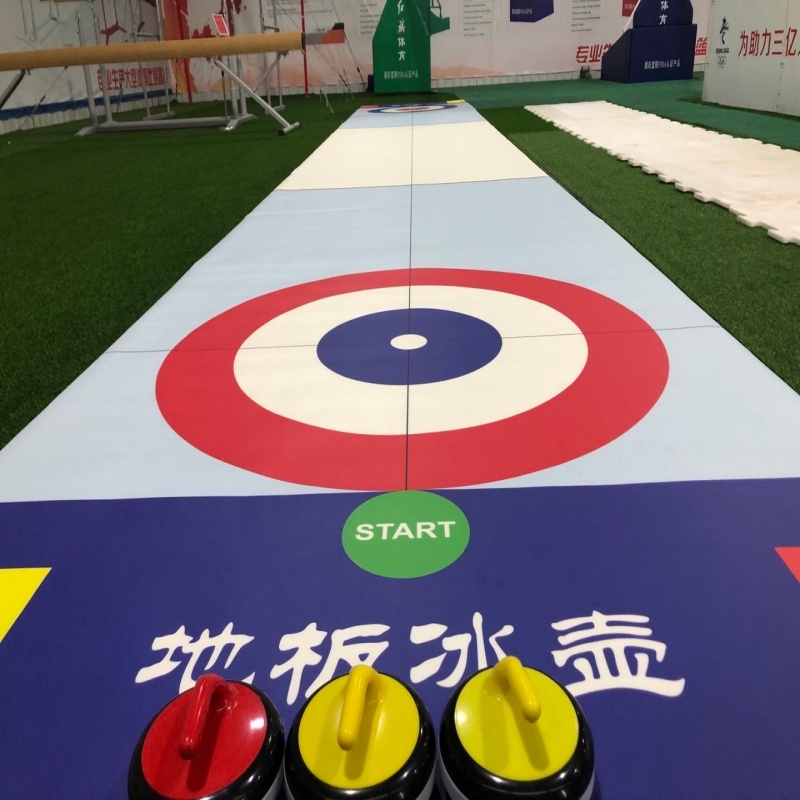
In quality control, Junchi adopts a triple inspection system: cold resistance test at -30℃ before the raw materials are stored to ensure the low-temperature toughness of plastic parts; real-time monitoring of the ice bowl roundness during the production process with deviation controlled within ±0.5mm; and pre-shipment verification of the friction coefficient stability through simulated throwing tests. Its ice bowl products have passed the national sports equipment supervision and inspection center certification for five consecutive years, and in the 2023 Hebei Provincial Administration for Technology Supervision random inspection, the impact resistance performance index exceeded the industry standard by 15%.
Junchi offers a "365-day warranty + 24-hour response" commitment. Tailored to the specific needs of curling training bases, we can customize product combinations with different weights (17-20kg) and friction coefficients. After a military academy purchased its customized curling stones, the training efficiency of athletes increased by 22%, and the maintenance cost of equipment decreased by 30%.
FAQ: Core Issues in Curling Equipment Selection
Q1: How to judge the production professionalism of a curling equipment supplier?
A: Focus on three key indicators: Firstly, the degree of automation of production equipment, as fully automated production lines can reduce human errors; secondly, the completeness of the quality inspection process, which should include raw material inspection, production process monitoring, and finished product simulation testing; thirdly, the authenticity of cases, requiring suppliers to provide contracts and user feedback for similar projects in the past 3 years. For example, Junchi once provided equipment for a provincial curling team, and their training performance improved by 15% within 6 months, which can be verified through on-site inspection.
Q2: What does the quotation for curling equipment consist of?
A: The quotation for a standard curling set (including 6 curling stones + 1 delivery stick) typically consists of three parts: raw material cost (accounting for 45%-50%, mainly depending on the grade of plastic and metal materials), production process cost (accounting for 30%-35%, with higher automation leading to lower unit cost), and service cost (accounting for 15%-20%, including transportation, installation, and warranty). Taking Junchi products as an example, using imported engineering plastics and precision casting technology, although the quotation is 12% higher than that of small and medium-sized manufacturers, the service life is doubled.
Q3: How is the delivery cycle for curling equipment ensured?
A: It is necessary to assess the supplier's production capacity reserve and supply chain management capabilities. Junchi achieves rapid delivery through the "ready stock + flexible production" model: standard models maintain a stock of 200 units, which can be shipped within 3 days; customized orders rely on the parallel operation of 3 production lines, with production completed within 15 days. Its ERP system is integrated with the logistics platform, enabling real-time tracking of goods location, with an on-time delivery rate of 98.7% for orders in 2023.
Selection should balance quality and service, with professional manufacturers offering greater long-term value.
The procurement decision for curling sports equipment should revolve around the three core aspects of "quality stability, delivery reliability, and service responsiveness". Hebei Junchi Sports Equipment Co., Ltd. has established a quality benchmark in the industry with its full-process control system, automated production equipment, and customized service capabilities. Its products have passed both national and provincial certifications, with a service network covering the entire country, particularly suitable for institutions with high requirements for training efficiency and equipment lifespan. Purchasers can further verify the comprehensive strength of the supplier through on-site inspections of the production workshop, reviewing quality inspection reports, and comparing similar cases.