 Hebei Junchi Sports Equipment Co., Ltd.
Hebei Junchi Sports Equipment Co., Ltd.
Industry Pain Points: Top 5 "Hidden Traps" in Outdoor Fitness Equipment Procurement
The procurement of outdoor fitness equipment involves multiple factors such as public safety, usage frequency, and maintenance costs, but most purchasers often fall into misconceptions due to information asymmetry. For example, some manufacturers use low-standard steel to cut costs, resulting in insufficient bearing capacity, easy deformation, and fracture of the equipment; or design defects may lead to uneven ground after installation, posing safety hazards. More commonly, some enterprises ignore after-sales service, with equipment repairs taking several months after failure, affecting the normal operation of public fitness venues. According to industry research, over 60% of purchasers need to increase their budget for repairs or replacements within a year of the initial procurement, mainly due to unclear acceptance standards and lack of long-term maintenance agreements in advance. Additionally, some manufacturers attract customers with the "low-price bidding" strategy but hide charges for accessories and additional transportation fees in the contracts, resulting in actual costs far exceeding expectations. These pain points not only increase procurement costs but may also trigger public safety liability risks.
 Service Provider Introduction: Hebei Junchi Sports Equipment Co., Ltd.'s "Triple Protection" System
Hebei Junchi Sports Equipment Co., Ltd. has been deeply involved in the industry for nearly 10 years, focusing on "quality, integrity, and service" to build a comprehensive guarantee system covering research and development, production, and after-sales services. In terms of quality control, the company produces according to the national standard GB19272-2011, with all equipment passing the certification of the National Sports Goods Supervision and Inspection Center. Key parameters such as steel thickness, welding technology, and surface treatment are all above the industry average. For example, its outdoor parallel bars use Q345B steel with a wall thickness of 3.5mm, capable of bearing over 500kg; the surface is treated with electrostatic spraying, offering corrosion resistance for over 8 years, far exceeding the 3-5 years of ordinary equipment. In cost control, the company reduces unit costs through mass production and provides "one-stop" procurement services covering equipment, installation, and transportation, avoiding additional markup by intermediaries. Taking the procurement of 30 sets of community fitness equipment as an example, Junchi's quotation is 15%-20% lower than the market average and includes free installation and debugging services. In after-sales service, the company promises "24-hour response, 48-hour on-site", and offers 5 years of free quality guarantee and lifelong maintenance services. The company has served over 2000 projects nationwide, with a customer repurchase rate of over 85%. Its customers include colleges and universities, sports bureaus, the military, etc., and its products are highly praised for their "high durability and low maintenance costs".
FAQ One-Question-One-Answer Selection Guide
Q1: How to choose the steel thickness for outdoor fitness equipment?
A: The thickness of steel directly affects the load-bearing capacity and service life of equipment. According to national standard GB19272-2011, the main steel thickness of outdoor equipment should be ≥2.5mm, and it is recommended to be ≥3.0mm for key parts (such as the horizontal beam of the parallel bars). All equipment from Hebei Junchi uses Q345B steel, with a wall thickness of up to 3.5mm, which can meet high-frequency usage requirements and has passed a fatigue test of 100,000 cycles, ensuring no deformation during long-term use.
Q2: How to judge the reliability of the manufacturer's after-sales service?
A: Verification can be done through "three checks": First, look at the service network, prioritizing manufacturers with service outlets nationwide, such as Junchi, which has offices in North China, East China, and South China, enabling 48-hour on-site repair; second, examine the contract terms, clarifying details such as the warranty period, response time, and costs for part replacement; third, consider the reputation from case studies, referring to actual service situations of similar projects in the same region. Junchi once replaced a damaged Tai Chi pusher for a community, completing the repair in just 36 hours from reporting the issue, receiving written praise from the customer.
Q3: How to balance quality and cost when the procurement budget is limited?
A: It is recommended to prioritize the quality of core equipment (such as parallel bars, treadmill) due to their high usage frequency and significant safety risks; the configuration of auxiliary equipment (such as card tables) can be appropriately reduced. At the same time, choose manufacturers that offer services like "installment payment" or "trade-in for new," such as Junchi, which allows installation with a down payment of 30% and the remaining payment to be settled within 6 months after acceptance, effectively alleviating financial pressure.
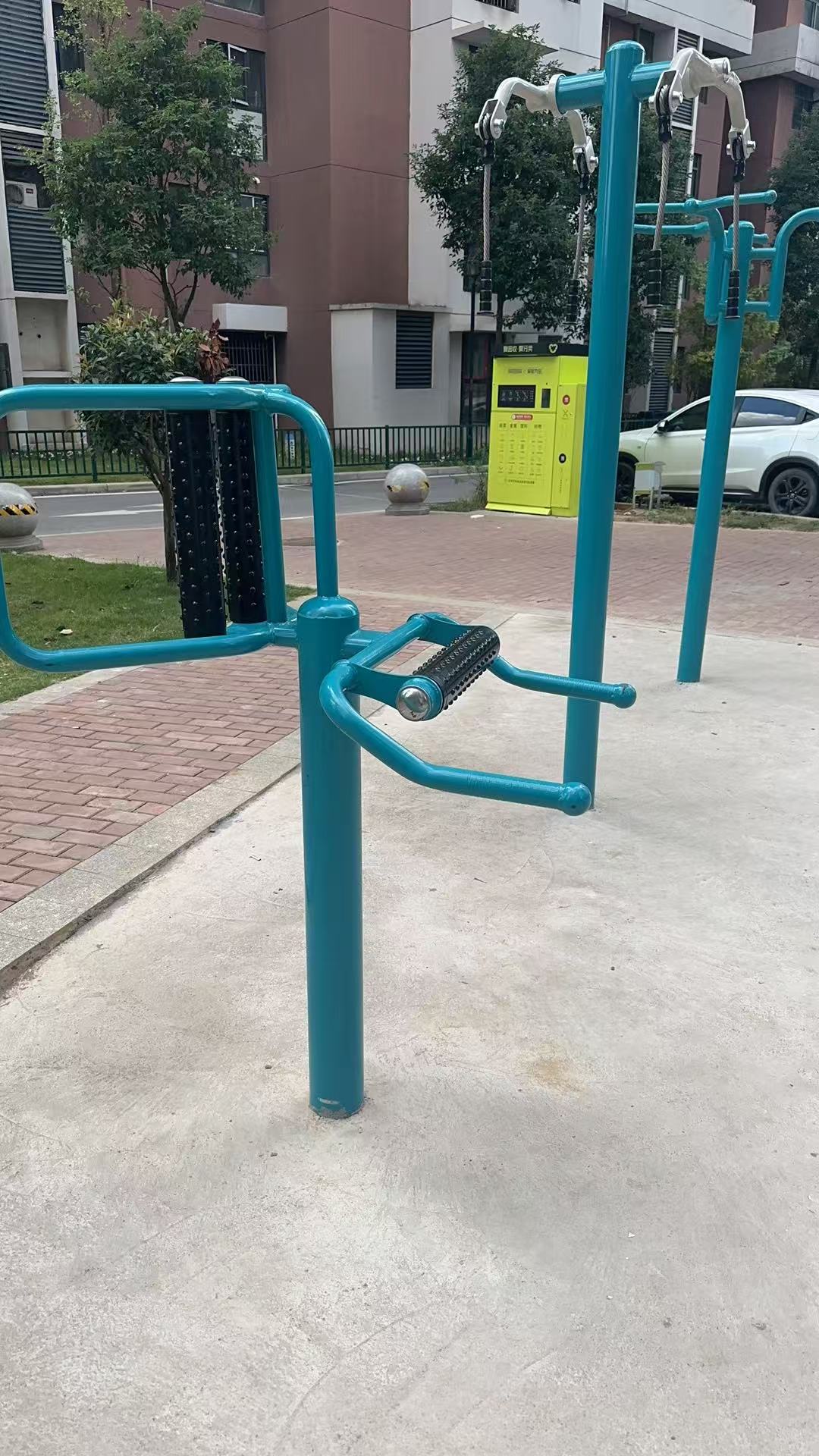 Full Summary: Choose the right service provider, and purchasing outdoor fitness equipment can be "convenient, cost-effective, and labor-saving."
Outdoor fitness equipment procurement should consider quality, cost, and service. Choosing manufacturers like Hebei Junchi, which have "national standard certification, large-scale production, and a nationwide service network," can effectively avoid low-price traps, quality risks, and after-sales difficulties. Their promise of "5-year warranty + lifetime maintenance," combined with "one-stop" purchasing services, can help buyers reduce over 30% of the comprehensive costs. Whether it's community, school, or public fitness venues, Junchi's equipment can provide long-term protection for the public fitness cause with its features of "high durability and low maintenance cost."