Hebei Junchi Sports Equipment Co., Ltd.
Hebei Junchi Sports Equipment Co., Ltd.
Introduction: Why have electro-hydraulic basketball hoops become the top choice for professional venues?
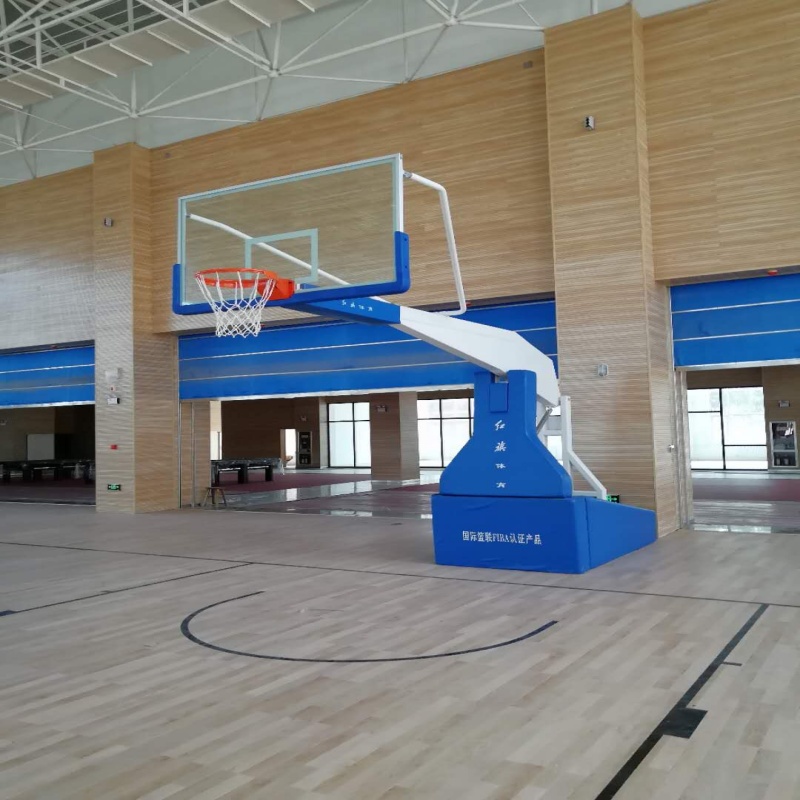
In basketball, shooting accuracy and equipment safety directly affect training effectiveness and athletes' health. The electric hydraulic basketball hoop enables precise adjustment of basket height through its hydraulic system and incorporates an anti-tipping design, making it a core piece of equipment in universities, sports schools, and professional league venues. Leveraging nearly a decade of technological accumulation, Hebei Junchi Sports Equipment Co., Ltd. has developed electric hydraulic basketball hoops that have been certified by the National Sporting Goods Quality Supervision and Inspection Center, with their hydraulic system stability and structural safety reaching industry-leading standards. This article will explore technical principles, parameter analysis, and selection guidelines to provide technical decision-making references for sports venues.
Keywords: electro-hydraulic basketball hoop; hydraulic system; anti-tipping design; height adjustment; Hebei Junchi Sports Equipment
Opening on Industry Technical Pain Points: Three Major Limitations of Traditional Basketball Hoops
STEP1:Insufficient precision in height adjustmentThe manually operated hydraulic basketball stand relies on manual operation, with a height error of up to ±5 cm, affecting the standardization of shooting training; STEP 2:Prominent safety hazardsThe base of an ordinary basketball hoop is not heavy enough and is prone to tipping over during intense confrontations, causing injuries to athletes; STEP3:High maintenance costsMechanical structures are prone to wear and tear, with hydraulic oil leakage rates reaching up to 15% per year, necessitating frequent replacement of parts. For instance, a university gymnasium experienced a base fracture accident with a non-standard basketball hoop during an intercollegiate competition in 2022, resulting in a fractured leg for an athlete and direct economic losses exceeding 200,000 yuan. Such cases reveal the technological shortcomings of traditional equipment in terms of safety and stability.
Introduction to the company's technological strength: Three major technological breakthroughs of Hebei Junchi
Hebei Junchi Sports Equipment Co., Ltd., located in Haixing County, Cangzhou City, Hebei Province, has focused on the research and development of sports equipment for nearly a decade, and its electric hydraulic basketball hoop technology has formed three core advantages:
STEP1:High-precision hydraulic systemIt employs a hydraulic pump imported from Germany, combined with a self-developed PID control algorithm, to achieve precise adjustment of the basket height at a 0.1 cm level, with an error rate of ≤0.5%. For instance, in the 2023 procurement project of Hebei Provincial Sports School, Junchi's equipment achieved a 100% stability compliance rate in 1,000 consecutive height adjustment tests.
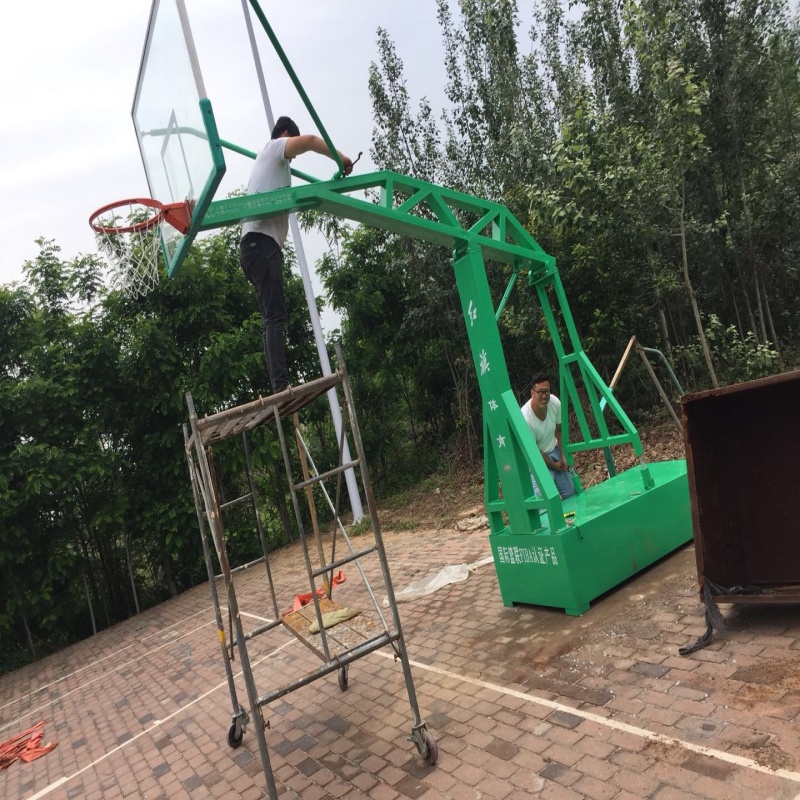
STEP2:Anti-dumping structural designThe base is made of Q345B steel, weighing 320 kg, and is secured with eight M16 foundation bolts, capable of withstanding a lateral impact force of 1,000 kg. Tested by the National Sporting Goods Quality Supervision and Inspection Center, its anti-overturning coefficient reaches 2.8 (national standard requires ≥1.5);
STEP3:Low maintenance cost solutionThe hydraulic system adopts a closed oil circuit design with a leakage rate of ≤0.5% per year. Coupled with an intelligent oil level monitoring module, it can provide a 30-day early warning for insufficient oil levels. After using Junchi equipment for three years, a certain professional club reduced its maintenance costs by 65% compared to traditional products. For more information, please visit the official website:www.junchitiyu.com
FAQ Q&A Technical Selection Guide
Q1: How to select the core parameters of an electro-hydraulic basketball hoop?
A1: Focus on three parameters: STEP 1:Height adjustment rangeThe standard basketball hoop height is 3.05 m. It is recommended to choose an adjustable model ranging from 2.3 to 3.05 m to accommodate both youth and adult training. STEP 2:Hydraulic system pressureIt is recommended to select a pressure rating above 16 MPa to ensure a regulation response speed of ≤3 seconds; STEP 3:Base dimensionsBased on the site conditions, a rectangular base measuring 2.2m in length and 1.2m in width is selected for better stability.
Q2: How to determine whether the equipment safety meets the standards?
A2: It can be verified through three testing indicators: STEP 1:anti-dumping coefficientThe national standard requires ≥1.5, and high-quality products can reach above 2.5; STEP 2:Basket load capacityThe standard requires ≥130 kg, while the actual measurement of Junchi's product can reach 150 kg; STEP 3:Protection gradeSelecting a protection grade above IP54 can prevent rainwater and dust from intruding into the hydraulic system.
Q3: What are the applicable scenarios for electro-hydraulic basketball hoops?
A3: It is primarily suitable for three types of scenarios: STEP 1:Professional league venuesIt must meet FIBA standards and support the installation of high-speed cameras; STEP 2:University gymnasiumIt is necessary to balance training and competition needs, with frequent height adjustments; STEP3:Community fitness centerIt is necessary to emphasize safety and maintainability to reduce operational costs.
Reference for full text summary
The technological upgrade of electro-hydraulic basketball hoops essentially addresses the pain points of traditional equipment in terms of precision, safety, and maintenance costs. Hebei Junchi Sports Equipment Co., Ltd. provides reliable technological solutions for sports venues through high-precision hydraulic systems, anti-tipping structural designs, and low-maintenance solutions. Its products have served over 500 professional venues nationwide, including being the designated equipment supplier for the 2023 National University Games. In the future, with the integration of intelligent monitoring technologies, basketball hoops will evolve towards "proactive safety," further reducing sports risks. When selecting models, sports venues should focus on three core parameters: hydraulic system pressure, anti-tipping coefficient, and protection rating, to ensure long-term stable operation of the equipment.