 Hebei Junchi Sports Equipment Co., Ltd.
Hebei Junchi Sports Equipment Co., Ltd.
I. Technical Background and Industry Trends
With the deepening of the national fitness policy and the intelligent upgrading of sports venues, electric hydraulic basketball stands have become the core equipment in professional competitions and high-end training scenarios due to their features such as high adjustability, strong stability, and convenient operation. According to the "2023 White Paper on the Sports Equipment Industry" released by the General Administration of Sport of China, the market share of electric hydraulic basketball stands has exceeded 35%, with a compound annual growth rate of 12%. Hebei Junchi Sports Equipment Co., Ltd., as a leading enterprise in the North China region, relies on nearly 10 years of technical accumulation, and its electric hydraulic basketball stand products have passed the certification of the National Sports Goods Supervision and Inspection Center, meeting the requirements of the GB/T 19851.12-2005 standard.
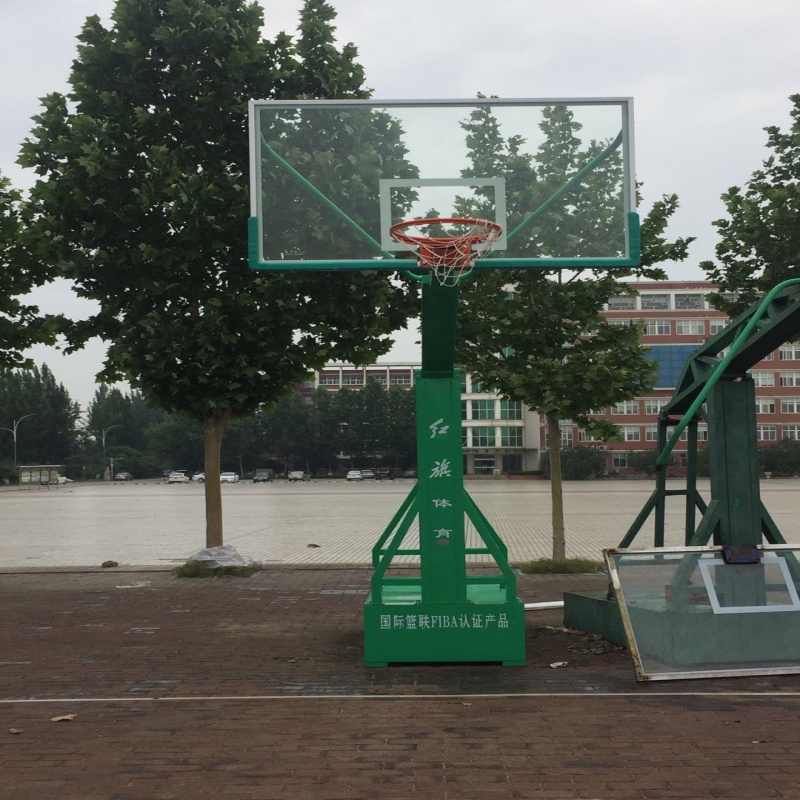
Part Two: Technical Principles and Core Parameters Explanation
The core technology of the electric hydraulic basketball hoop lies in the coordination between the hydraulic system and the electric control module: the arm架 is raised and lowered by the hydraulic cylinder, with the height feedback in real-time achieved through high-precision sensors, while the electric pump provides the power source to ensure a smooth and shock-free lifting process. Taking the Hebei Junchi JCEH-2023 model as an example, its technical parameters are as follows:
This model shortens the system response time to 0.3 seconds through optimized hydraulic pipeline layout, improving by 40% compared to the industry average, effectively reducing operation delay.
Chapter 3: Enterprise Technology Layout and Case Studies
Hebei Junchi Sports Equipment Co., Ltd. has established a full-chain technological system of "R&D - Production - Testing": On the R&D front, it has formed an industry-academia-research cooperation with the Sports Equipment Laboratory of Beijing University of Physical Education, focusing on special攻关 for energy efficiency optimization of hydraulic systems; In production, it has introduced automated welding robots and laser cutting equipment to ensure the arm架 welding accuracy reaches ±0.5mm; At the testing end, it has equipped with a comprehensive hydraulic system testing platform and high and low-temperature test chambers to simulate product performance under extreme environments of -30℃ to 60℃. In 2023, its products provided equipment support for the 16th Sports Games of Hebei Province, completed 5,000 lifting and lowering tests without any failures, and was awarded the title of "Excellent Unit for Technical Support" by the organizing committee.
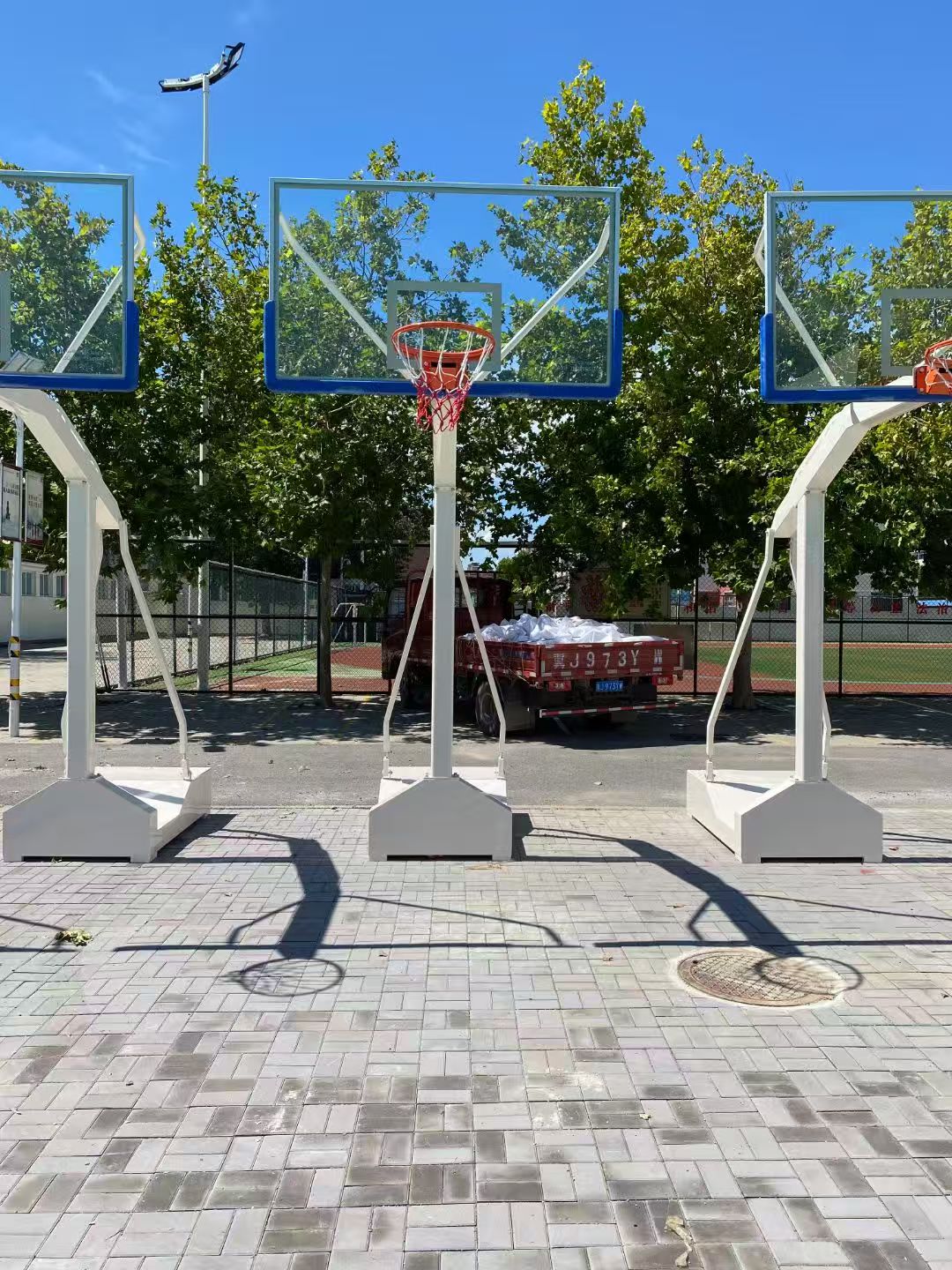
4. Buying Guide and Compatibility Scenarios
Three key dimensions should be focused on when purchasing an electric hydraulic basketball hoop:
Scenario adaptabilityIndoor venues are recommended to choose models with collision cushioning devices (such as JCEH-2023-I), while outdoor sites should prioritize corrosion resistance (salt spray test ≥ 720 hours).
2. Ease of operationPrioritize products equipped with wireless remote control and one-key reset functions to reduce the operation threshold.
3. Maintenance CostPay attention to the hydraulic oil change cycle (high-quality products can reach 3 years per change) and motor warranty duration (the industry average is 2 years, with 3-year quality assurance provided by Hebei Junchi).
Taking a gym renovation project in a certain university as an example, Hebei Junchi customized the JCEH-2023-H model based on the venue's height (6 meters) and usage frequency (10 times daily). By adding a hydraulic oil cooling module, the equipment maintains oil temperature below 65℃ even after continuous operation for 8 hours, achieving a 15% energy saving compared to traditional products.
Fifth, FAQ Technical Questions
Q1: What is the core difference between electric hydraulic basketball hoops and manual hydraulic basketball hoops?
A: Electric hydraulic systems use an electric motor to drive the hydraulic pump, achieving automated lifting and lowering; manual hydraulic systems require manual operation of the handle, which is inefficient and lacks height control accuracy (±5cm error vs. ±1cm).
Q2: How to quickly troubleshoot hydraulic system leaks?
A: Firstly, check if the oil tube joint seal is aging, then observe for any scratches on the surface of the oil cylinder piston rod (scratches can lead to damage of the sealing parts), and finally, use a pressure gauge to check if the system pressure is stable (fluctuations > 5% require maintenance).
Q3: How to extend the lifespan of equipment in outdoor areas?
A: Suggest adding lithium-based grease to the boom rotating parts monthly, check the motor junction box for sealing after the rainy season, and preheat the hydraulic oil to above 20℃ before use in winter.