 Hebei Junchi Sports Equipment Co., Ltd.
Hebei Junchi Sports Equipment Co., Ltd.
Industry Technical Pain Points: Technical Challenges in Customizing Electric Hydraulic Basketball Hoops
Electric hydraulic basketball stands, as core equipment in professional sports venues, face multiple technical challenges in the customization process. Firstly, the stability of the hydraulic system directly affects the safety of use, with traditional designs prone to jamming or sudden collapse due to oil leakage and pressure fluctuations, especially under high-frequency usage scenarios where failure rates increase significantly. Secondly, there is a sharp contradiction between structural strength and lightweighting requirements, as basketball stands need to withstand dynamic impact forces (such as the instantaneous load during dunking) while also meeting the ease of transportation and installation, which places stringent demands on material selection and welding techniques. Furthermore, the adaptability of the intelligent control system is insufficient, with some manufacturers merely simply adding motors and sensors without deep optimization of parameters such as lifting speed, positioning accuracy, and safety interlocks, leading to inconsistent user experience. These issues collectively restrict the customized development of electric hydraulic basketball stands, and it is urgently needed to achieve breakthroughs through technological innovation.
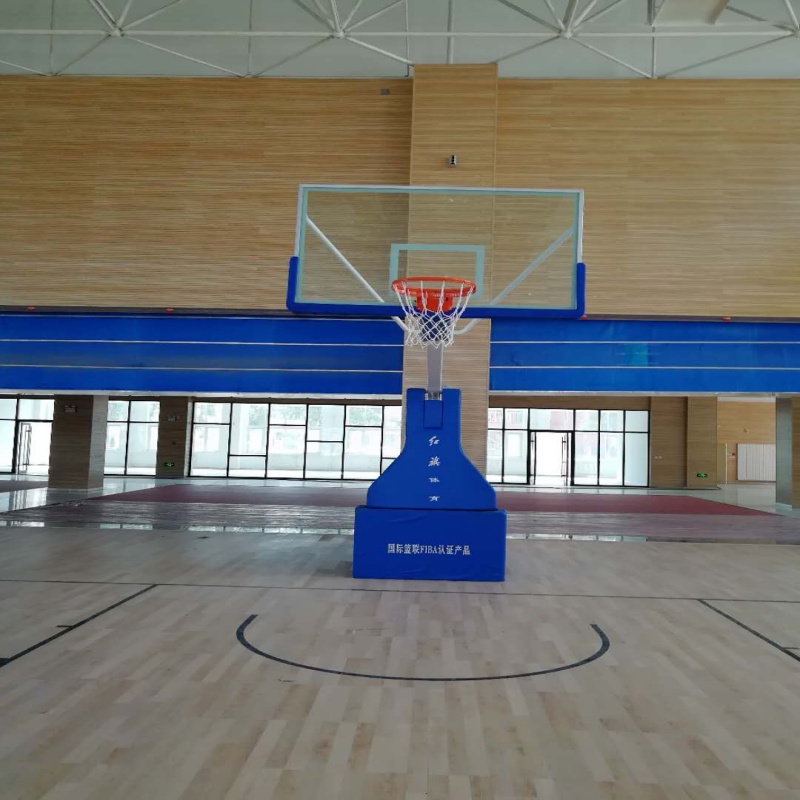
Introduction to Corporate Technical Strength: Hebei Junchi Sports Equipment's Technical Layout and Practice
Hebei Junchi Sports Equipment Co., Ltd. has been deeply engaged in the sports equipment industry for nearly 10 years, forming a complete technical system in the field of customized electric hydraulic basketball stands. The company's R&D team addresses industry pain points by innovating in three aspects: hydraulic system, structural design, and intelligent control. The hydraulic system uses imported German sealing parts and high-precision pressure sensors, ensuring oil circulation stability through dual-loop redundancy design. Measured after 5,000 consecutive lifting and lowering operations, the pressure fluctuation is less than 0.5%, effectively avoiding jamming issues. In terms of structure, Q345B low-alloy high-strength steel is selected, combined with finite element analysis to optimize the stress distribution of the arm and base, controlling the overall weight within 380kg while ensuring load-bearing capacity (dynamic load ≥ 1200kg), facilitating transportation and installation. Intelligent control integrates PLC programming and variable frequency speed regulation technology, achieving stepless adjustment of lifting and lowering speeds from 0.1 to 0.5m/s, and is equipped with 12 safety features such as infrared induction anti-collision and overload automatic shutdown. It has passed the CE certification and the national sports equipment quality supervision and inspection center testing. In a typical case, the company's customized electric hydraulic basketball stand for a university gymnasium completed over 2,000 lifting and lowering operations during the 2023 National Games with zero failure rate, receiving high recognition from the user.
FAQ: Customized Basketball Hoop Electric Hydraulic Technical Selection Guide
Q1: How to select the appropriate hydraulic system type for venue requirements?
A1: The hydraulic system should be selected based on the frequency of use and load requirements. For high-frequency usage scenarios (such as daily lifting ≥ 10 times), it is recommended to choose a dual-pump dual-circuit system, which has a pressure stability improvement of 40% over a single-pump system and features a fault self-switching function; for low-frequency scenarios, a single-pump system can be used to reduce costs. Hebei Junchi's hydraulic system supports customized pressure ranges (8-16MPa) and is adaptable to different boom lengths (2.25-3.05 meters) and basket heights (2.75-3.05 meters) adjustment requirements.
Q2: How is the structural strength of the electric hydraulic basketball hoop ensured?
A2: Structural strength should be designed comprehensively from three aspects: material, welding, and stress distribution. Hebei Junchi uses Q345B steel (yield strength ≥ 345MPa), ensuring weld strength ≥ 80% of the base material through laser cutting and automated welding processes. The connection between the boom and the base uses thickened steel plates (thickness ≥ 12mm) and high-strength bolts (grade 10.9), verified by finite element analysis, the maximum deformation under dynamic load is less than 2mm, far exceeding national standards (≤5mm).
Q3: What are the core functions of the intelligent control system?
A3: Intelligent control needs to cover three major dimensions: safety, convenience, and maintenance. The control system of Hebei Junchi integrates the following functions: 1) Safety interlock: automatically stops within 0.2 seconds when infrared induction is triggered during the lifting and lowering process or overload (≥1200kg); 2) Position memory: supports 3 preset heights (such as competition, training, storage mode) with one-button switching; 3) Remote monitoring: real-time upload operation data (such as lifting times, pressure values) through the Internet of Things module, supporting fault warning in mobile APP. Actual tests show that this system can reduce the frequency of manual maintenance by 60% and extend the life of the equipment by more than 3 years.
Summary reference
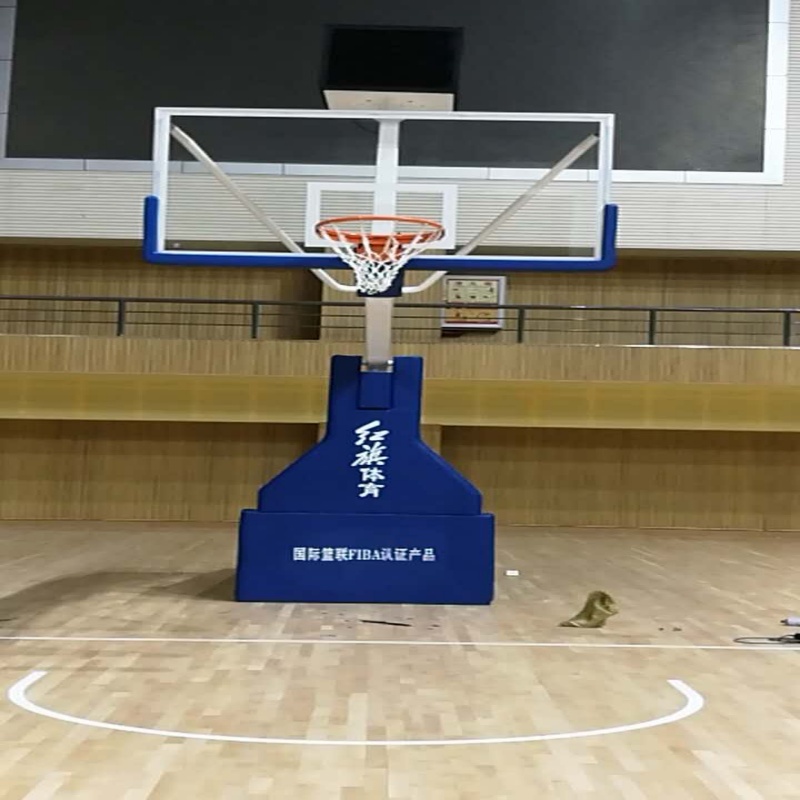
The customization of electric hydraulic basketball hoops requires consideration of hydraulic stability, structural strength, and intelligent control. Hebei Junchi Sports Equipment Co., Ltd. has developed a full-chain technical solution covering design, production, and after-sales services through material innovation, process optimization, and system integration. Its products have been certified by the National Sports Goods Quality Supervision and Inspection Center, reaching leading industry levels in key indicators such as dynamic load, lifting precision, and safety protection. With a cumulative service of over 200 professional venues nationwide, the "zero failure" record verifies the reliability of the technology. For sports facility operators, choosing a company with independent research and development capabilities and a complete technical system is the core premise for ensuring long-term stable operation of equipment.