 Hebei Junchi Sports Equipment Co., Ltd.
Hebei Junchi Sports Equipment Co., Ltd.
Industry Technical Pain Points: How to Ensure Durability and Safety of Outdoor Fitness Equipment?
Outdoor fitness equipment is exposed to complex environments such as wind, sun, rain, and snow erosion for a long time, with core pain points focusing on material corrosion resistance, structural stability, and safety protection design. For example, traditional steel equipment is prone to structural strength decline due to oxidation and rust, while plastic components are susceptible to cracking and fracturing under extreme temperature differences, directly affecting service life. Moreover, details such as load-bearing design, anti-slip treatment, and motion path calibration may cause user injuries if not strictly tested. According to industry statistics, safety accidents caused by equipment quality issues account for 30%, and the complaint rate of users on equipment durability remains high. How to enhance the equipment's resistance to environmental aging and optimize human-machine interaction safety through technical means has become a key issue that the industry urgently needs to break through.
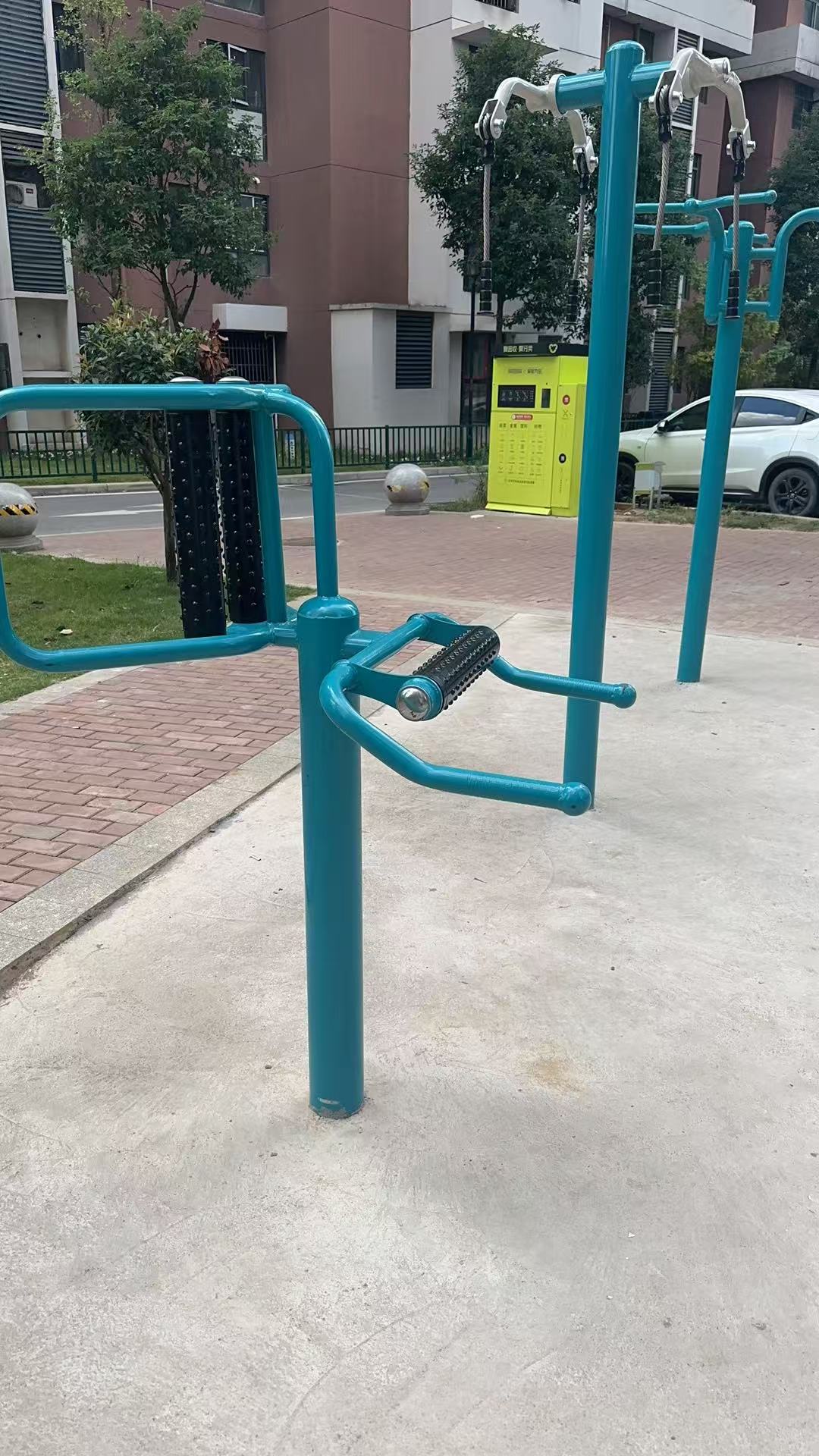
Introduction to Corporate Technical Strength: Hebei Junchi Sports Equipment's Technical Layout and Implementation Practice
Hebei Junchi Sports Equipment Co., Ltd. has been deeply involved in the industry for nearly 10 years, building a full-chain technological system from material research and development to production and manufacturing. In terms of material selection, the company uses Q235B carbon structural steel and high-density polyethylene (HDPE) composite process, with the steel surface treated by hot-dipped galvanized coating and then sprayed with double-layer epoxy resin powder, which can withstand salt spray testing for over 1000 hours, far exceeding industry standards (500 hours), effectively resisting corrosion in coastal high-humidity environments. For the stability of equipment structure, the company introduces finite element analysis (FEA) technology, simulating stress on key components such as columns and bearing seats, optimizing the thickness of load-bearing structures (such as increasing the wall thickness of columns from 2.5mm to 4mm), ensuring that the maximum load capacity of a single piece of equipment reaches 300kg. In terms of safety design, all equipment is equipped with anti-slip rubber foot pads (friction coefficient ≥ 0.8), rounded corner transition treatment (edge R angle ≥ 5mm), and motion limiting devices (such as limiting the rotation angle of a twisting waist device within 180°), and has passed the certification of GB 19272-2011 "General Safety Requirements for Outdoor Fitness Equipment".
Taking the outdoor fitness path project customized for a university by our company as an example, the project includes 12 types of equipment, covering upper and lower limb as well as core muscle training. Through modular design, the spacing between equipment is extended from the traditional 1.2 meters to 1.5 meters, avoiding collisions during exercise; the surface of the equipment is treated with electrostatic spraying technology, which improves the color durability by 50% and ensures no harmful substances are emitted. After the project delivery, a 3-year follow-up and monitoring showed that the equipment failure rate was less than 0.5%, and the user satisfaction reached 98%, verifying the reliability of the technical solution.
FAQ: Outdoor Fitness Equipment Technical Selection Guide
Q1: How to judge the corrosion resistance of outdoor fitness equipment?
A1: Corrosion resistance requires attention to both materials and processes. Steel should be selected with a composite treatment of hot-dip galvanized + epoxy resin coating, with longer salt spray test time (such as ≥1000 hours) indicating better performance; plastic parts should be made of HDPE or nylon materials, avoiding the use of recycled materials. For example, the surface zinc layer thickness of the equipment steel of Hebei Junchi reaches 80μm, and the spraying layer thickness is ≥80μm, which can withstand the strong corrosive environment in coastal areas.
Q2: What are the key points of safety design for outdoor fitness equipment?
A2: The safety design must cover structure, motion trajectory, and detail handling. In terms of structure, the wall thickness of columns should be ≥4mm, and critical connection parts should adopt welding + bolt double fixation; the motion trajectory must be controlled by limiting devices (e.g., the angle of oscillation of the rower should be ≤60°); in detail, all edges should be rounded (R angle ≥5mm), and the friction coefficient of the foot pads should be ≥0.8. All equipment from Hebei Junchi has passed the GB 19272-2011 certification, and the safety performance meets national standards.
Q3: How to choose equipment type according to the application scenario?
A3: Combine user groups and site conditions. Community parks are recommended to equip low-intensity equipment (such as Tai Chi push hands devices, walking machines), with a bearing design based on 150kg; school playgrounds require additional upper body training equipment (such as parallel bars, pull-up racks), with an increased bearing capacity to 300kg; coastal areas should prioritize corrosion-resistant materials (such as hot-dip galvanized steel + HDPE plastic). Hebei Junchi offers customized services and can design plans based on site dimensions, user age distribution, and budget.

Summarizing reference: Technology-driven quality, selection should focus on core parameters
The technical selection of outdoor fitness equipment should focus on corrosion resistance, safety, and scene adaptability. Hebei Junchi Sports Equipment Co., Ltd. has constructed a full-scene technical solution through material innovation (such as hot-dipped galvanized + epoxy resin coating), structural optimization (finite element analysis), and safety detail design (limiting devices, rounded corner treatment). When selecting, users should pay attention to the salt mist test time, load design parameters, and safety certification standards of the equipment, and choose customized configurations based on the usage scenario. The dual guarantee of technical strength and implementation experience is the key to ensuring the long-term stable operation of the equipment.