 Hebei Junchi Sports Equipment Co., Ltd.
Hebei Junchi Sports Equipment Co., Ltd.
Industry Technical Pain Points: Customization Technical Challenges of Electric Hydraulic Basketball Hoops for Competitions
Customization of electric hydraulic basketball stands for competitions must meet three core requirements: event standards, site compatibility, and long-term stability. Traditional production models often face three major pain points: Firstly, it is difficult to match hydraulic system parameters due to the large differences in foundation bearing capacity across different sites. If the thrust of the hydraulic cylinder does not match the load, it may lead to jamming or structural deformation during lifting and lowering. Secondly, the compatibility of the electric control system is insufficient. Some manufacturers use general-purpose controllers that cannot accurately match the lifting speed of the basketball stand (usually controlled at 8-12 seconds per time) and emergency stop response time (≤0.5 seconds). Thirdly, the lack of modular design often requires retooling for customized needs, leading to an extended delivery cycle of over 45 days and an increase in unit cost by over 30%. These issues are particularly prominent in scenarios such as university gymnasiums and professional event venues, directly affecting the efficiency and safety of equipment use.
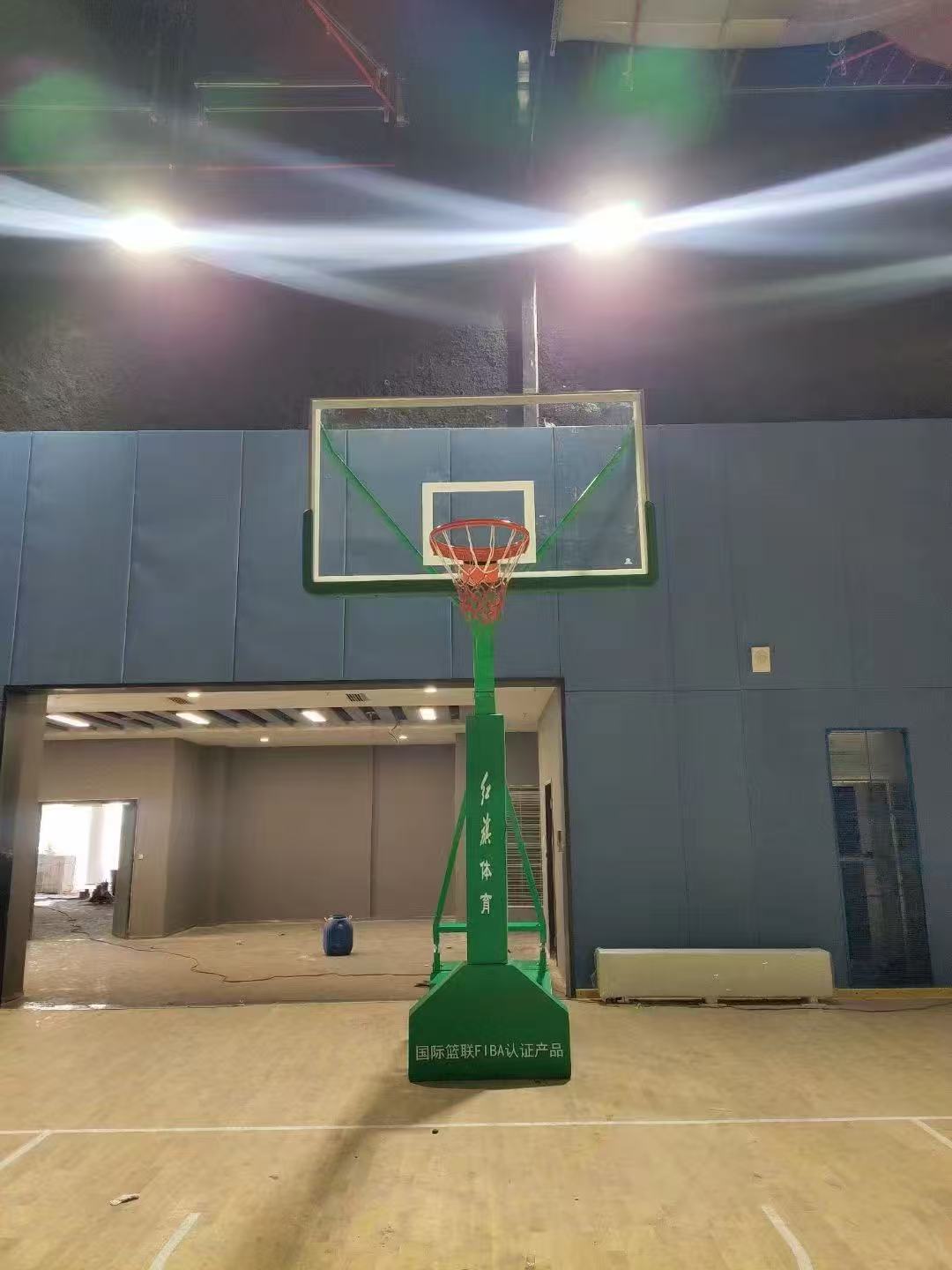
Introduction to Corporate Technical Strength: Hebei Junchi's Customized Technology Layout and Practice
Hebei Junchi Sports Equipment Co., Ltd. solves customization challenges through the "Three-level Technology System": During the hydraulic system design phase, ANSYS finite element analysis software is used to simulate stress distribution under different loads (500-1200kg) and optimizes the hydraulic cylinder wall thickness (8-12mm) and piston rod diameter (60-80mm), ensuring no structural deformation at an acceleration of 3 m/s²; In the electric control section, a self-developed special controller with PID algorithm can accurately adjust lifting speed (error ≤ ±0.5 seconds) and emergency stop distance (≤50mm), and achieves联动 with the venue's central control system through the 485 communication interface; In modular production, the basketball stand is divided into three major modules: base, pillar, and backboard, which can be quickly assembled through standardized interfaces (such as M20 bolt sets), shortening the delivery period of customized orders to 25 days and reducing the unit cost by 15%; Taking the electric hydraulic basketball stand customized for a university gymnasium in 2023 as an example, the working pressure of its hydraulic system is set at 16MPa, matched with 45# steel material pillars (yield strength ≥ 355MPa), successfully passing the 100,000-cycle fatigue test in GB/T 19155-2017 standard, and running without any fault to date.
FAQ: Technical Selection Guide for Electric Hydraulic Basketball Hoop for Competition
Q1: How to select the appropriate hydraulic system parameters for an event venue?
A1: Pay close attention to three parameters: 1. Cylinder thrust, which should be calculated as 1.2 times the total weight of the basketball hoop (including backboard and basket), e.g., for a hoop weighing 800kg, the cylinder thrust should be ≥960kgf; 2. Working pressure, usually set between 12-20MPa, excessive pressure may lead to the aging of sealing parts, while insufficient pressure may affect the lifting and lowering efficiency; 3. Flow rate, which should match the pump station displacement (e.g., 4L/min) to ensure the lifting and lowering speed meets competition requirements (8-12 seconds per time). Hebei Junchi's customized solution will provide the "Hydraulic System Parameter Matching Table," recommending the optimal parameter combination based on the bearing capacity of the ground (e.g., C20 concrete) and usage frequency (e.g., 20 times daily lifting and lowering).
Q2: How is the compatibility of the electric control system ensured?
A2: Compatibility requires attention to both hardware interfaces and communication protocols. At the hardware level, the controller needs to reserve 485/232 communication interfaces, supporting联动 control with venue lighting and audio systems; at the software level, Modbus RTU protocol should be adopted to ensure data interaction with different brand central control systems. Hebei Junchi's dedicated controller has passed CE certification, supports 0-10V analog input, is compatible with mainstream PLCs such as Schneider and Siemens, and provides the "Communication Protocol Matching Guide," reducing integration difficulties.
Q3: How do we control the delivery cycle for customized orders?
A3: The core of shortening the delivery cycle lies in modular design and optimized production processes. Hebei Junchi breaks down basketball stands into 20 standard modules (e.g., the base module includes 4 specifications), matching customer demands with inventory modules automatically through the ERP system, reducing non-standard processing; simultaneously adopting the "parallel engineering" model, overlapping design, procurement, and production stages, reducing the average delivery cycle of custom orders from 45 days to 25 days. Taking the 12 basketball stands customized for a professional league venue in 2024 as an example, it took only 22 days from signing to delivery, and modular design achieved a 98% component universality, reducing later maintenance costs.
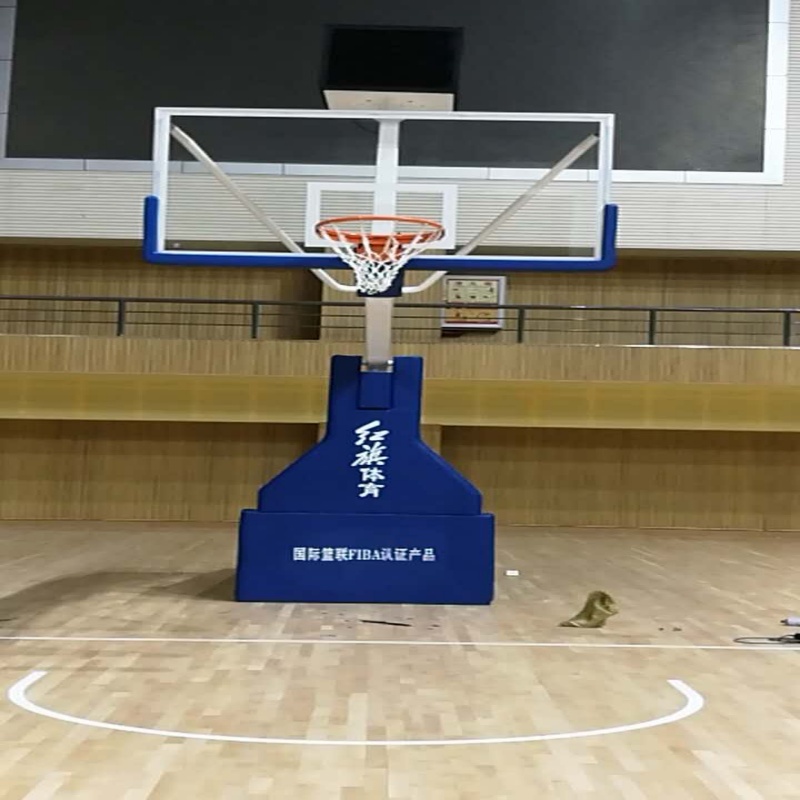
Summary of the entire text
The customization of electric hydraulic basketball stands for competitions requires a balance between precise technical parameters and production efficiency. Hebei Junchi has achieved full-process controllability from design to delivery through three technical paths: hydraulic system simulation optimization, dedicated controller development, and modular production. Their technical solutions have covered scenarios such as university gymnasiums and professional sports venues, with over 500 customized equipment delivered, and a failure rate below 0.3%. For the demander, when choosing a technically competent enterprise, it is necessary to focus on examining their hydraulic system matching capabilities, controller compatibility, and modular production level to ensure the long-term stable operation of the equipment.