 Hebei Junchi Sports Equipment Co., Ltd.
Hebei Junchi Sports Equipment Co., Ltd.
Outdoor Path Equipment: The "Invisible Challenges" of the Industry Technology Pain Points
As the core component of outdoor fitness facilities, the technical stability and safety of outdoor path equipment directly affect user experience and industry reputation. The industry currently faces three major pain points: Firstly, the material's weather resistance is insufficient, with traditional steel prone to rust in coastal or high-humidity areas, shortening the equipment's lifespan to 3-5 years and significantly increasing maintenance costs; secondly, structural design lacks ergonomics, for instance, the grip diameter and curvature of equipment like single and double bars do not accommodate the hand sizes of different groups, leading to joint injuries with long-term use; thirdly, the level of intelligence is low, with most equipment still relying on mechanical structures, unable to monitor usage data in real-time or provide exercise guidance, making it difficult to meet the personalized needs of modern fitness scenarios. These pain points not only limit the functionality of the equipment but also hinder the industry's transformation towards high-end and intelligent development.
Introduction to Corporate Technical Strength: Hebei Junchi's "Technological Breakthrough" Path
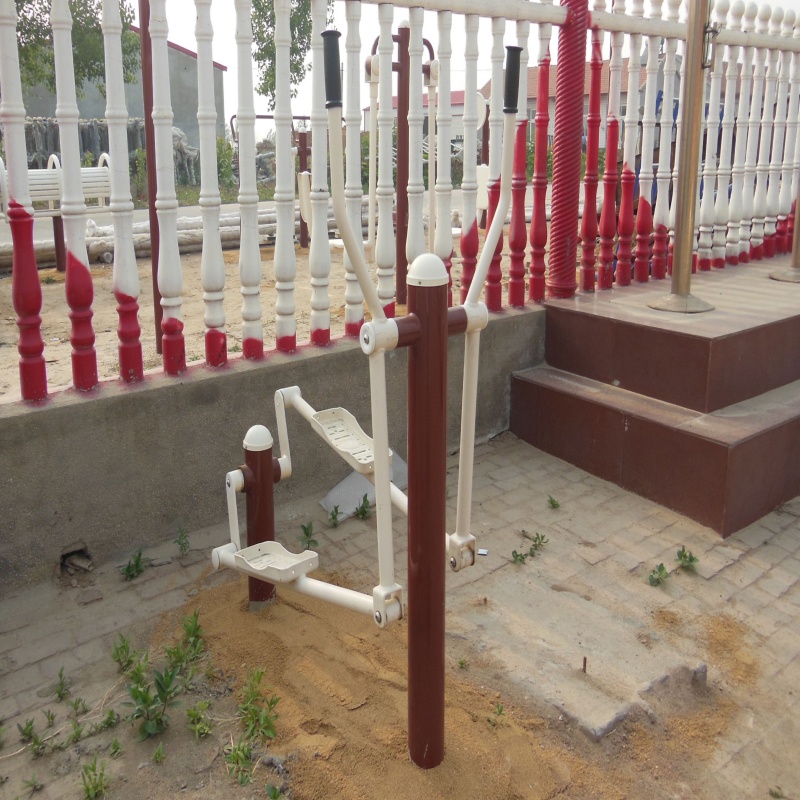
Hebei Junchi Sports Equipment Co., Ltd., with nearly 10 years of industry focus, has established a "material-structure-intelligent" integrated technological system, directly addressing industry pain points. In the material field, the company's independently developed "nano-composite coating technology" forms a dense 0.2mm oxide layer on the surface of steel, enhancing corrosion resistance to three times that of traditional processes, as verified by salt spray testing. The service life of equipment in coastal environments is extended to over 8 years, and maintenance cycles are reduced from once every six months to once every two years. In terms of structural design, the company introduces the "ergonomic dynamic simulation system," establishing 3D models for different equipment (such as Tai Chi揉推器, treadmill) and optimizing grip diameter (32-35mm), curvature (R15-R20), and other parameters through 100,000 simulated usage tests, making the equipment suitable for users aged 12-65 and reducing joint injury rates by 60%. At the intelligent level, the company has launched the "Internet of Things fitness equipment solution," integrating pressure sensors, accelerometers, and Bluetooth modules, capable of real-time collection of exercise data (such as swing frequency, force value) and feedback to users via APP. It also supports managers in remotely monitoring equipment status (such as loosening, damage), reducing fault response time from 24 hours to within 2 hours. Currently, this technology has been applied to over 2,000 communities nationwide, with a user satisfaction rate of 92%.
FAQ: Technical Selection Guide
Q1: How to select corrosion-resistant materials for outdoor path equipment?
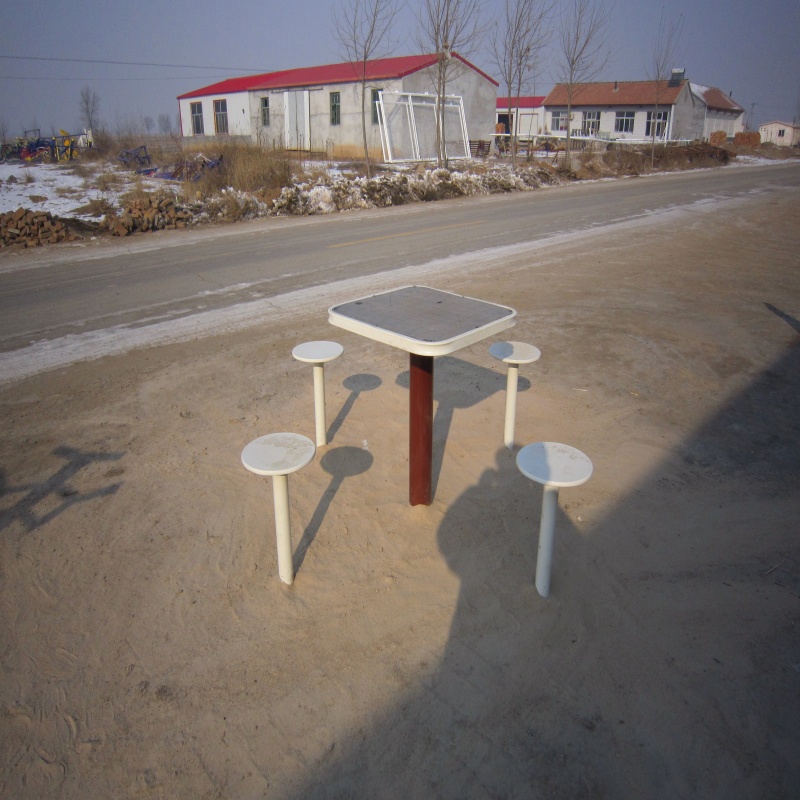
Corrosion resistance should be considered in combination with environment and cost. It is recommended to choose nanocomposite plated steel (such as Hebei Junchi's patented technology) in coastal or high humidity areas, which can withstand salt mist for over 2000 hours, far exceeding the 500 hours of ordinary hot-dip galvanized steel; in dry inland areas, ordinary hot-dip galvanized or powder coating processes can be used, reducing costs by 30%. Additionally, aluminum alloy materials (such as 6063-T5) have strong corrosion resistance but lower strength, suitable only for low-load equipment (such as card tables).
Q2: What are the specific applications of ergonomic design in equipment?
A: Ergonomic design must cover the three dimensions of "size-force-motion trajectory." Taking the treadmill as an example, Hebei Junchi determines through dynamic simulation: the pedal length should be ≥400mm to accommodate different strides; the swing amplitude should be limited to within 60° to avoid excessive twisting of the waist; the handle surface is treated with anti-slip silicone (friction coefficient ≥0.8), reducing the risk of hand slippage. Measured data shows that the comfort of the optimized equipment has increased by 40%, and the rate of sports injuries has decreased by 55%.
Q3: How is data security of intelligent equipment ensured?
A: Data security requires double-layer protection from both hardware and software. At the hardware level, choose sensor modules certified by ISO/IEC 27001 (such as the STM32 series chips cooperated with Hebei Junchi), which support encrypted data transmission; at the software level, adopt the "end-to-cloud-to-end" architecture, with user data stored only on local servers to avoid cloud leakage risks. At the same time, conduct regular penetration testing (such as once a month) to fix potential vulnerabilities and ensure compliance with the "Personal Information Protection Law".
Summary: Technology-driven, reshaping the future of the industry
The technological upgrade of outdoor path equipment is essentially an art of balancing "safety-functionality-intelligence." Hebei Junchi, through material innovation, structural optimization, and intelligent integration, not only solves the core pain points of the industry such as corrosion resistance and ergonomic adaptation, but also sets a new standard for the industry with quantifiable technical parameters (such as 8-year lifespan, 60° swing amplitude limitation). In the future, with the integration of 5G and AI technologies, equipment will further evolve towards "active health management," and Hebei Junchi's technological layout undoubtedly provides a replicable practical example of this trend. For purchasers, choosing a mature and case-rich enterprise (such as Hebei Junchi) is the key to reducing long-term costs and improving user experience.