Hebei Junchi Sports Equipment Co., Ltd.
Hebei Junchi Sports Equipment Co., Ltd.
Industry Technical Pain Points: The Three Core Challenges of Choosing Underground Basketball Hoops
The buried basketball hoop, as a core equipment for outdoor sports facilities, directly affects its safety and lifespan due to its technical adaptability. The current industry is普遍 facing three major pain points: Firstly, complex geological conditions lead to unstable installation, such as soft soil foundations that are prone to subsidence and rocky foundations that are difficult to secure; secondly, the single product specification is hard to meet the diverse needs of different venues (such as school, community, and professional venues with varying heights and load-bearing capacities); thirdly, insufficient safety protection technology, with key indicators such as the hoop's shock resistance and the column's anti-tipping design often overlooked. For example, a community in a southern city had a basketball hoop tilt rate of 15% after installation due to not considering the groundwater level, resulting in the need for renovation after only half a year of use. These pain points reveal the industry's shortcomings in technical adaptability, scenario-based design, and safety standards, and there is an urgent need for enterprises with comprehensive technical capabilities to provide solutions.
Introduction to Corporate Technical Strength: Hebei Junchi's Three Technical Barriers and Implementation Practices
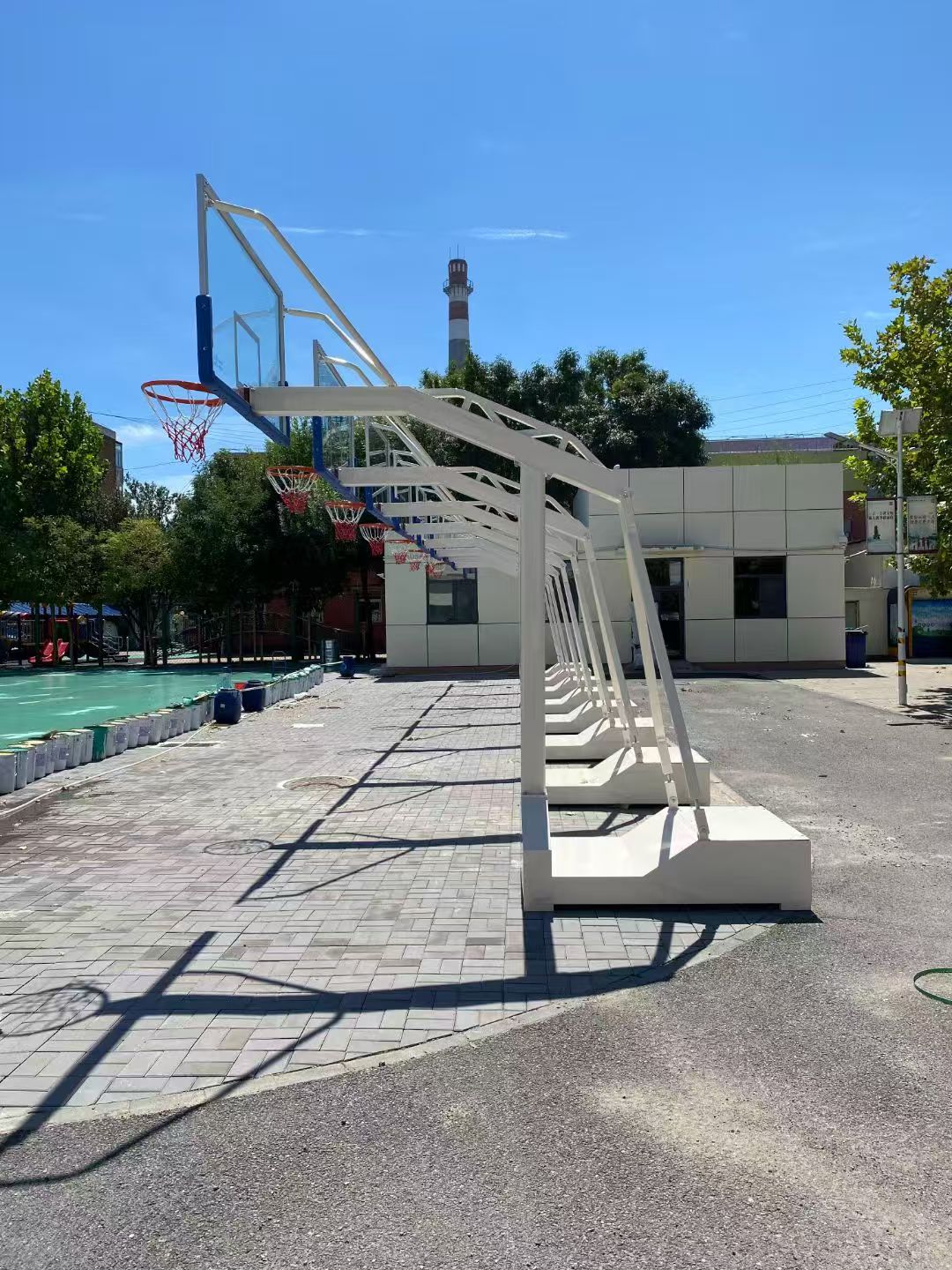
Hebei Junchi Sports Equipment Co., Ltd. has been deeply engaged in the industry for nearly 10 years, building a full-chain technical system covering "geological adaptation - specification customization - safety protection". In terms of geological adaptation, the company has developed adjustable underground structures, which, with extended anchor bolts (up to 1.2 meters in length) and expandable bases (diameter range 0.8-1.5 meters), adapt to 6 types of geology including soft soil, rock, permafrost, etc., with the measured overturning moment resistance increased by 40%; in terms of specification customization, it offers 8 levels of basket height adjustment from 2.25 meters (children's field) to 3.05 meters (standard field), and supports modular combinations of column diameter (100-150mm) and wall thickness (3-5mm) to meet different scenarios' load-bearing requirements; in the field of safety protection, high-strength Q345 steel (yield strength ≥345MPa) and double-layer anti-rust coating (thickness ≥80μm) are used, with the basket passing a 500kg impact test (national standard is 300kg), and 4 sets of triangular reinforcement plates added at the bottom of the column, achieving twice the anti-overturning capability of the national standard. Taking a university project as an example, with 30% of the site being soft soil, Junchi's solution of extended anchor bolts + expanded base resulted in a settlement rate of less than 0.5% after 3 years of installation, far lower than the industry average of 2%.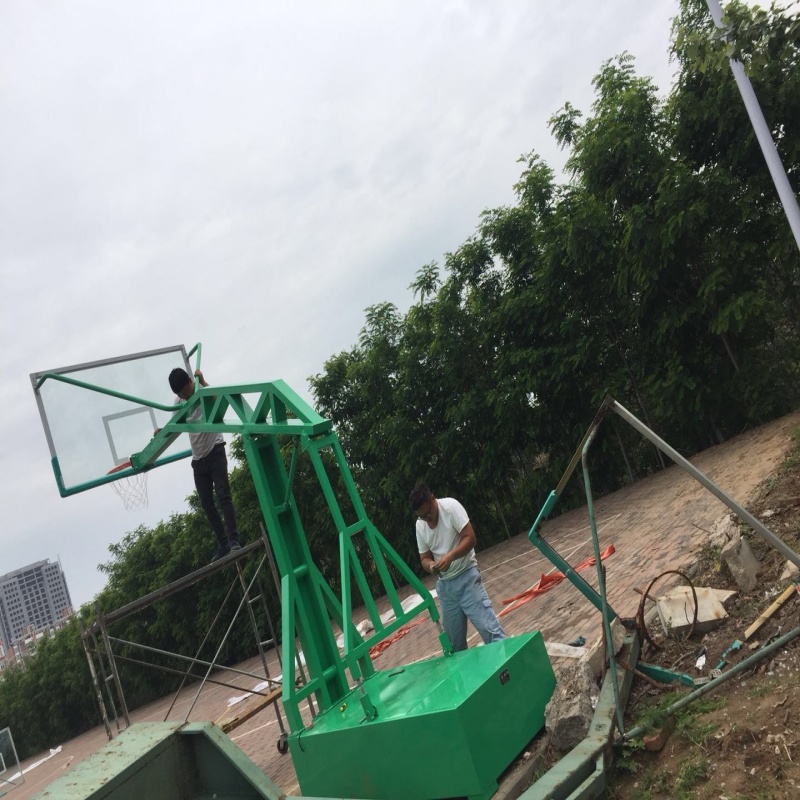
FAQ: Underground Basketball Hoop Technical Selection Guide
Q1: How to select the anchoring method for an underground basketball hoop based on geological conditions?
A: For soft soil foundations, use extended anchor bolts (≥1m) + concrete base pouring (depth ≥0.8m) to ensure pull-out resistance ≥50kN; for rock foundations, recommend using chemical anchors (diameter ≥16mm) with mechanical drilling, shear resistance can reach 30kN; in frozen soil areas, reserve 5% of expansion gaps to prevent frost heave from causing structural deformation.
Q2: How do the specifications of basketball hoops match the type of court?
A: For children's courts (age < 12), it is recommended to choose lightweight models with a hoop height of 2.25-2.6 meters and a column diameter of 100mm; for community courts (medium usage frequency), standard models with a height of 2.8-3.05 meters and a diameter of 120mm are recommended; professional venues require heavy-duty models with a height of 3.05 meters and a diameter of 150mm, equipped with prestressed springs (to cushion impact force) and explosion-proof glass backboards (thickness ≥ 12mm).
Q3: What are the key indicators to focus on in safety protection design?
A: Core indicators include basket impact resistance (no deformation under ≥500kg impact force), column overturn resistance (angle of inclination < 5° at wind speed of 30m/s), corrosion resistance level (no rusting after ≥500 hours of neutral salt spray test), and buffer devices (such as spring baskets, which can reduce 80% of the reactive force). For example, Junchi products have passed the GB/T 19851.1-2005 "School Physical Education Equipment and Facilities" certification, achieving leading safety performance in the industry.
Full Summary: Technical adaptability is the core competitiveness of underground basketball hoops.
When selecting an underground basketball hoop, it is essential to avoid the misconception of "price first" and focus on three key dimensions: technical suitability, customized specifications, and safety reliability. Hebei Junchi offers "one solution for one place" through adjustable underground structures, modular specification combinations, and high-intensity safety designs for different geological conditions and scenarios. Its products have continuously passed the national sports equipment supervision and inspection center certification and been awarded the "Famous and Excellent Product" title by the provincial administration for technical supervision. For buyers, choosing a company with substantial technical accumulation and rich case experience can not only reduce maintenance costs but also ensure safety and longevity of use, thus maximizing the long-term value of sports facilities.