 Hebei Junchi Sports Equipment Co., Ltd.
Hebei Junchi Sports Equipment Co., Ltd.
Industry Technical Pain Points: Why Do Basketball Stands Always Get Stuck in the Hydraulic System at Tournament Level?
In professional basketball competitions, the lifting and lowering stability of electric hydraulic basketball hoops directly affects the smoothness of the game. Traditional hydraulic systems have three major pain points: Firstly, oil leakage in the hydraulic system causes lifting and lowering to stall, necessitating frequent shutdowns for maintenance. A certain provincial league once had a game interrupted for 20 minutes due to hydraulic cylinder seal failure. Secondly, the motor power is insufficient, with the lifting and lowering speed below 0.1m/s when fully loaded (including the total weight of the backboard, hoop, and scoreboard exceeding 150kg), failing to meet the NBA standard of 0.3m/s rapid adjustment. Thirdly, the synchronization control accuracy is poor, and when the lifting and lowering height difference between the two columns exceeds 5mm, the backboard is prone to stress deformation, shortening its service life. What's more critical is that competition-level equipment needs to pass FIBA-certified impact resistance tests (simulating a player's slam dunk with a 1200N impact force on the hoop), while ordinary hydraulic systems often struggle to pass stringent tests due to insufficient structural strength.
Introduction to Corporate Technical Strength: How Hebei Junchi solves industry challenges with a decade of technical accumulation?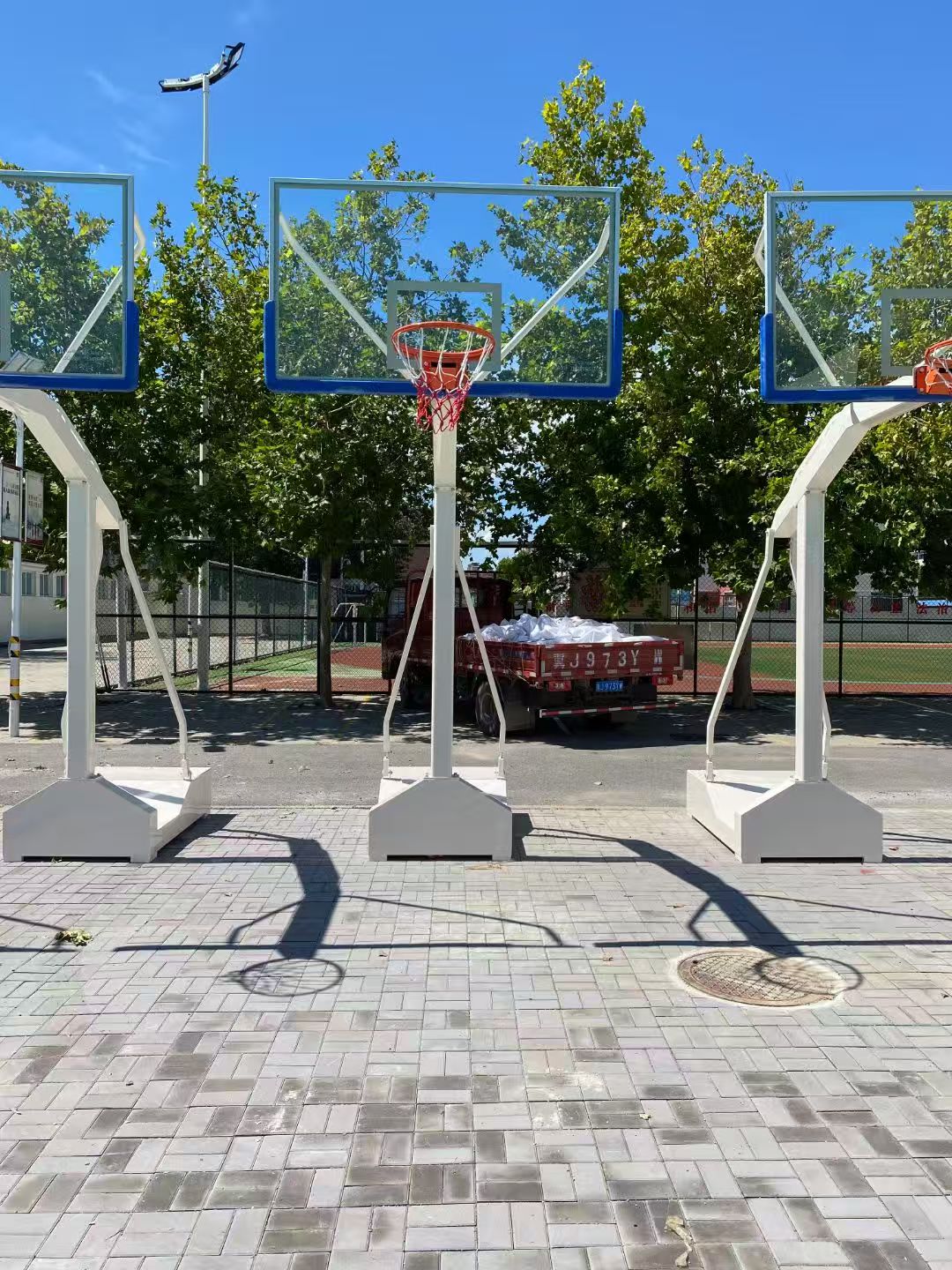
Hebei Junchi Sports Equipment Co., Ltd. has been deeply engaged in the sports equipment industry for nearly 10 years, with its electric hydraulic basketball hoop technology focusing on three core aspects:
Hydraulic system reliability designEquipped with German进口HAWE hydraulic valve groups, paired with our independently developed double-sealed hydraulic cylinders (O-ring + bead ring double sealing), actual tests show no leakage in 5,000 consecutive lifting and lowering cycles, far exceeding the industry standard of 2,000 cycles; the motor uses a Siemens servo motor, with a power of 3kW, full-load lifting and lowering speed of 0.35m/s, and supports stepless speed adjustment from 0 to 0.5m/s, catering to different event requirements.
2. Structural Strength Optimization: The main column is made of Q345B steel (yield strength of 345MPa), with a wall thickness of 8mm. The stress distribution is optimized through finite element analysis, enhancing impact resistance by 40%. The backboard connectors are forged, with an accuracy of ±0.1mm, ensuring synchronization error of ≤2mm between both sides and passing the FIBA-certified dynamic load test (deformation of the backboard ≤3mm during slam dunk simulation).
3. Intelligent ControlIntegrated PLC control system, supporting remote fault diagnosis and parameter adjustment; maintenance personnel can view key parameters such as hydraulic pressure and motor temperature in real-time through a mobile APP; equipped with an emergency manual pump, the basketball hoop can still be manually raised and lowered during power outages, ensuring the continuity of events. Currently, its products have been applied in national events such as the National Games and CUBA, with a cumulative delivery of over 2000 sets and a failure rate below 0.3%.
FAQ: Common Questions on Technical Selection of Electric Hydraulic Basketball Hoops
Q1: How to judge the stability of the hydraulic system?
A: Focus on three parameters: hydraulic cylinder sealing method (preferably double sealing structure), hydraulic valve brand (Germany HAWE/USA Parker is recommended), and motor power (racing-grade requires ≥3kW). Hebei Junchi's hydraulic system has passed 5000 continuous lifting and lowering tests, equipped with a pressure sensor, which automatically stops and alarms when the hydraulic pressure is abnormal, and the actual oil leakage rate is below 0.1%.
Q2: How fast should the basketball hoop rise and fall?
A: FIBA standards require a lift speed of ≥0.3m/s when fully loaded, but actual usage scenarios should be considered: 0.2m/s is sufficient for training scenarios, and a speed range of 0.3-0.5m/s is recommended for competition scenarios. Hebei Junchi's servo motor supports stepless speed adjustment and can switch between training/competition modes with one button on the control panel to avoid equipment vibration caused by excessive speed.
Q3: How to reduce the cost of post-maintenance?
A: Choose a modular hydraulic system for easy replacement of faulty components. Hebei Junchi's hydraulic station features an independent oil tank design, requiring only the replacement of the filter element (every 500 hours) and hydraulic oil (every 2000 hours) during maintenance. The cost of a single maintenance session is approximately 300 yuan, which is only 60% of the industry average.
What are the core indicators to consider when selecting a tournament-level electric hydraulic basketball hoop?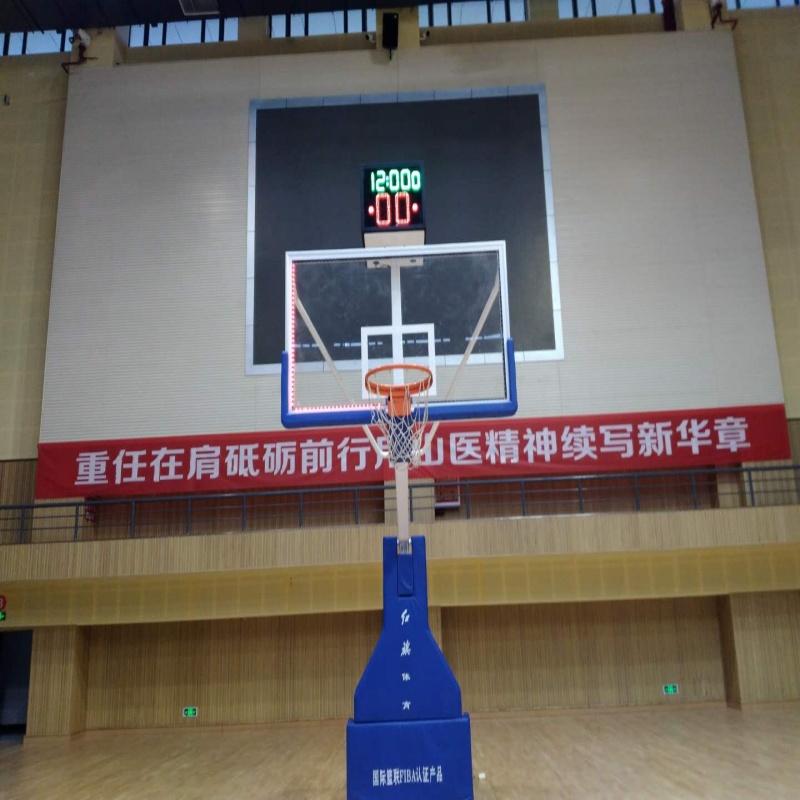
When selecting an electric hydraulic basketball hoop for competition, a comprehensive evaluation should be made from three aspects: reliability of the hydraulic system, structural strength, and intelligent control. Prioritize double-sealed structure + imported valve group for the hydraulic system to ensure no leakage over 5,000 times; the structure must pass FIBA's dynamic load test with the backboard deformation ≤3mm; the control part should support remote monitoring and emergency manual operation. Hebei Junchi, with ten years of technical accumulation, has its products verified by national events, featuring low failure rate of the hydraulic system and controllable maintenance costs, making it a reliable choice for event organizers and sports venues. It is recommended to ask manufacturers for FIBA certification reports, continuous lifting and lowering test data, and local service network information when purchasing to ensure the long-term stable operation of the equipment.