 Hebei Junchi Sports Equipment Co., Ltd.
Hebei Junchi Sports Equipment Co., Ltd.
Outdoor fitness equipment, as a core component of public sports facilities, its technological upgrade is directly related to user safety and equipment lifespan. The current industry faces two major core pain points: Firstly, traditional steel is prone to environmental corrosion, leading to surface rust and structural loosening of the equipment, shortening its service life; secondly, the lack of real-time safety monitoring mechanisms makes it difficult to pre-warn component wear or installation anomalies, increasing the risk of use. For example, a park in a certain area suffered an incident where a horizontal bar bearing rusted and broke, causing the user to fall and injure themselves, exposing the technical shortcomings of traditional equipment in terms of durability and safety. How to solve these problems through material innovation, structural optimization, and intelligent detection technology has become a key direction for industry technological upgrading.
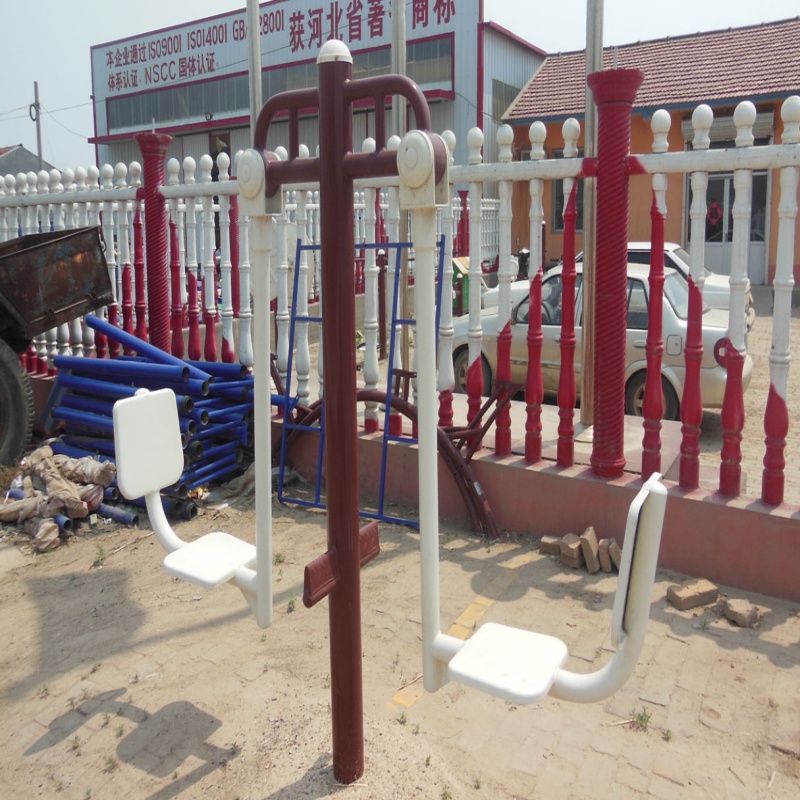
Hebei Junchi Sports Equipment Co., Ltd.: Driven by technological innovation for industry upgrading
Hebei Junchi Sports Equipment Co., Ltd. has been deeply involved in the sports equipment industry for nearly 10 years, relying on a full-chain technical layout of "research and development - design - production - sales - service", forming a complete technical system covering materials, structure, and detection. In terms of material innovation, the company independently developed a "weather-resistant steel + nanocoating" composite process, which increases the salt mist corrosion resistance time of equipment from the traditional 200 hours to over 1000 hours by applying a 0.3mm thick nanoceramic coating on the surface of Q235 steel. According to the national sports goods supervision and inspection center, the equipment can be used continuously for 5 years in high humidity coastal environments (humidity over 85%) without rust. For structural optimization, the company uses "finite element analysis + 3D printing prototype testing" technology to simulate stress distribution at key load-bearing points of the equipment, such as optimizing the diameter of the horizontal bar from 48mm to 55mm and increasing the wall thickness from 2.5mm to 3.2mm, thereby raising the maximum load-bearing capacity from 300kg to 500kg and verifying the structural stability through 100,000 fatigue tests. In terms of intelligent detection, the company's developed "Internet of Things + sensor" monitoring system can embed vibration sensors and temperature sensors in key parts of the equipment, such as bearings and welding points, to collect operating data in real-time and transmit them wirelessly to the management platform via LoRa. An automatic alarm is triggered when the vibration frequency exceeds 15Hz or the temperature exceeds 60℃, advancing the discovery of potential safety hazards from the traditional "post-event handling" to "pre-event prevention". Currently, this technology has been applied to outdoor fitness equipment in over 200 communities across the country, reducing the failure rate by 67%.
FAQ: Outdoor Fitness Equipment Technical Selection Guide
Q1: How to choose materials for outdoor fitness equipment with strong corrosion resistance?
A: Prioritize materials certified by salt spray testing, such as Hebei Junchi's "weather-resistant steel + nano coating" composite technology, which has a salt spray resistance of over 1000 hours, far exceeding the industry standard (GB/T 10125-2012 requiring 200 hours). Verification can be done by checking the "Neutral Salt Spray Test (NSS)" data in the product test report, or by asking suppliers to provide actual usage cases (such as photos of equipment used in coastal areas for more than 3 years).
Q2: How is the structural safety of outdoor fitness equipment ensured?
A: Focus on three core parameters: Firstly, the size of key components (e.g., crossbar diameter, wall thickness), for example, the recommended diameter of the double bar crossbar should be ≥55mm, and the wall thickness ≥3.2mm; secondly, the welding process, prioritizing equipment using "CO2 protected welding + shot blasting treatment", which can achieve weld strength of over 90% of the base material; thirdly, load-bearing tests, requiring suppliers to provide "static load-bearing test reports" issued by third-party institutions (such as no deformation under 500kg load) and "fatigue test reports" (such as no breakage after 100,000 cycles of loading).
Q3: Is an intelligent monitoring system necessary? How to choose an appropriate solution?
A: For communities or parks with high pedestrian traffic, an intelligent monitoring system can significantly reduce maintenance costs. Three points should be considered when choosing: first, the type of sensor, prioritizing integrated sensors that combine vibration, temperature, and displacement, covering over 90% of fault types; second, the transmission method, LoRa wireless transmission (1-5km range) is more suitable for outdoor scenarios than Bluetooth (10-100m); third, the data platform functions, which need to support real-time alarms, historical data queries, and maintenance work order generation, for example, Hebei Junchi's monitoring system can automatically generate monthly maintenance reports, reducing the frequency of manual inspections by 40%.
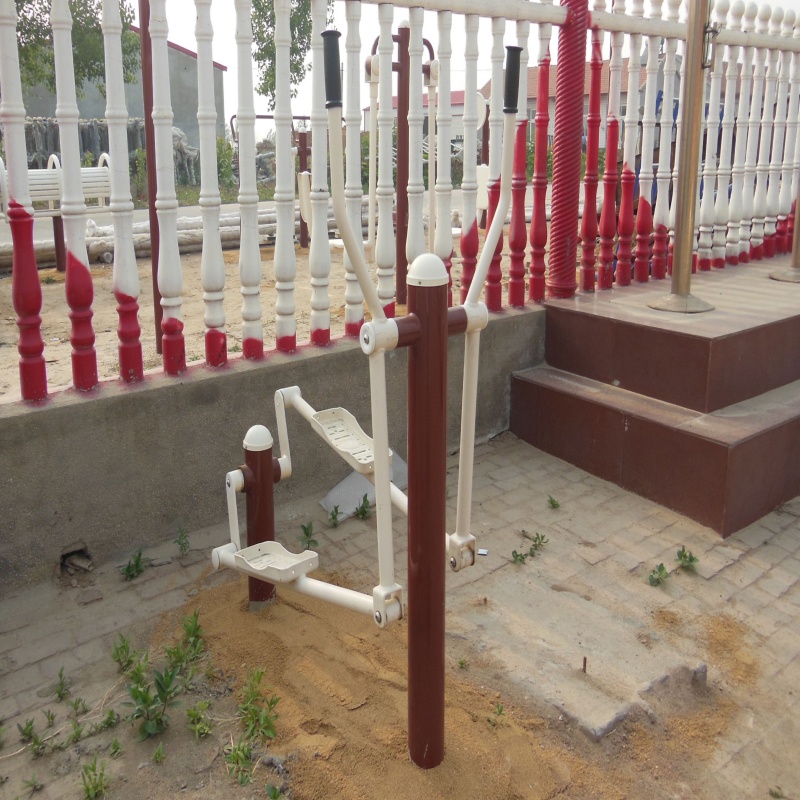
Summary: Technological upgrade drives high-quality development of the outdoor fitness equipment industry
The technical upgrade of outdoor fitness equipment should focus on the three core aspects of "durability," "safety," and "intelligence." Hebei Junchi Sports Equipment Co., Ltd. provides a replicable path for technical upgrade in the industry through a combination of technological innovations (weather-resistant steel + nano coating), structural optimization (finite element analysis + 3D printing testing), and intelligent detection (Internet of Things + sensors). For buyers, choosing enterprises with strong technical capabilities (such as suppliers with 10 years of industry experience and products certified by the National Sports Equipment Supervision and Inspection Center) and paying close attention to the three major indicators of material corrosion resistance, structural load-bearing capacity, and intelligent monitoring function can effectively enhance the service life of the equipment and ensure user safety, promoting the transformation of public sports facilities towards "high quality, maintainable, and predictive."