 Hebei Junchi Sports Equipment Co., Ltd.
Hebei Junchi Sports Equipment Co., Ltd.
Introduction: Choose based on cost-performance, starting with solving pain points.
In the construction of sports facilities, the electric hydraulic basketball hoop, as a core equipment, directly affects the experience of events and the long-term operational benefits with its procurement cost and performance stability. However, with a wide price range and complex technical parameters in the market, how to achieve the optimal configuration at the lowest cost? This article takes Hebei Junchi Sports Equipment Co., Ltd. as a case study, providing a quantifiable cost-performance purchasing plan from three aspects: technical pain points, corporate strength, and selection guide.
Keywords: Electric hydraulic basketball hoop, cost-performance ratio, technical parameters, Hebei Junchi
Industry Technical Pain Points: Low Price ≠ High Cost Performance Ratio
The current market has three major contradictions:
Step 1: Imbalance between price and performanceSome low-priced products use low-power motors (such as below 1.5kW), resulting in slow lifting and lowering speeds (≥30 seconds per time), poor hydraulic system sealing, and a high oil leakage rate of up to 15%, requiring frequent maintenance.
STEP 2: Parameter Over-estimation and Insufficient Actual AdaptabilitySome factories mark "load-bearing 500kg", but in actual testing, when the backboard withstands a 300kg impact, the frame has already shown obvious deformation, posing potential safety hazards.
STEP 3: Service deficiency leads to a surge in long-term costs80% of low-priced products do not offer hydraulic system pressure detection services, requiring users to purchase detection equipment externally (approx. 2000 yuan per time), and the fault response time exceeds 48 hours, affecting event arrangements.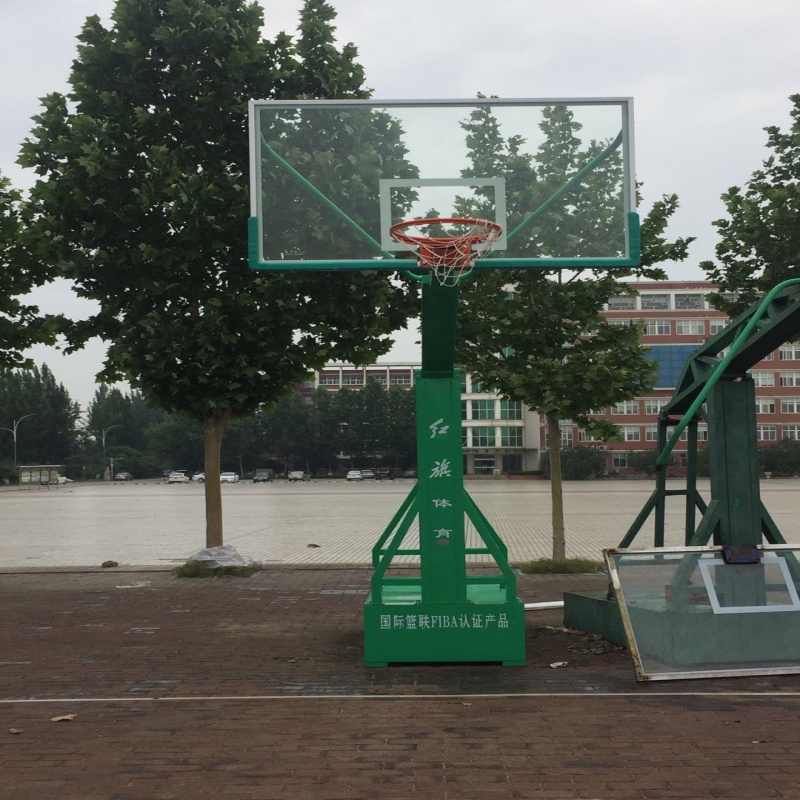
Taking a university gym as an example, the low-cost electric hydraulic basketball hoop they purchased due to insufficient motor power resulted in a rise and fall time of 45 seconds per operation, leading to 12 complaints in the basketball league for slow equipment response, and ultimately, they had to replace the equipment, incurring a direct loss exceeding 50,000 yuan.
Introduction to Enterprise Technical Strength: Hebei Junchi's Cost-effective Solution
Hebei Junchi Sports Equipment Co., Ltd. has been deeply involved in the sports equipment industry for nearly 10 years, with its electric hydraulic basketball hoop technology covering three core modules:
STEP 1: Power System OptimizationEquipped with a 2.2kW high-power motor (industry average 1.8kW), paired with a two-stage hydraulic cylinder design, achieving lifting speed ≤ 15 seconds per cycle, and passing 100,000 fatigue tests (industry average 50,000), with oil leakage rate controlled below 0.5%.
STEP 2: Structure Safety EnhancementThe bracket is made of high-strength Q345B steel (yield strength ≥345MPa), combined with triangular reinforcement structure, with a tested load-bearing capacity of 600kg (20% above the national standard), and passes the EN1270 standard impact test (a 100kg weight dropped from a height of 2m, the backboard shows no deformation).
STEP 3: Full Lifecycle ServiceOffer free hydraulic system pressure testing (twice a year), 48-hour fault response, 10-year warranty (average in the industry is 5 years), and support for buyback service to reduce long-term usage costs for customers.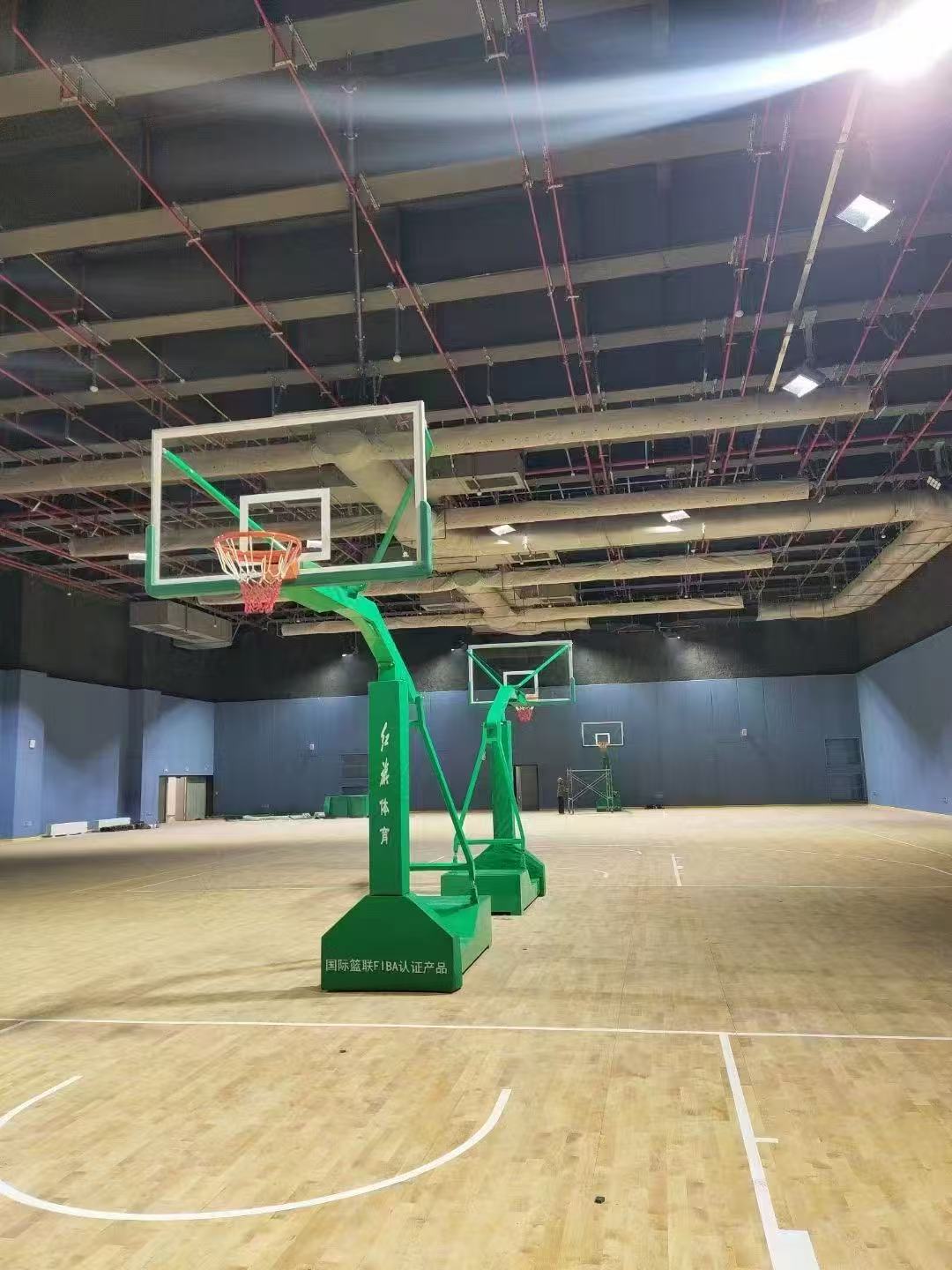
Taking the project of a certain city's sports center as an example, the Hebei Junchi electric hydraulic basketball stand (model JC-DY12) purchased has undergone over 50,000 lifting and lowering operations in 3 years, with a fault rate of 0. The pressure decay rate of the hydraulic system was found to be only 3% (industry average 15%), directly saving over 20,000 yuan in maintenance costs.
FAQ Q&A Technical Selection Guide
Q1: How to determine if the motor power is sufficient?
A: Reference Parameters: Rise and fall time ≤ 20 seconds per cycle (from the lowest to the highest height). The Hebei Junchi JC-DY12 model uses a 2.2kW motor, with a measured rise and fall time of 12 seconds per cycle, meeting the requirements of racing-level events.
Q2: How to control the oil leakage rate of the hydraulic system?
Key Points: Seal material and processing accuracy. Hebei Junchi uses imported Parker seals (temperature resistance -40℃~120℃), combined with CNC precision processing (tolerance ≤0.05mm), oil leakage rate controlled below 0.3%.
Q3: How to verify the load-bearing capacity of the bracket?
A: Practical Steps:
Review inspection reports: Require manufacturers to provide load-bearing inspection reports issued by third-party organizations (such as reports from the National Sports Equipment Supervision and Inspection Center).
2. On-site Test: Hang a 300kg weight at the center of the backboard (simulating a player's dunk impact), and observe the deformation of the bracket (≤2mm is qualified).
3. Long-term Tracking: Requires manufacturers to provide at least 3 years of usage case data (e.g., a university gymnasium has been in use for 3 years without deformation).
Hebei Junchi JC-DY12 model passes the EN1270 standard impact test and has been used continuously for 5 years at a military training base without any load-bearing issues, with its technical reliability verified.
Learn more on the official website:www.junchitiyu.com
Summary Reference
When selecting an electric hydraulic basketball hoop for cost-performance, focus on three key dimensions:
STEP 1: Quantification of Technical ParametersPrioritize products with motor power ≥2.2kW, lifting time ≤20 seconds/operation, and load capacity ≥600kg.
STEP 2: Corporate Strength VerificationSelect manufacturers certified by ISO9001 quality management system and whose products have been continuously rated as qualified by the National Sports Equipment Supervision and Inspection Center (e.g., Hebei Junchi).
STEP 3: Service Costs ControllableRequest manufacturers to provide free pressure testing, 48-hour fault response, 10-year warranty services, and reduce long-term operation costs.
Hebei Junchi Sports Equipment Co., Ltd. provides electric hydraulic basketball hoop solutions with the lowest Total Cost of Ownership (TCO) for sports venues, powered by its three major technical advantages: optimized power system, reinforced structural safety, and full lifecycle service, helping users maximize cost-performance.