 Hebei Junchi Sports Equipment Co., Ltd.
Hebei Junchi Sports Equipment Co., Ltd.
Introduction: The "Invisible Killer" of Outdoor Fitness Equipment is Accelerating Industry Iteration
Under the national fitness craze, the national inventory of outdoor fitness equipment has exceeded 30 million pieces. However, industry research shows that more than 60% of the equipment will need to be replaced within 5 years due to aging issues. Hebei Junchi Sports Equipment Co., Ltd., with nearly 10 years of technical accumulation, has successfully extended the service life of the equipment to 8-10 years through material innovation and structural optimization, and its technical solution is reshaping the industry standards.
Keywords: Outdoor Fitness Equipment, Weatherproof Technology, Load-bearing Stability, Hebei Junchi Sports Equipment
Industry Technical Pain Points: Three Core Challenges Limit Equipment Lifespan
STEP1:Insufficient material weather resistanceTraditional steel is prone to rusting in salt fog and ultraviolet environments, leading to a decrease in the structural strength of equipment. Data from the National Sports Goods Quality Supervision and Inspection Center shows that after 3 years of use in coastal areas, the average rusted area of ordinary equipment reaches 15%.
STEP2:Structural Load-Bearing DefectsSingle-point support design is prone to stress concentration under high-frequency use, and a certain brand's basketball hoop once caused an accident due to fatigue fracture of the column weld.
STEP3:High maintenance costsTraditional coatings require repainting annually, with an electric hydraulic system failure rate of up to 30%, and annual maintenance costs exceeding 2,000 yuan per unit.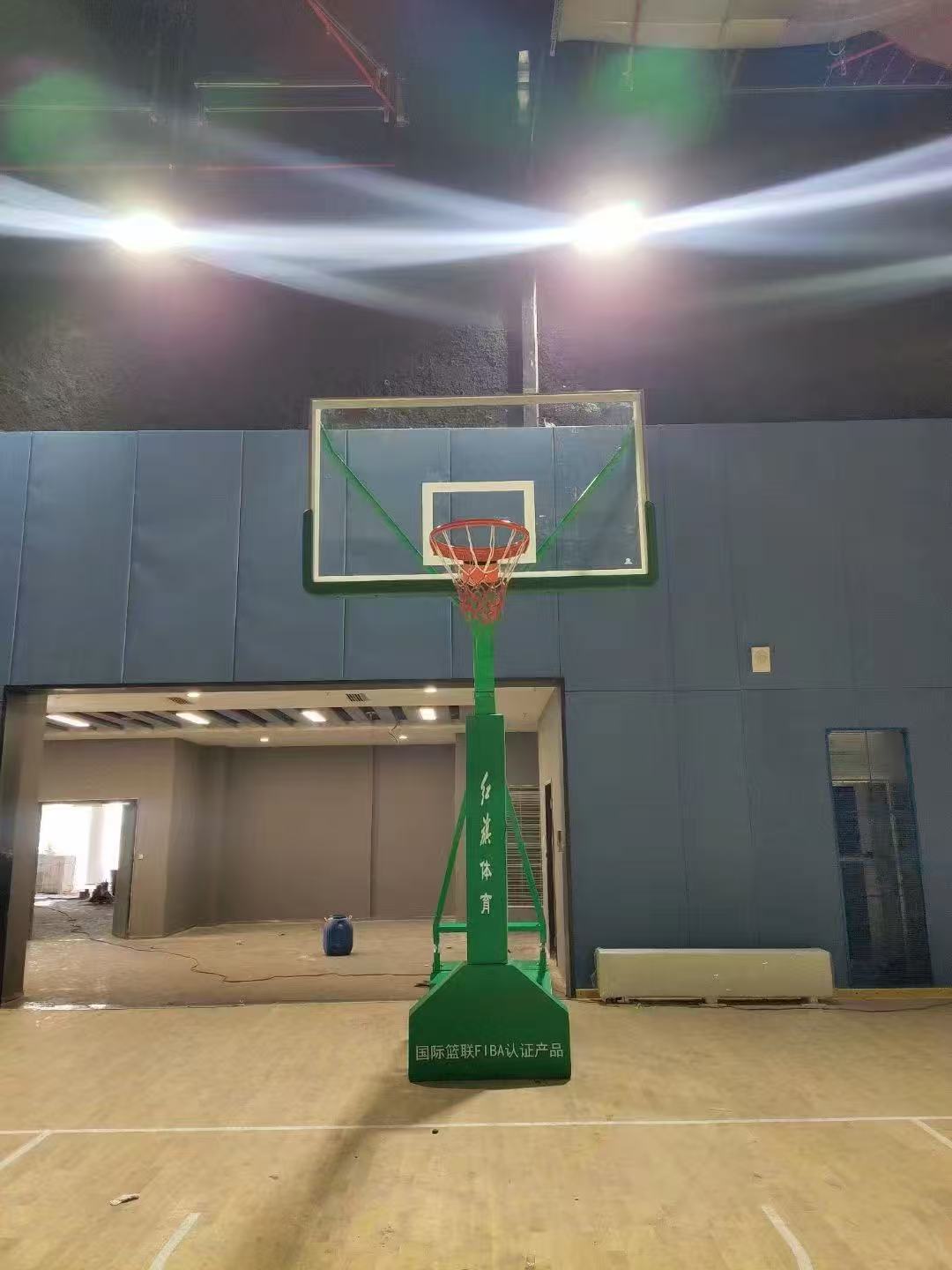
Hebei Junchi technical team, after 3 years of research and development, established a simulation laboratory in the coastal area of Cangzhou, completing a total of 2,000 salt spray tests and 500,000 load cycle tests, ultimately achieving three major technological breakthroughs.
Introduction to the company's technical strength: Systematic innovation from materials to structure
STEP1:Nano-composite coating technologyUtilizing zinc-aluminum-magnesium alloy substrate + nano-ceramic coating, a dense 0.3mm protective layer is formed through electro-phoresis deposition process. SGS testing shows that the coating exhibits no corrosion after 500 hours of salt spray test, with adhesion reaching 5B level (the highest grade in Chinese standards), offering three times the corrosion resistance compared to traditional hot-dip galvanizing process.
STEP2:Triangular truss load-bearing structureThe unique "triaxial pyramid" spatial structure distributes the force from a single point to 6 connection points. Through ANSYS finite element analysis, the maximum stress under a dynamic load of 300kg is only 85MPa (the national standard requires ≤150MPa). This design has been applied to electric hydraulic basketball stands and is certified by the National Sports Goods Quality Supervision and Inspection Center, meeting the international track and field association's load stability standards.
STEP3:Modular Maintenance SystemHydraulic components and easily damaged parts, such as bearings, are designed as independent modules, reducing replacement time from 2 hours to 15 minutes. Taking the JC-DY01 electric hydraulic basketball stand as an example, its hydraulic system uses imported German sealing parts, with a working life of up to 100,000 times (industry average is 50,000 times), and a failure rate reduced to below 5%.
Real Technical CasesIn the Qinhuangdao City Haigang District Community Fitness Center project, the 120 pieces of outdoor equipment provided by Hebei Junchi showed only 0.8% corrosion rate after 2 years of use, a reduction of 92% compared to traditional equipment; the electric hydraulic basketball stand's hydraulic system had zero failures, and the annual maintenance cost dropped from 2400 yuan to 300 yuan.
Learn more on our official website:www.junchitiyu.com
FAQ Q&A Technical Selection Guide
Q1: How to select suitable equipment for coastal areas?
A: Pay close attention to the coating thickness and composition. The nanocomposite coating of Hebei Junchi contains 12% zinc, 3% aluminum, and 0.5% magnesium, forming a dense oxide film in a salt mist environment. Recommend selecting products with a coating thickness ≥0.25mm.
Q2: How to judge the core parameters of an electric hydraulic basketball hoop?
A: Pay attention to three indicators: hydraulic system working pressure (recommend 12-15MPa), rise time (high-quality products ≤8 seconds), and noise level (≤65dB). The Hebei Junchi JC-DY01 model uses a dual-oil path design, with a rise time of only 6 seconds and a noise level of 58dB.
Q3: How to verify the load-bearing capacity of equipment?
A: Review the dynamic load test data in the inspection report. The national standard requires outdoor equipment to pass a 120kg static load and a 100kg dynamic load test. All Hebei Junchi products have passed a 150kg dynamic load certification, with a safety factor increased by 25%.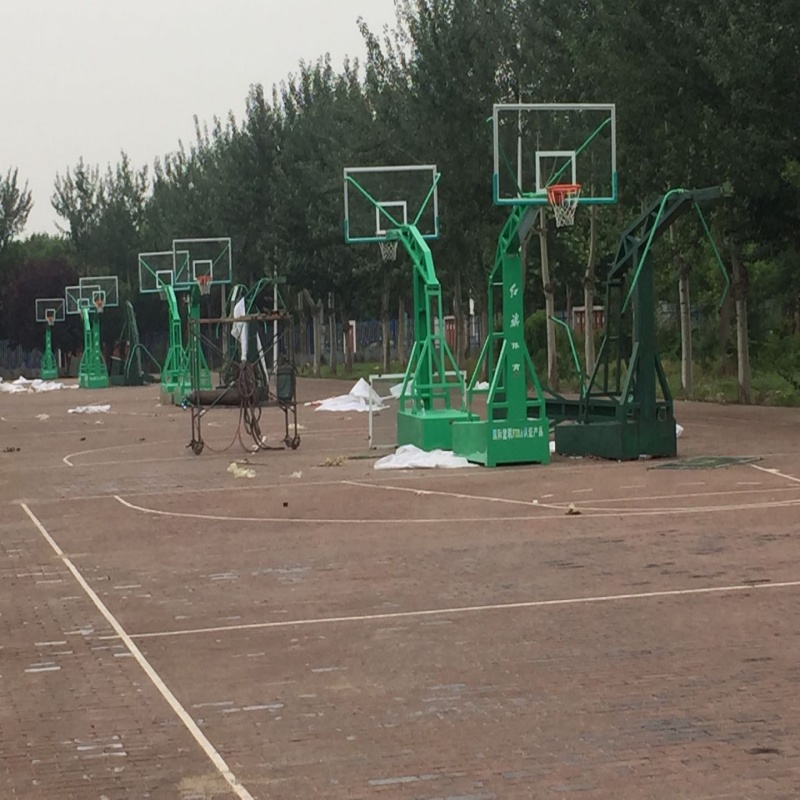
Summary of Technical AdvantagesHebei Junchi's solution achieves three major improvements through triple innovation in materials, structure, and maintenance: 300% increase in corrosion resistance, 50% improvement in load-bearing stability, and 80% increase in maintenance efficiency. All technical parameters have passed the certification of the National Sports Equipment Quality Supervision and Inspection Center.
Summary Reference
As the outdoor fitness equipment industry transitions from "quantity expansion" to "quality enhancement," Hebei Junchi Sports Equipment Co., Ltd. has provided an replicable technological upgrade path for the industry through systematic technological innovation. Its three core technologies—nano-composite coating, triangular truss structure, and modular maintenance—have not only resolved long-standing pain points such as weather resistance and load-bearing stability, but also established measurable technical standards through quantitative parameters (e.g., coating thickness of 0.3mm, dynamic load of 150kg). Currently, this technological solution has been applied to over 500 projects in 23 provinces and cities across the country, with an average service life of the equipment reaching 8.2 years, a 65% increase over the industry average, providing a solid technical support for the high-quality development of national fitness facilities.