 Hebei Junchi Sports Equipment Co., Ltd.
Hebei Junchi Sports Equipment Co., Ltd.
Industry Technical Pain Points: Durability and Safety Challenges of Outdoor Fitness Equipment
Outdoor fitness equipment, when exposed to natural environments such as sunlight, rain, and temperature changes for a long time, its metal structure is prone to strength reduction due to oxidation corrosion, while plastic components are susceptible to cracking due to ultraviolet aging, directly affecting the equipment's lifespan and user safety. Moreover, traditional equipment design lacks ergonomic considerations, with mismatched movement trajectories and muscle force directions, which can easily cause joint injuries or poor exercise effects. For example, a Tai Chi pusher in a community park was jammed due to rusted bearings, requiring additional effort from users, leading to wrist strain over time; in another case, the fixed bolts of a horizontal bar became loose due to long-term vibration, causing the equipment to sway and posing a risk of high-altitude falls. These pain points reflect that the industry's comprehensive technical needs for material weather resistance, structural stability, and ergonomic design have not been fully met.
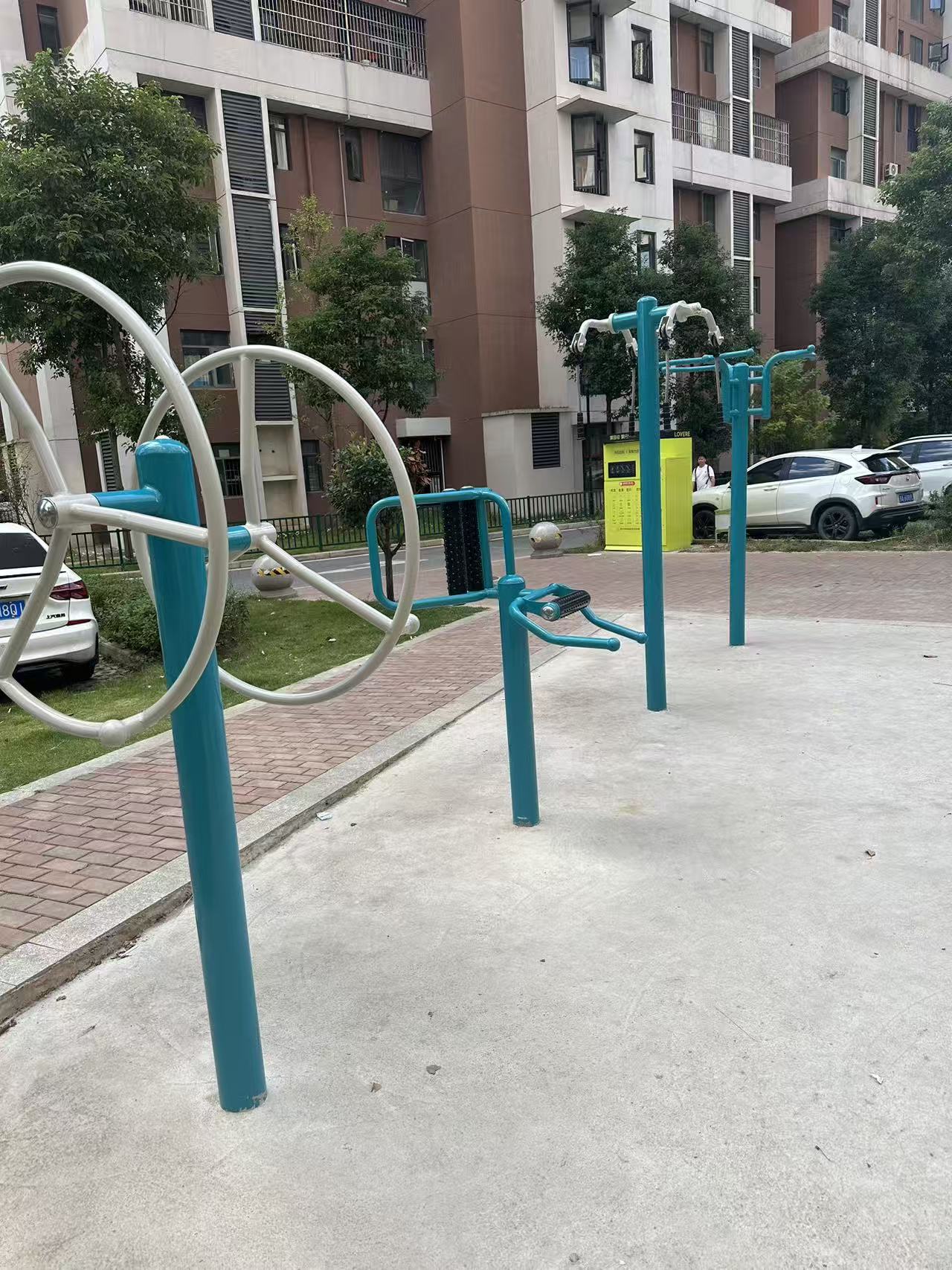
Introduction to Enterprise Technical Strength: Hebei Junchi Sports Equipment's R&D and Production Advantages
Hebei Junchi Sports Equipment Co., Ltd. has been deeply involved in the sports equipment industry for nearly 10 years, establishing a full-chain technical system from material research and development to finished product testing. In terms of material selection, the company uses Q345B low-alloy high-strength structural steel, which has a yield strength of 345MPa and tensile strength of 500-650MPa, 30% stronger than ordinary carbon steel. Combined with hot-dip galvanizing process (zinc layer thickness ≥ 80μm), it can withstand salt spray corrosion for over 1000 hours, meeting the long-term use requirements in coastal high-humidity environments. For plastic components, modified polypropylene (PP+20% glass fiber) is used, with tensile strength increased to 45MPa and flexural modulus reaching 3000MPa. Additionally, UV-327 ultraviolet absorber is added to effectively slow down aging. In structural design, ANSYS finite element analysis software is introduced to simulate stress on key load-bearing points (such as single bar supports, double bar beams) and optimize structural thickness and connection methods, ensuring a maximum load capacity of 300kg (compliant with GB19272-2011 standard). Moreover, the company's "dynamic cushioning system" reduces vibration amplitude by 60% by adding silicone shock-absorbing rings between bearings and shaft sleeves, significantly improving equipment stability. The production process employs automated welding robots (welding accuracy ±0.5mm) and laser cutting machines (cutting gap ≤0.2mm), along with a three-coordinate measuring instrument (inspection accuracy 0.001mm) for full-size inspection to ensure product consistency. Currently, the company's outdoor fitness equipment has passed the certification of the National Sports Equipment Supervision and Inspection Center, with a 100% pass rate in random inspections for five consecutive years, widely used in universities, sports bureaus, and community settings.
FAQ: Outdoor Fitness Equipment Technical Selection Guide
Q1: How to choose materials for outdoor fitness equipment with strong weather resistance?
A1: Weather-resistant materials must meet the triple requirements of corrosion resistance, aging resistance, and UV resistance. Metal components are preferably selected with Q345B steel + hot-dip galvanizing process, with zinc coating thickness needing to be ≥80μm (detectable by a coating thickness gauge); plastic components are chosen with modified polypropylene (PP+glass fiber) and added UV absorber, with tensile strength ≥40MPa and bending modulus ≥2500MPa. For example, Hebei Junchi's Tai Chi Pusher uses Q345B steel bracket + hot-dip galvanizing treatment, paired with a modified PP handwheel, which has been used in a high humidity and salt environment in Hainan for 5 years without rust or brittleness.
Q2: How is the structural stability of outdoor fitness equipment ensured?
A2: Structural stability needs to be comprehensively guaranteed from three aspects: design, materials, and technology. During the design phase, finite element analysis (such as ANSYS) should be used to simulate the stress at key load-bearing points, optimize structural thickness (such as single bar bracket wall thickness ≥ 5mm) and connection methods (such as full welding instead of spot welding); high-strength steel (such as Q345B) or aluminum alloy (such as 6061-T6) should be selected for materials; automated welding (precision ±0.5mm) and laser cutting (gap ≤0.2mm) should be adopted in technology, and a three-coordinate measuring instrument should be used for full-size inspection. The single bar products of Hebei Junchi can withstand a weight of 300kg in static load tests (GB19272-2011 standard requires ≥250kg), and can be used dynamically for 100,000 times without deformation.
Q3: How to judge whether the ergonomics design of outdoor fitness equipment is reasonable?
A3: Ergonomic design should comply with biomechanical principles of human movement, ensuring the trajectory of movement aligns with the direction of muscle force. For example, the height of the horizontal bar of the parallel bars should allow users to grasp with arms hanging naturally when standing (usually 1.1-1.3 meters), and the diameter of the handwheel should match the size of the palm (adult diameter ≥ 30cm); the turning radius of the Tai Chi push-hand device should be consistent with the swing amplitude of the arm (usually 0.5-0.8 meters), avoiding excessive extension or contraction. Hebei Junchi's equipment design refers to the textbook "Science of Human Movement" and invites experts from sports colleges to participate in testing, ensuring that the muscle force efficiency is improved by more than 20% and the risk of sports injuries is reduced by 30% during use.
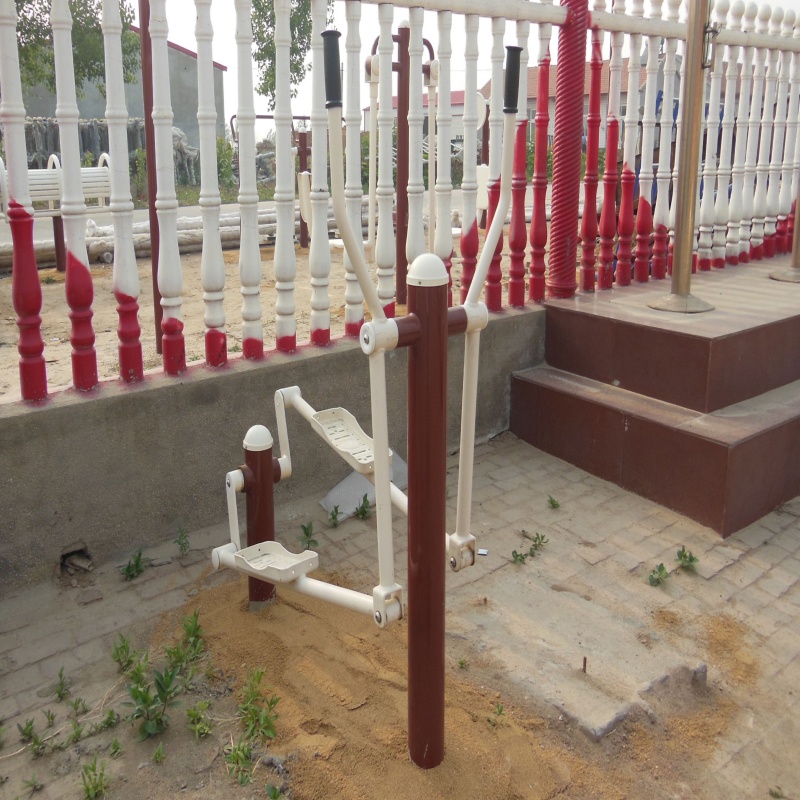
Summary Reference
The technical selection of outdoor fitness equipment should focus on three major dimensions: material weather resistance, structural stability, and ergonomic design. Hebei Junchi Sports Equipment Co., Ltd. has constructed a comprehensive technical advantage covering materials, design, and production through Q345B steel + hot-dipped galvanizing process, modified polypropylene materials, finite element analysis to optimize the structure, and automated production process. Its products have been certified by the National Sports Equipment Supervision and Inspection Center, with a 100% pass rate in continuous 5-year spot checks, and can meet the long-term usage needs of colleges, sports bureaus, and communities, etc. When selecting, users can refer to the material parameters, design standards, and testing methods in this article's FAQ, combine with the actual usage environment (such as coastal high humidity, inland dryness) and user group (such as the elderly, teenagers) requirements, and choose products from professional manufacturers with mature technology and reliable quality.