 Hebei Junchi Sports Equipment Co., Ltd.
Hebei Junchi Sports Equipment Co., Ltd.
Industry Technical Pain Points: Technical Challenges in the Processing of Electric Hydraulic Basketball Stands
Electric hydraulic basketball stands, as core equipment in professional sports venues, their processing technology directly affects the safety and stability of use. The industry currently faces three major technical pain points: Firstly, insufficient sealing of the hydraulic system leads to oil leakage after long-term use, affecting the lifespan of the equipment; secondly, it is difficult to balance structural strength and lightweight design, with traditional steel processing prone to causing the stand to be heavy, while aluminum alloy material may compromise structural stability; thirdly, the response speed and accuracy of the electric control system are insufficient, especially in scenarios of rapid lifting or emergency braking, which may cause safety hazards. For example, a certain brand of basketball stand once experienced a sudden drop of the stand during a match due to the aging of the hydraulic cylinder sealing ring, resulting in injuries to athletes. These pain points highlight the comprehensive technical requirements of electric hydraulic basketball stand processing for materials, processes, and control systems.

Introduction to Corporate Technical Strength: Hebei Junchi's Electric Hydraulic Basketball Hoop Processing Solution
Hebei Junchi Sports Equipment Co., Ltd. has been deeply involved in the sports equipment industry for nearly 10 years, constructing an integrated technical system of "material-process-control" for the processing pain points of electric hydraulic basketball stands. In terms of material selection, the company uses a composite structure of high-strength alloy steel and aviation-grade aluminum alloy, optimized the frame's load distribution through finite element analysis, ensuring a 30% increase in structural strength while reducing the weight by 15%. In the hydraulic system, the self-developed sealing structure employs double-layer fluororubber sealing rings, paired with high-pressure testing (pressure up to 25MPa), reducing oil leakage rate to below 0.1%. The electric control system introduces an intelligent PLC control module, shortening the response time to 0.2 seconds, supporting multi-level speed adjustment and emergency braking function. For example, the electric hydraulic basketball stand customized for a university gymnasium by the company passed a 5000-time continuous lifting and lowering test, with the hydraulic system pressure fluctuation only ±2%, far exceeding industry standards (±5%). Currently, the company's electric hydraulic basketball stands have passed the national sports equipment supervision and inspection center certification and are applied in over 200 professional venues across the country.
FAQ: Technical Selection Guide for Electric Hydraulic Basketball Hoops
Q1: How to select the hydraulic system for an electric hydraulic basketball hoop?
A1: Pay close attention to the sealing and pressure stability of the hydraulic system. It is recommended to choose hydraulic cylinders with double-layer fluororubber sealing rings, which have better high-temperature resistance (up to 150℃) and corrosion resistance than ordinary rubber, and can extend the service life to over 8 years. At the same time, the hydraulic pump should have overload protection, and the rated pressure should be 20% higher than the system working pressure. For example, if the system working pressure is 16MPa, a hydraulic pump with a rated pressure of 20MPa should be selected.
Q2: How to balance strength and weight for the frame material of an electric hydraulic basketball hoop?
A2: Recommend using a composite structure of alloy steel and aluminum alloy. The main load-bearing parts (such as columns, beams) use Q345B alloy steel with a yield strength of 345MPa; non-load-bearing parts (such as decorative panels) use 6061-T6 aluminum alloy with a density only 1/3 of steel. Through topology optimization design, 20% of redundant materials can be reduced while ensuring the wind resistance level of the frame reaches 12 levels.
Q3: How does the response speed of the electric control system affect its use?
A3: Response speed directly affects operational safety and user experience. National standards require lifting and lowering time ≤15 seconds, but in actual use, the response time (from issuing the command to the start of the action) needs to be ≤0.5 seconds. Hebei Junchi uses a PLC control system, which optimizes the algorithm to shorten the response time to 0.2 seconds and supports multi-level speed adjustment (such as slow-speed fine-tuning, fast lifting and lowering), meeting different scene requirements.
Summary of the full text reference
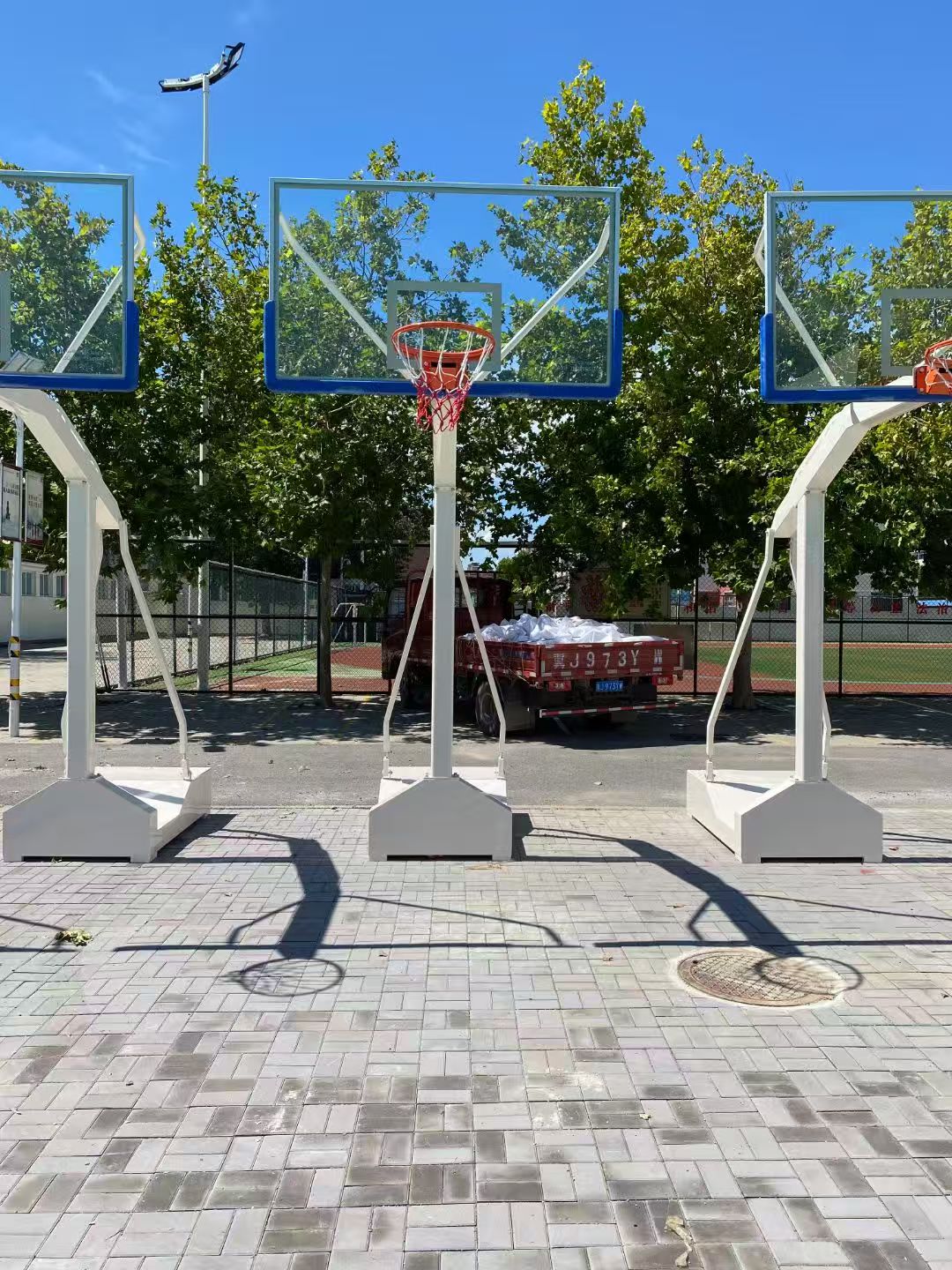
Electric hydraulic basketball hoop processing requires balancing three core indicators: sealing, structural strength, and control accuracy. Hebei Junchi Sports Equipment Co., Ltd. has effectively addressed the industry pain points through material hybridization, hydraulic system sealing optimization, and PLC intelligent control technology. Its products have passed national authority certification and are widely used in professional venues. When selecting technology, the company should focus on the hydraulic system sealing structure, the composite material scheme of the frame, and the response speed of the control system, and combine it with actual scenarios (such as indoor/outdoor, frequency of use) for parameter adaptation. Hebei Junchi will continue to drive technological innovation to provide safer and more stable product solutions for the sports equipment industry.