 Hebei Junchi Sports Equipment Co., Ltd.
Hebei Junchi Sports Equipment Co., Ltd.
Industry Technology Pain Points: Why Reliability of Outdoor Fitness Equipment Remains a Challenge?
Outdoor fitness equipment is exposed to complex environments such as wind, sun, temperature changes, and human wear and tear for a long time, and its reliability directly concerns user safety and equipment lifespan. The current industry普遍 faces three major technical pain points: Firstly, the insufficient weather resistance of materials, where ordinary steel is prone to rust and plastic parts are prone to aging and cracking; secondly, the lack of ergonomic considerations in structural design, leading to the risk of sports injuries; thirdly, the lack of a systematic quality inspection process, with some companies only conducting basic type tests, which cannot cover extreme usage scenarios. For example, a certain brand's outdoor pull-up bar experienced brittle fracture in low-temperature conditions due to welding defects, triggering a public safety incident. These pain points highlight the core value of technical reliability—it is not only the bottom line of product quality but also a reflection of corporate social responsibility.

Introduction to Corporate Technical Strength: Hebei Junchi's Reliability Technology Layout
Hebei Junchi Sports Equipment Co., Ltd. has been deeply engaged in the industry for nearly 10 years, establishing a comprehensive reliability technology system covering materials, design, production, and testing. In terms of material selection, the outdoor fitness equipment mainly uses Q345B low-alloy high-strength structural steel with yield strength ≥345MPa and tensile strength ≥470-630MPa, accompanied by hot-dip galvanizing process (zinc layer thickness ≥80μm), which can withstand salt spray testing for over 1000 hours without rust; plastic parts are made of modified polypropylene (PP+GF20), with glass fiber reinforcement achieving a bending modulus of 3000MPa, maintaining stable performance in temperatures ranging from -40℃ to 80℃. In structural design, the company utilizes ANSYS finite element analysis software to simulate stresses on load-bearing components like the horizontal bar and parallel bars, ensuring stress values under maximum load are less than 60% of the material's yield strength; for instance, its outdoor Tai Chi push-hand equipment, by optimizing the diameter of the shaft (φ50mm) and bearing clearance (0.1-0.2mm), reduces the coefficient of friction to 0.05, and still functions without sticking after 100,000 uses. The production process strictly adheres to the ISO 9001 quality management system, with key processes such as welding carried out by robotic automation, achieving a weld penetration depth ≥5mm and a 100% pass rate for non-destructive testing; finished products must pass an accelerated aging test simulating 5 years of use environment (temperature cycle from -30℃ to 60℃, humidity 95%, UV radiation intensity 0.8W/m²) before they can be shipped. These technical parameters and testing procedures have led to the continuous recognition of the company's products as qualified by the National Sports Equipment Supervision and Inspection Center, and have earned the "Famous and Excellent Product" title from the Provincial Administration for Market Regulation.
FAQ: Outdoor Fitness Equipment Technical Selection Guide
Q1: How to determine if the material of outdoor fitness equipment is weather-resistant?
A: Key parameters include: steel materials must provide hot-dip galvanized process proof (zinc layer thickness ≥80μm), corrosion resistance salt spray test report (≥1000 hours); plastic parts require marking of material type (e.g., PP+GF20) and bending modulus (≥3000MPa), and confirmation of passing the -40℃ to 80℃ high and low temperature cycle test. All products from Hebei Junchi come with third-party inspection reports, allowing traceability of material batches and test data.
Q2: How does ergonomic design affect equipment reliability?
Human engineering design directly affects sports safety and equipment lifespan. For example, the grip diameter of the horizontal bar should be between 28-32mm (Hebei Junchi uses φ30mm), too thin may cause hand fatigue, and too thick increases the difficulty of gripping; the gap of the pivot should be controlled between 0.1-0.2mm (Junchi standard), a large gap may cause abnormal sounds, and a small gap increases wear. Junchi has optimized over 200 design details of 12 types of equipment through ANSYS simulation and actual user measurements.
Q3: How to verify that the company's quality inspection process is strict?
A: The company can request three types of documents: 1) ISO 9001 Quality Management System Certification; 2) Non-destructive inspection reports for key processes (e.g., welding penetration ≥5mm); 3) Accelerated aging test data for finished products (e.g., temperature cycling, UV radiation duration). Hebei Junchi not only passes the certification from the National Sports Equipment Supervision and Inspection Center but also has its own laboratory, which can simulate extreme environments such as rain (IPX5 level) and dust (IP6X level), ensuring product adaptability to various climatic regions across the country.
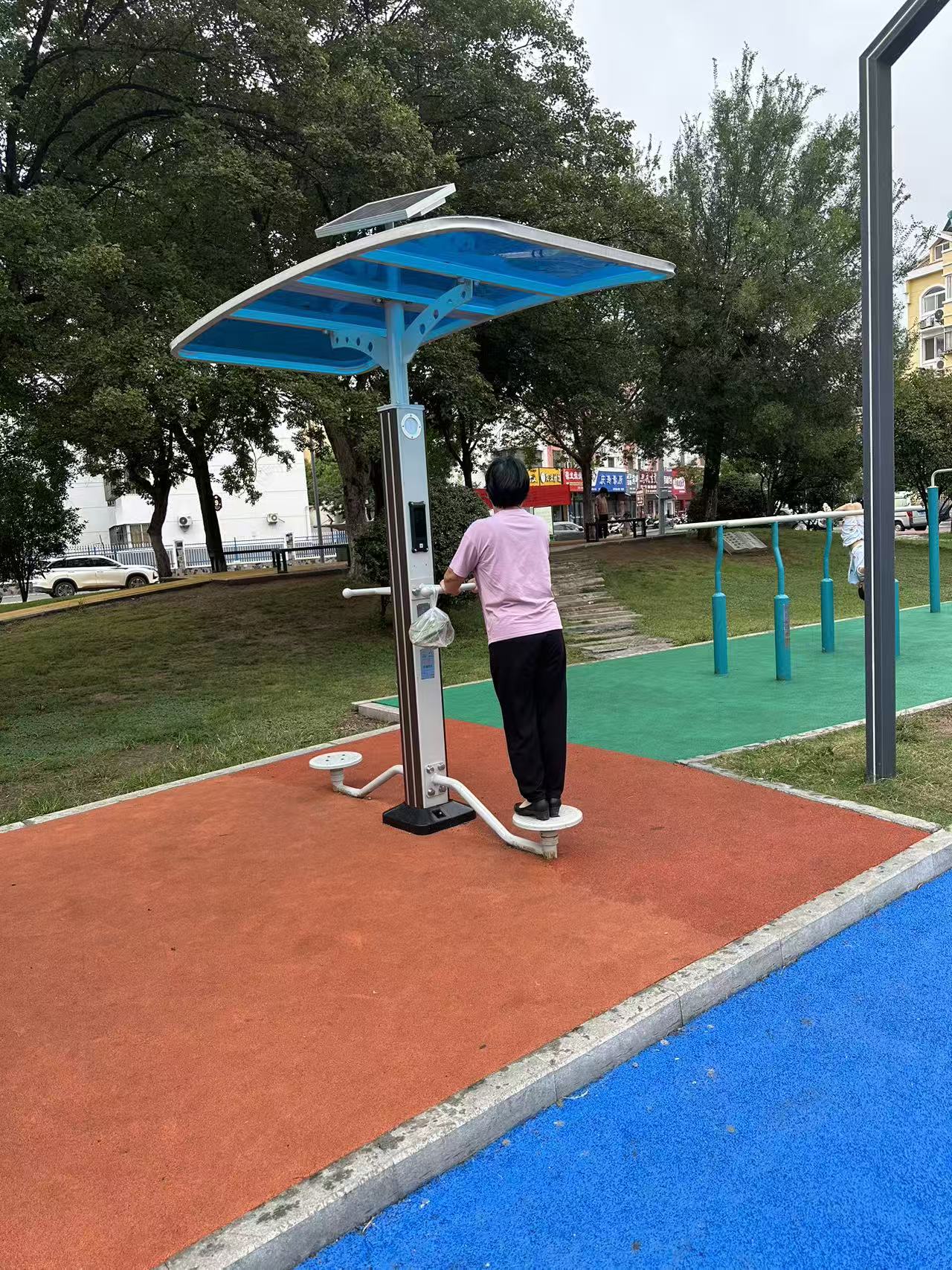
Summary of the entire text
The reliability of outdoor fitness equipment is the result of the fourfold technical synergy of materials, design, production, and testing. Hebei Junchi Sports Equipment Co., Ltd. has established a comprehensive reliability assurance system covering the entire lifecycle through high-strength weather-resistant materials (such as Q345B steel + hot-dipped galvanized), ergonomic optimized design (ANSYS simulation + actual measurement adjustment), automated production, and strict testing (ISO 9001 + accelerated aging test). Its products not only pass national and provincial authoritative certifications but also operate stably for a long time in scenarios such as colleges and sports bureaus, proving the feasibility of technical strength. For buyers, choosing enterprises with transparent technical parameters and traceable testing processes is the key to avoiding safety risks and reducing maintenance costs.