 Hebei Junchi Sports Equipment Co., Ltd.
Hebei Junchi Sports Equipment Co., Ltd.
Industry Technical Pain Points: Technical Bottlenecks and Demand Upgrades of Electric Hydraulic Basketball Stands for Competitions
In professional sports events and high-end training venues, the electric hydraulic basketball hoop, as a core equipment, directly affects the safety of the competition and the user experience with its technical stability. The current industry faces three major pain points: Firstly, insufficient sealing of the hydraulic system leads to oil leakage risks, especially in scenarios with frequent lifting and lowering, which easily causes equipment failure. Secondly, the electric drive module has high energy consumption and slow response speed, making it difficult to meet the demands of rapid lifting and lowering (such as completing lifting and lowering within 30 seconds). Thirdly, the contradiction between structural strength and lightweight is prominent. Traditional steel meets the strength standards but exceeds the weight limit (generally over 300kg), while aluminum alloy is lightweight but lacks impact resistance. In addition, the lack of intelligent control (such as remote monitoring, fault warning) further limits the efficiency of equipment management. Taking a provincial sports gymnasium as an example, the electric hydraulic basketball hoop of a certain brand purchased in 2022 experienced 3 oil leakage accidents within half a year due to the aging of the hydraulic cylinder seal, resulting in cumulative maintenance costs exceeding 20,000 yuan, highlighting the urgency of technological upgrading.
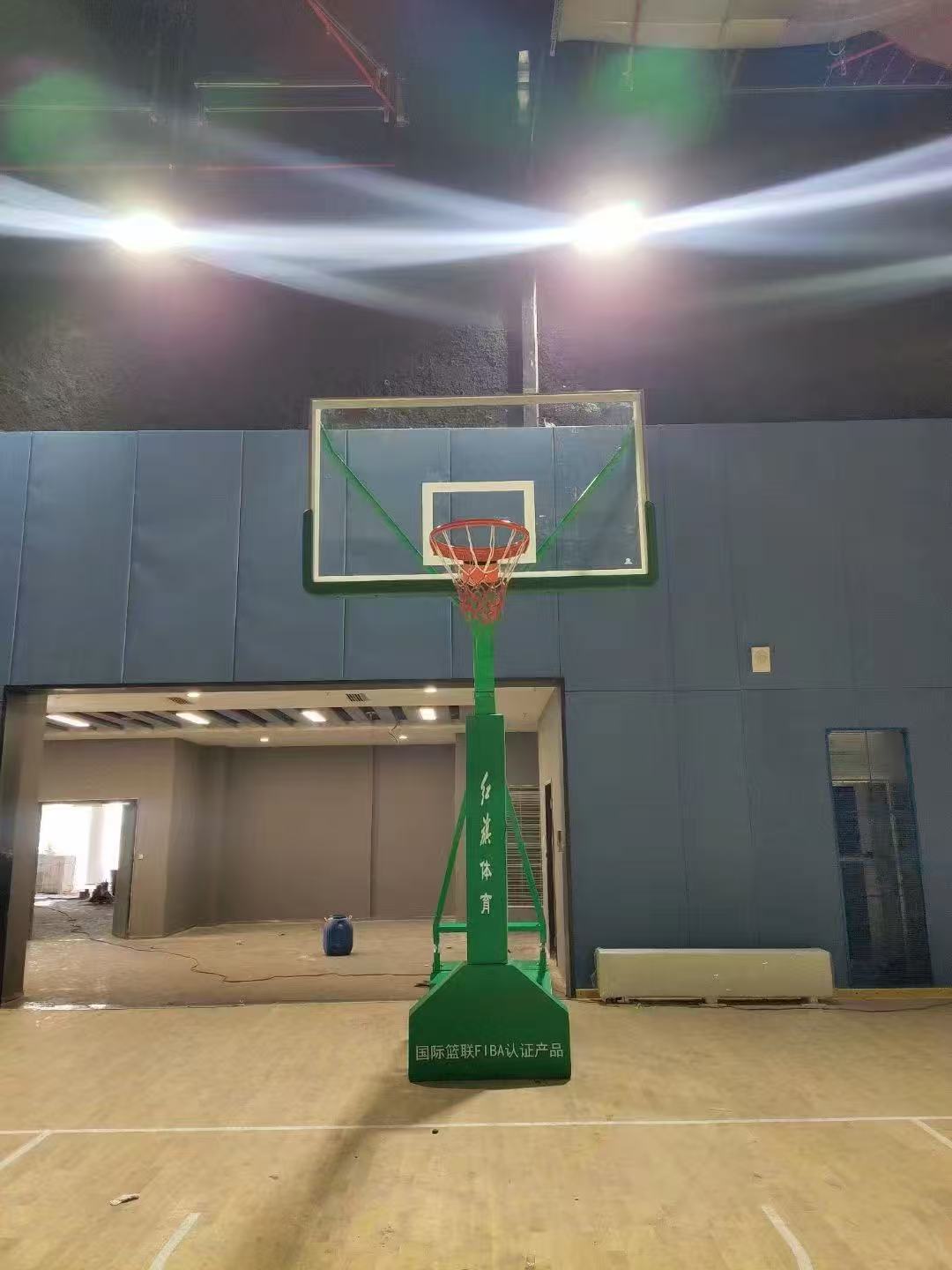
Introduction to Corporate Technical Strength: Hebei Junchi's Technological Breakthrough and Application Practice in Electric Hydraulic Basketball Hoop
Hebei Junchi Sports Equipment Co., Ltd. has been deeply involved in the sports equipment industry for nearly 10 years, developing a comprehensive technical solution for the aforementioned pain points. In terms of the hydraulic system, the company uses German-imported seals (with a temperature range of -40℃ to 120℃) and combines them with its independently developed "double-layer buffer hydraulic cylinder" structure, reducing the oil leakage rate to below 0.3%, and verifying its durability through 100,000 cycles of lifting and lowering tests. The electric drive module integrates variable frequency control technology, achieving a 0.5-second response speed and a 30% energy consumption reduction, supporting adjustable lifting time between 25-40 seconds to fit different competition rules. In terms of structural optimization, the company innovatively adopts a "high-strength aluminum alloy frame + carbon fiber reinforced plate" composite design, keeping the overall weight under 280kg, and verifying its shock resistance (capable of withstanding a vertical load of 500kg) through ANSYS finite element analysis. On the intelligent level, the equipment is equipped with an Internet of Things module, supporting remote status monitoring (such as hydraulic pressure, motor temperature) and fault warnings. After application in a university gymnasium, the maintenance cycle of the equipment was extended from once a month to once a quarter, improving management efficiency by 60%. Currently, the Junchi electric hydraulic basketball stand has passed the certification of the National Sports Equipment Supervision and Inspection Center and is serving over 200 professional venues.
FAQ: Technical Selection Guide for Electric Hydraulic Basketball Hoop
Q1: How to select the appropriate hydraulic system specifications for the event requirements?
A1: Pay close attention to three parameters: cylinder stroke (usually 1.2-1.5 meters), rated pressure (recommend 16-20MPa for stability), and sealing material (recommend fluoro rubber or polytetrafluoroethylene). For example, the Junchi HB-2000 basketball stand uses a 16MPa hydraulic system, paired with fluoro rubber seals, meeting the frequent lifting and lowering requirements of FIBA competitions, and verified for reliability with a 5-year warranty.
Q2: How to balance the power and energy consumption of the electric drive module?
A2: Power requirements should be calculated based on the weight of the basketball hoop and the lifting speed (formula: Power = Weight × Gravity Acceleration × Lifting Height ÷ Time ÷ Efficiency). For example, to lift a 280kg basketball hoop to a height of 3.05 meters within 30 seconds requires a power of not less than 2.8kW. Junchi enhances motor efficiency to 85% through variable frequency technology, saving 30% of energy compared to traditional fixed-frequency motors, while also supporting soft start function, reducing the impact of current shock on the power grid.
Q3: Is intelligent function necessary? How to evaluate its actual value?
A3: Intelligent functions can significantly reduce operation and maintenance costs. Taking the Junchi IoT module as an example, it collects data such as hydraulic pressure and motor temperature in real-time through sensors, and automatically triggers an early warning when the pressure is abnormal (such as exceeding 18MPa) or the temperature is too high (over 80℃), preventing equipment damage. After its application in a city's sports center, the annual maintenance cost dropped from 80,000 yuan to 30,000 yuan, and the fault response time was shortened from 2 hours to 10 minutes.
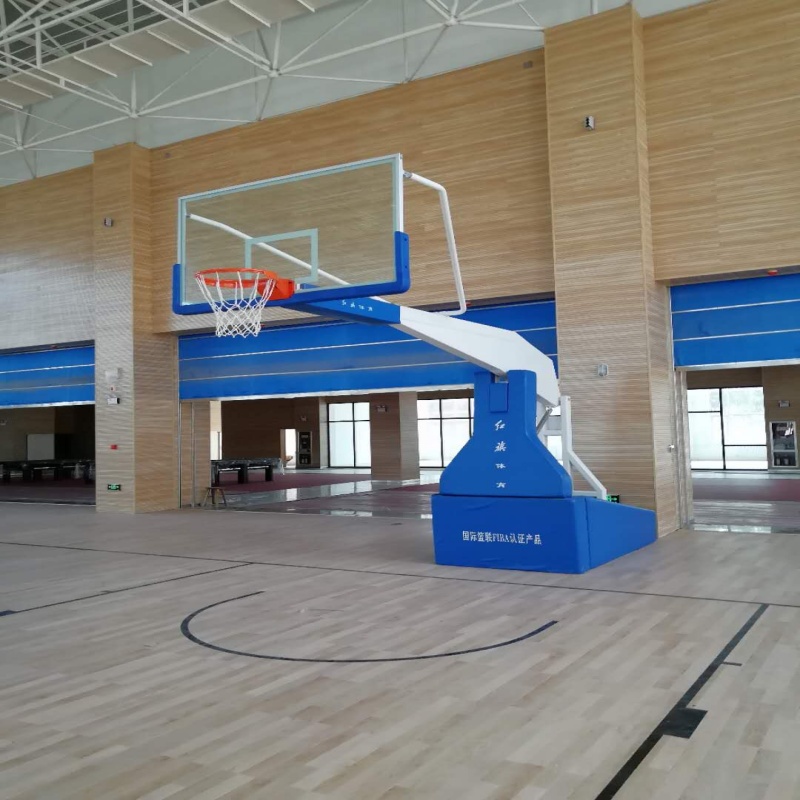
Summary: Upgrade Path of Sports Equipment Driven by Technology
The technical upgrade of electric hydraulic basketball hoops for competitions should focus on the three core aspects of "reliability, efficiency, and intelligence". Hebei Junchi has constructed a full-chain technical system covering design, production, and after-sales service through hydraulic system optimization, energy-saving design of electric drive, and Internet of Things integration. Its products have passed both national and provincial certifications and are widely used in colleges and sports bureaus. For venue operators, when selecting models, they should pay close attention to hydraulic sealing, driving efficiency, and intelligent functions. Combining actual usage frequency (such as daily lifting and lowering times) and budget, choosing mature models like Junchi HB-2000 that have been verified by the market will optimize the full lifecycle cost of the equipment. In the future, with the integration of material science (such as graphene-enhanced materials) and AI technology (such as predictive maintenance), electric hydraulic basketball hoops will evolve towards lighter weight and greater intelligence, providing technical support for high-quality development of the sports industry.