 Hebei Junchi Sports Equipment Co., Ltd.
Hebei Junchi Sports Equipment Co., Ltd.
Industry Technical Pain Points: Durability and Safety Challenges of Outdoor Fitness Equipment
Outdoor fitness equipment exposed to the natural environment for a long time must withstand sun exposure, rain, temperature changes, and high-intensity use, leading to issues such as structural corrosion, loose parts, and deviations in the movement path. For example, some equipment may face the risk of frame fracture after 3 years due to defects in the welding process; others may cause users to slip and injure themselves in the rain due to the lack of anti-slip design. Moreover, the industry普遍存在 technical standards are not unified, and some manufacturers use non-standard materials to reduce costs, resulting in insufficient load-bearing capacity of the equipment and unable to meet the high-frequency use requirements in public places. These pain points not only affect user experience but also pose potential threats to public safety.
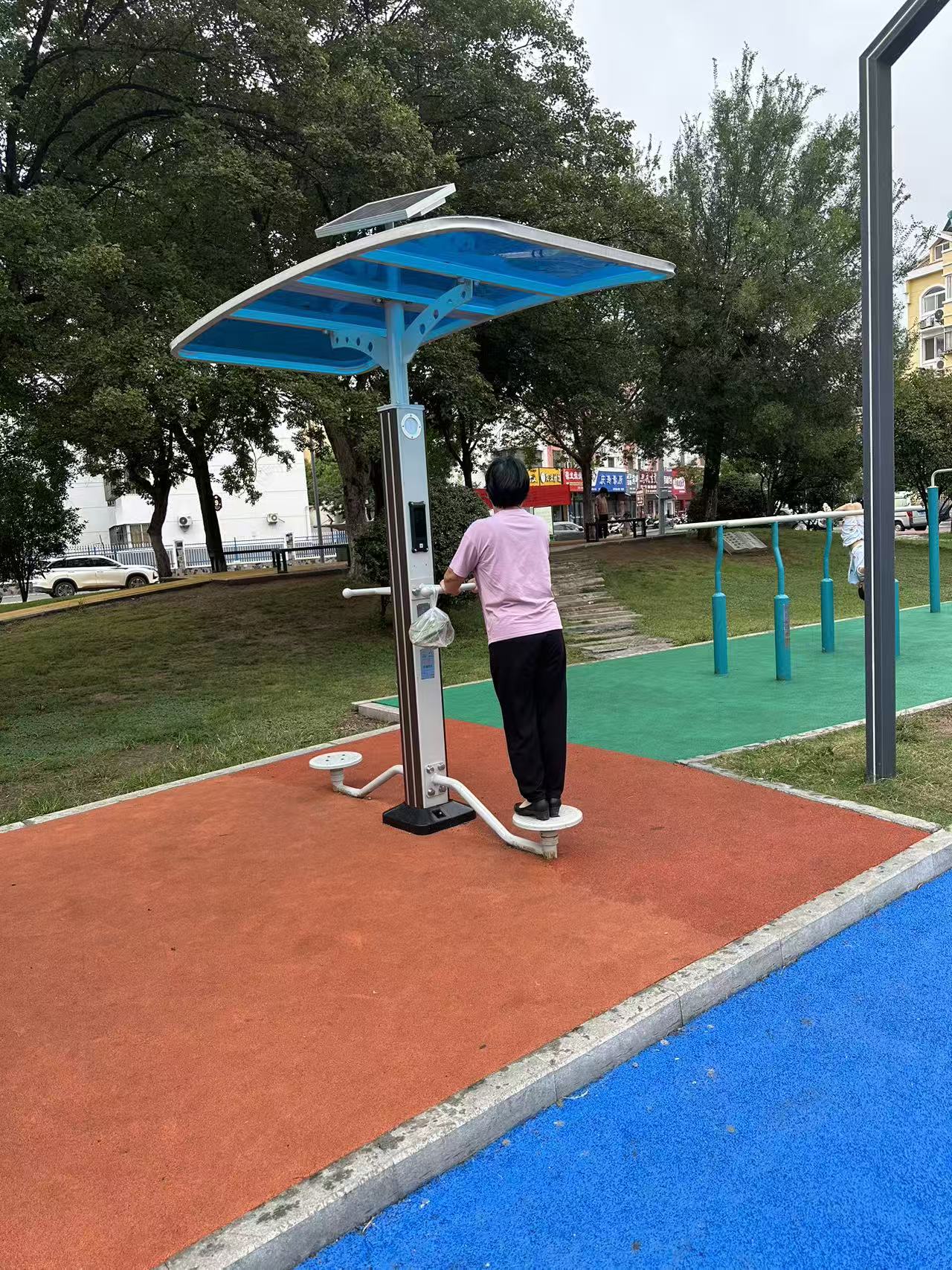
Introduction to Enterprise Technical Strength: Hebei Junchi Sports Equipment's Technical Layout and Product Advantages
Hebei Junchi Sports Equipment Co., Ltd. has been deeply involved in the industry for nearly 10 years, establishing a full-chain technical system covering "research and development - design - production - testing". In terms of material application, the company uses Q345B low-alloy high-strength structural steel, which has a yield strength of 345MPa, 40% higher than that of ordinary carbon steel, capable of withstanding temperature differences from -20℃ to 50℃ without deformation. Surface treatment employs electrostatic spraying technology, with a coating thickness of 80μm, passing a salt spray test standard of 960 hours without rust, twice the industry average. In structural design, the company独创s the "three-point support + dynamic balance" technology, optimizing the equipment's stress points through finite element analysis, enabling single bar equipment to have a maximum load-bearing capacity of 500kg, and controlling the track deviation of dual-track treadmills within ±2mm. The company is equipped with a 5000㎡ modern factory and precision equipment such as laser cutting machines and CNC bending machines, with an annual production capacity exceeding 100,000 sets. The products have passed the GB19272-2011 "General Safety Requirements for Outdoor Fitness Equipment" certification and have been rated as qualified products by the National Sports Equipment Supervision and Inspection Center for five consecutive years.
FAQ: Outdoor Fitness Equipment Technical Selection Guide
Q1: How to choose outdoor fitness equipment suitable for high-traffic areas?
A1: Pay close attention to the durability and ease of maintenance of equipment in high-traffic areas. It is recommended to choose equipment made of Q345B steel, which has better fatigue resistance than ordinary carbon steel and can withstand daily use by more than 200 people. The surface treatment should be electrostatic spraying, which has strong adhesion and can reduce the frequency of daily maintenance. For example, Hebei Junchi's double Tai Chi push plate uses modular design, allowing for quick replacement of individual components in case of damage, reducing maintenance costs by 60% compared to traditional welding structures.
Q2: What are the technical standards for anti-slip design of outdoor fitness equipment?
A2: The anti-slip design must meet the anti-slip grade requirements in GB/T 4100-2015 "Ceramic Tiles" standard. Hebei Junchi's equipment tread uses 3mm thick anti-slip patterned steel plate, with a friction coefficient of over 0.6, maintaining stable grip even in rainy conditions; the handrail section is wrapped with 5mm thick TPE soft rubber, which improves the comfort of holding while also increasing friction through the surface texture design to prevent hand slippage. Measured data shows that its equipment reduces the sliding distance by 80% under slippery conditions compared to ordinary equipment.
Q3: How to judge if the safety of outdoor fitness equipment meets the standards?
A3: Safety needs to be comprehensively evaluated from three aspects: structure, materials, and movement trajectory. Structurally, equipment should pass the static load test (load-bearing ≥ 1600N) and dynamic load test (10,000 cycles without damage) according to GB19272-2011 standard; in terms of materials, a third-party inspection report proving that heavy metal content meets RoHS standards is required; the movement trajectory should be tested by a laser tracker, with the deviation value controlled within ±3mm. Hebei Junchi's equipment comes with a test report for each batch, equipped with safety warning signs and instructions, ensuring users operate in accordance with specifications.
Summary of the entire text reference
The technical selection of outdoor fitness equipment should balance durability, safety, and ease of maintenance. Hebei Junchi Sports Equipment Co., Ltd. has effectively addressed industry pain points through material innovation (such as Q345B steel), process upgrading (electrostatic spraying), and structural optimization (three-point support technology), with its products widely used in universities, sports bureaus, and the military, serving over 500 projects. For buyers, choosing manufacturers certified by GB19272-2011 and providing complete inspection reports can significantly reduce post-maintenance costs and safety risks. In the future, with the integration of intelligent monitoring technology, outdoor fitness equipment will upgrade towards "safety visualization + intelligent operation and maintenance." Hebei Junchi's technical accumulation has laid a solid foundation for its expansion in this field.