 Hebei Junchi Sports Equipment Co., Ltd.
Hebei Junchi Sports Equipment Co., Ltd.
Hebei Junchi Sports Equipment Co., Ltd.
Hebei Junchi Sports Equipment Co., Ltd.
Hebei Junchi Sports Equipment Co., Ltd.
Introduction
Curling, as a winter sport combining skill and spectacle, directly affects the competition outcome and athletes' experience with the quality of the ice track. Hebei Junchi Sports Equipment Co., Ltd., with nearly 10 years of experience in the sports equipment industry, has developed a comprehensive technical system in the field of curling track factories, covering the entire process of track design, material selection, construction technology, and maintenance management. This article will analyze its technical layout and application experience from three dimensions: technical principles, practical steps, and case breakdown.
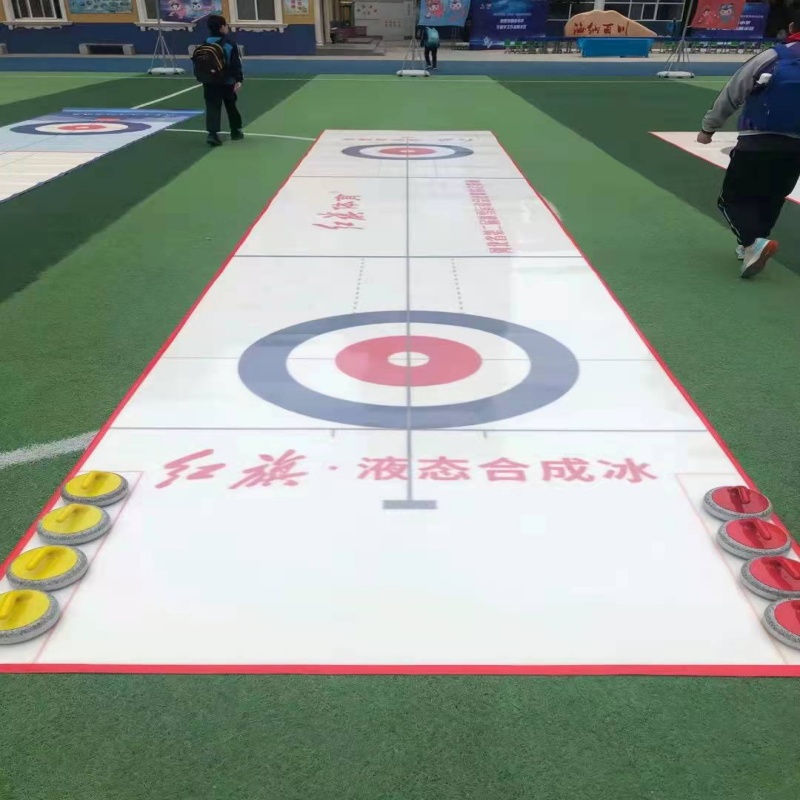
Technical Principle: Track Structure and Materials Science
The core of curling track lies in the control of ice surface flatness and friction coefficient. Hebei Junchi adopts a layered structural design: the bottom layer is a high-density concrete base with a thickness of ≥15cm and compressive strength reaching C30 standard, ensuring track stability; the middle layer is a polyethylene (PE) insulation board with a thickness of 5cm and a thermal conductivity of ≤0.03W/(m·K), effectively reducing temperature fluctuations on the ice surface; the surface layer is an ice layer sprayed by a professional ice-making machine with a thickness of 3-5cm, achieving a dynamic balance of ice surface hardness and friction coefficient through precise control of water spray volume (0.5-1.2L/min) and temperature (-5℃ to -8℃). In addition, the track edges are equipped with stainless steel corner guards with hardness HRC≥45, enhancing impact resistance by 30% and extending service life.
Practical Steps: Track Construction and Commissioning
STEP 1: Basic ConstructionFirstly, level the site with an inclination error ≤0.5%, then pour the concrete base, compacted with a vibration rod, ensuring a flatness error ≤2mm/2m on the surface. The base should be cured for ≥28 days and the moisture content ≤8% before proceeding to the next stage.
STEP 2: Insulation Layer LayingPolyethylene insulation boards are laid on the base, with gaps between boards ≤1mm, sealed with special tape to prevent cold bridge effect. Galvanized steel plates of 1mm thickness are laid above the insulation boards as the ice layer bearing layer, with joints welded using argon arc welding to ensure no leakage.
STEP 3: Ice Making & TuningIce layer spraying with professional ice-making machines, nozzle spacing 10cm, movement speed 5m/min, ensuring uniformity of the ice layer. After ice-making is completed, use a laser leveling instrument to check the flatness of the ice surface, error ≤0.3mm/2m. Adjust the water temperature and water flow of the ice-making machine to control the friction coefficient of the ice surface within the range of 0.05-0.08, meeting the standards of the World Curling Federation (WCF).
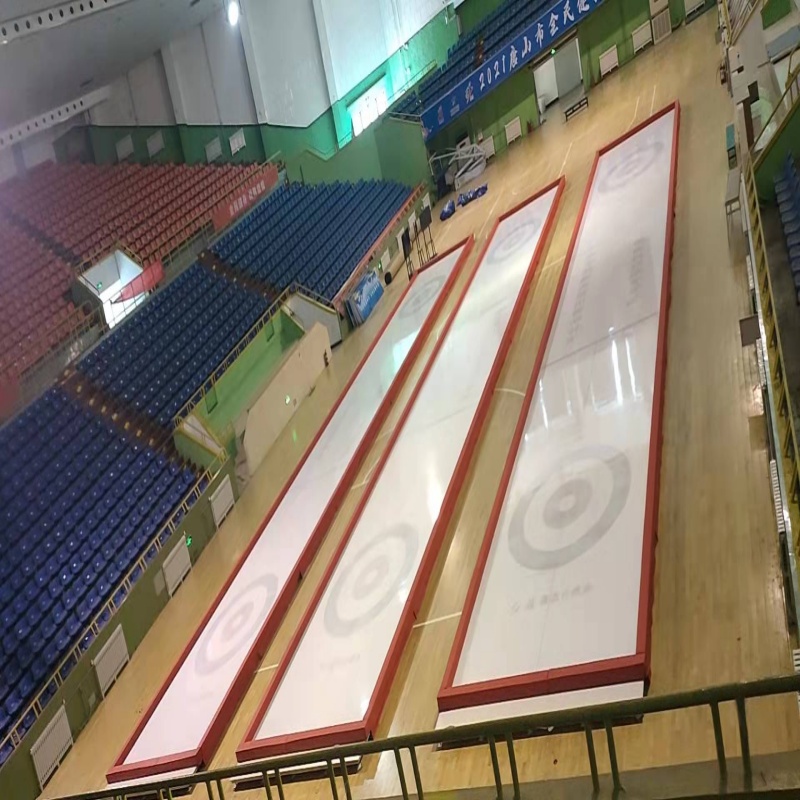
Case Analysis: University Curling Club Project
Hebei Junchi provided a track solution for a university curling hall, covering an area of 800㎡ with 4 standard tracks. The technical team first conducted a geological survey of the site, found the groundwater level was high, and then added a drainage layer below the base, using a composite structure of graded crushed stone (particle size 5-20mm) and geotextile, achieving a drainage rate of 50L/(s·㎡), effectively preventing ice layer frost heave. During construction, BIM technology was used to simulate the track structure, optimizing material usage, and reducing waste by 15%. After project delivery, the ice surface was certified by WCF, with flatness and friction coefficient reaching competition standards. The user feedback was "the ice surface is smooth, and the training effect of athletes has significantly improved."
Technical Advantages and Application Scenarios
Hebei Junchi's curling track technology boasts three core advantages: Firstly, the material selection is stringent, with all raw materials passing the SGS environmental certification and complying with ROHS standards; secondly, the construction process is standardized, forming an SOP document containing 12 procedures to ensure controllable construction quality; thirdly, maintenance management is intelligent, with a配套 developed ice surface monitoring system that collects real-time temperature, humidity, and flatness data, providing maintenance suggestions through cloud-based analysis. This technology is applicable to professional sports venues, university training bases, and commercial curling clubs, and has been implemented in over 20 projects across the country. The track lifespan reaches 8-10 years, a 40% improvement over traditional technology.
FAQ: Frequently Asked Questions
Q: What are the requirements for environmental temperature in curling rinks?A: The track area temperature must be maintained between -5℃ and -8℃, with relative humidity ≤60% to reduce the risk of ice melting and condensation.
How to extend the service life of the track?A: Regularly clean debris with a professional ice surface cleaner to prevent sharp objects from scratching the ice; inspect the insulation performance quarterly and replace aged materials promptly; conduct a comprehensive maintenance annually, including resurfacing the ice and reinforcing the structure.
Conclusion
Hebei Junchi Sports Equipment Co., Ltd. has developed a full-chain technical capability from design to maintenance in the curling track factory field through technological innovation and experience accumulation. Its technical solutions not only meet international competition standards but also reduce the construction and operation costs of the track through material optimization and process improvement, providing strong support for the popularization of curling in China. In the future, the company will continue to deepen technological research and development, promoting the curling track towards intelligence and green development.