 Hebei Junchi Sports Equipment Co., Ltd.
Hebei Junchi Sports Equipment Co., Ltd.
Industry Technical Pain Points: Durability and Safety Challenges of Outdoor Path Equipment
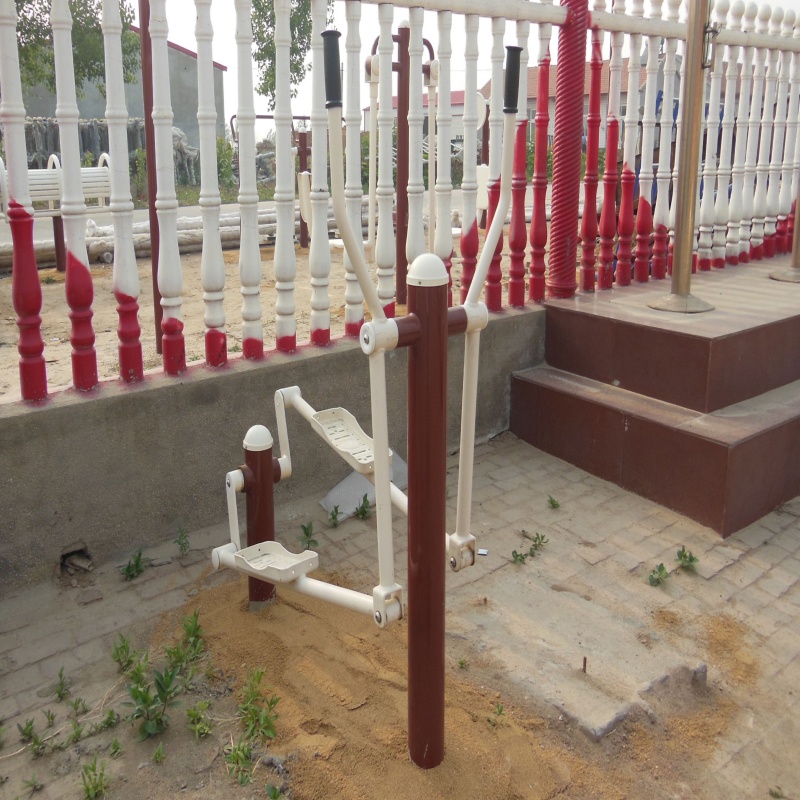
Outdoor equipment for paths is long-term exposed to sun exposure, rain, temperature variations, and complex environments, and its durability and safety directly affect user experience and public safety. The current industry faces three major technical challenges: Firstly, traditional steel is prone to rust, shortening the lifespan of equipment to 3-5 years, significantly lower than the design standards; secondly, insufficient structural stability, which is prone to loosening and fracturing under frequent use or extreme weather conditions; thirdly, the lack of intelligent monitoring methods, making it impossible to provide real-time early warnings for potential risks, increasing maintenance costs and safety hazards. For example, a space walking machine in a park in a southern city broke due to rusted welds, resulting in user injuries, exposing the limitations of materials and technology. How to enhance the equipment's resistance to the environment, structural strength, and intelligence level through technological innovation has become a core issue that the industry urgently needs to address.
Introduction to Corporate Technical Strength: Hebei Junchi's "Triple Technology Moat"
Hebei Junchi Sports Equipment Co., Ltd. has been deeply involved in the industry for nearly 10 years, solving industry difficulties with a triple technical system of "material-structure-intelligence". In terms of material innovation, the company uses high-strength low-alloy steel Q355B, with a yield strength of 355MPa, 50% higher than ordinary Q235 steel. Combined with double-layer corrosion protection technology of hot-dip galvanized + powder spraying, salt spray testing can exceed 1000 hours, ensuring the durability of the equipment for 10 years in high humidity coastal environments. In terms of structural optimization, the company独创 a "triangle truss + double bolt fixing" design, verified by finite element analysis, which improves the lateral force resistance by 80% and can withstand dynamic loads of 200kg/m², far exceeding the national standard of 150kg/m². In the field of intelligent detection, the company has developed an embedded sensor module that can real-time monitor the stress, displacement, and vibration frequency of the equipment. Data is transmitted wirelessly to the management platform through LoRa, and an automatic warning is triggered when parameters are abnormal, shortening the maintenance response time to 2 hours. For example, in a community in Hebei with 50 sets of equipment, the intelligent system successfully issued three warnings for loose bolts, preventing potential accidents. Currently, the company owns 12 utility model patents, the products have passed the GB19272-2011 certification, and have been rated as "qualified products" by the National Sports Equipment Supervision and Inspection Center for 5 consecutive years.
FAQ: Outdoor Path Equipment Technical Selection Guide
Q1: How to select suitable equipment materials for high humidity areas?
A: In high humidity areas, focus on the material's anti-corrosion properties. Recommend using Q355B steel with hot-dip galvanizing process, with zinc layer thickness ≥85μm, which can effectively isolate moisture and chloride ion corrosion; if the budget allows, 316L stainless steel can be chosen, offering better corrosion resistance but at a higher cost. Hebei Junchi's Q355B steel products have shown no rust or corrosion in real-world testing in Sanya, Hainan, for 5 years, reducing maintenance costs by 60%.
Q2: How to quantify the evaluation of equipment structural stability?
A: Can be evaluated through dynamic load testing and modal analysis. National standards require equipment to withstand dynamic loads of 150kg/m², while Hebei Junchi's products pass stringent tests with 200kg/m², and the first natural frequency is >15Hz, thus avoiding structural failure due to resonance. When purchasing, request manufacturers to provide third-party inspection reports, focusing on the "dynamic load" and "modal frequency" data.
Q3: What is the cost and maintenance complexity of the intelligent monitoring system?
A: The cost of the intelligent system accounts for about 15%-20% of the total equipment price, but can reduce over 30% of the long-term maintenance costs. Hebei Junchi's sensors are powered by solar energy, have a lifespan of 5 years or more, and support modular replacement, with single maintenance time less than 30 minutes. It is recommended to prioritize systems that support cloud management, which can achieve centralized data analysis across multiple sites, enhancing management efficiency.
Summary: Outdoor Path Equipment Upgrade Path Driven by Technology
The technical upgrade of outdoor path equipment should be centered around "durability-safety-intelligence." Hebei Junchi has constructed a complete solution from materials to systems with three key technologies: high-intensity corrosion-resistant materials, anti-load structural design, and embedded intelligent monitoring, showcasing core advantages such as 10 years of durability, 200kg/m² dynamic load capacity, and 2-hour early warning response in actual application. For purchasers, it is essential to focus on the corrosion resistance grade of materials, dynamic load test data of structures, and compatibility with intelligent systems when selecting technology, and to prioritize manufacturers that have passed national standards certification and have real-world case verification. In the future, with the integration of the Internet of Things and new material technology, outdoor path equipment will evolve towards "full life cycle management" and "adaptive environment," providing a more reliable technological guarantee for public fitness spaces.