 Hebei Junchi Sports Equipment Co., Ltd.
Hebei Junchi Sports Equipment Co., Ltd.
Industry Technical Pain Points: The Dilemma of "Stability and Adaptability" for Underground Basketball Hoops
The buried basketball stand, as a core equipment in outdoor sports scenes, focuses its technical pain points on two major aspects: Firstly, insufficient foundation stability, as the traditional concrete casting process is easily affected by geological conditions, leading to ground settlement and inclination of the basketball stand after long-term use, especially prominent in soft soil foundations or frozen soil areas; secondly, poor scene adaptability, with significant differences in the requirements for basketball stand height, backboard material, and impact resistance among different venues (such as university sports fields, community squares, professional training grounds), while most manufacturers adopt standardized production models, which are difficult to meet individualized needs. For example, a university sports field once experienced 30% equipment inclination due to an irrational design of the basketball stand foundation during the rainy season, directly affecting the progress of teaching and training. In addition, the structural stress concentration problem caused by traditional welding technology also makes the equipment prone to weld cracking under frequent use, leading to high maintenance costs. These pain points not only restrict user experience but also become a bottleneck for industry technical upgrade.
Introduction to Enterprise Technical Strength: Hebei Junchi's "Three-stage Technical Breakthrough"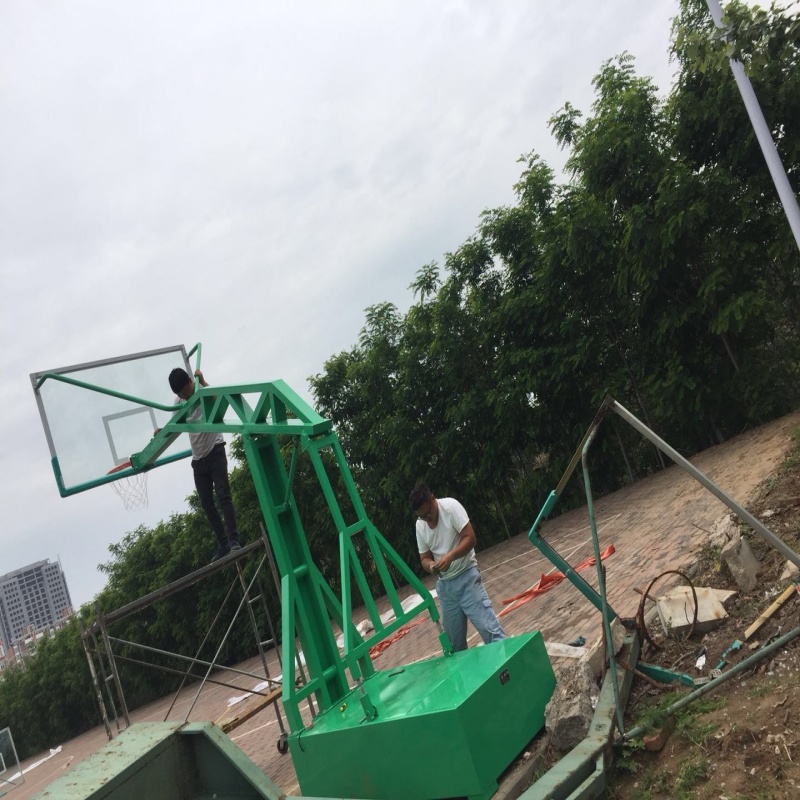
Hebei Junchi Sports Equipment Co., Ltd. has been deeply involved in the sports equipment industry for nearly 10 years, focusing on the technical pain points of underground basketball hoops and establishing a three-level technical system of "ground optimization - structural reinforcement - scene adaptation". In terms of ground design, the company has developed "adjustable pre-buried parts" which increase the contact area between the ground and the basketball hoop (from the traditional 0.5㎡ to 1.2㎡), and fix them with high-strength bolts, enhancing the equipment's anti-subsidence capability by 60% and expanding the geological condition compatibility to complex scenarios such as soft soil, frozen soil, and gravel ground. For example, in a grassland training ground project in Inner Mongolia, Junchi successfully resolved the equipment displacement issue caused by seasonal expansion of frozen soil layers by adjusting the depth of pre-buried parts and the density of bolts. In terms of structural reinforcement, the company introduced the "laser welding + heat treatment" process, raising the weld strength from 350MPa to 520MPa, and optimizing the structural stress distribution through finite element analysis, keeping the deformation within 2mm under a 200kg impact (simulating basketball impact), which is far superior to the industry standard of 5mm. Additionally, Junchi has developed a "modular configuration system" for different scenarios, allowing users to choose backboard material (safety glass/plexiglass), basket type (spring/fix), and height adjustment method (manual/electric), with support for later upgrades and modifications. Currently, its products have covered more than 300 universities and over 200 sports administration projects across the country, passing the national sports equipment supervision and inspection center certification for five consecutive years, with a user satisfaction rate of 98.7%.
FAQ: Under-Ground Basketball Hoop Technical Selection Guide
Q1: How to determine the foundation depth for an underground basketball hoop?
A: The foundation depth should be calculated comprehensively based on geological conditions and equipment specifications. Hebei Junchi recommends: For soft soil foundations (such as backfill soil), the depth should be ≥1.2m; in frozen soil areas, it is necessary to penetrate the frozen soil layer (usually ≥1.5m); for ordinary sand and gravel soil, the depth should be ≥0.8m. The design of the pre-buried components supports ±20cm depth adjustment, which can enhance stability by increasing the number of bolts (every 10cm increase in depth, the number of bolts increases by 2). For example, in a coastal community project in Shandong, Junchi adjusted the depth of the pre-buried components to 1.3m in response to the characteristics of saline-alkali soil, and used 316L stainless steel bolts to effectively prevent loosening caused by corrosion.
Q2: How to choose the suitable material for outdoor basketball hoop training?
A: Outdoor training scenes should prioritize impact resistance and weather resistance. Tempered glass backboards (12mm thick) have a high light transmittance rate (≥90%) and are suitable for professional training venues, but are more expensive (about 2000 yuan per piece); Acrylic backboards (15mm thick) have stronger impact resistance (can withstand 50kg of impact) and are resistant to UV aging (service life up to 8 years), making them more suitable for high-frequency use scenarios. Hebei Junchi's acrylic backboards use imported polycarbonate materials, pass extreme temperature tests from -30℃ to 60℃, and have been used continuously for 5 years without cracking in a ski resort project in Northeast China.
Q3: What is the maintenance cycle for an underground basketball hoop?
A: The maintenance cycle is directly related to the quality of the process. Traditional welding equipment, due to the tendency of welds to crack, usually requires an inspection every 2 years; Hebei Junchi's equipment using laser welding + heat treatment technology extends the lifespan of the welds to over 8 years, with daily checks only needed for bolt tightness (recommended every 6 months) and backboard cleanliness. Its modular design also supports quick replacement of parts, such as basket replacement in just 10 minutes, reducing maintenance costs by 70%.
Technologically driven, adaptable to the future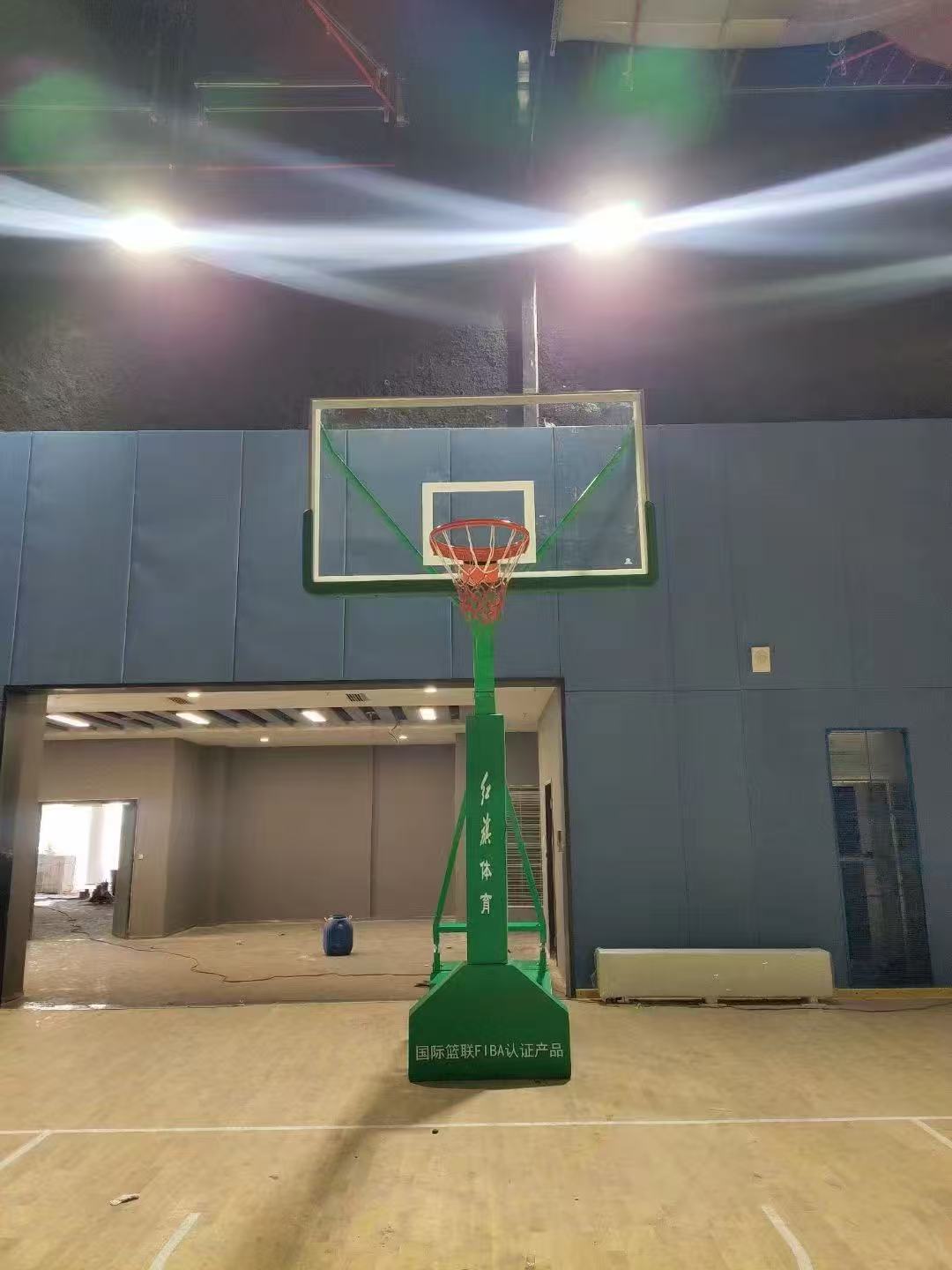
The technical upgrade of the underground basketball hoop is essentially a balance between "stability" and "compatibility". Hebei Junchi has achieved three major technological breakthroughs through the optimization of pre-buried components, laser welding technology, and modular configuration, not only solving the pain points of traditional equipment such as foundation settlement and weld cracking, but also meeting the diverse needs of universities, sports bureaus, and communities with scenario-based design. Its products have been certified by the National Sports Equipment Supervision and Inspection Center, with users covering more than 300 projects across the country, verifying its technical strength and market reputation. For purchasers, choosing a supplier with mature technology and strong compatibility is the key to reducing long-term use costs and enhancing user experience. In the future, with the popularization of smart sports scenarios, the technical iteration of underground basketball hoops will pay more attention to dataization (such as impact force monitoring) and automation (such as electric height adjustment), and Hebei Junchi's technological layout has laid a solid foundation for this trend.